Ep 138: Covid conversations (with Kailey McCain and Caroline Merriman)
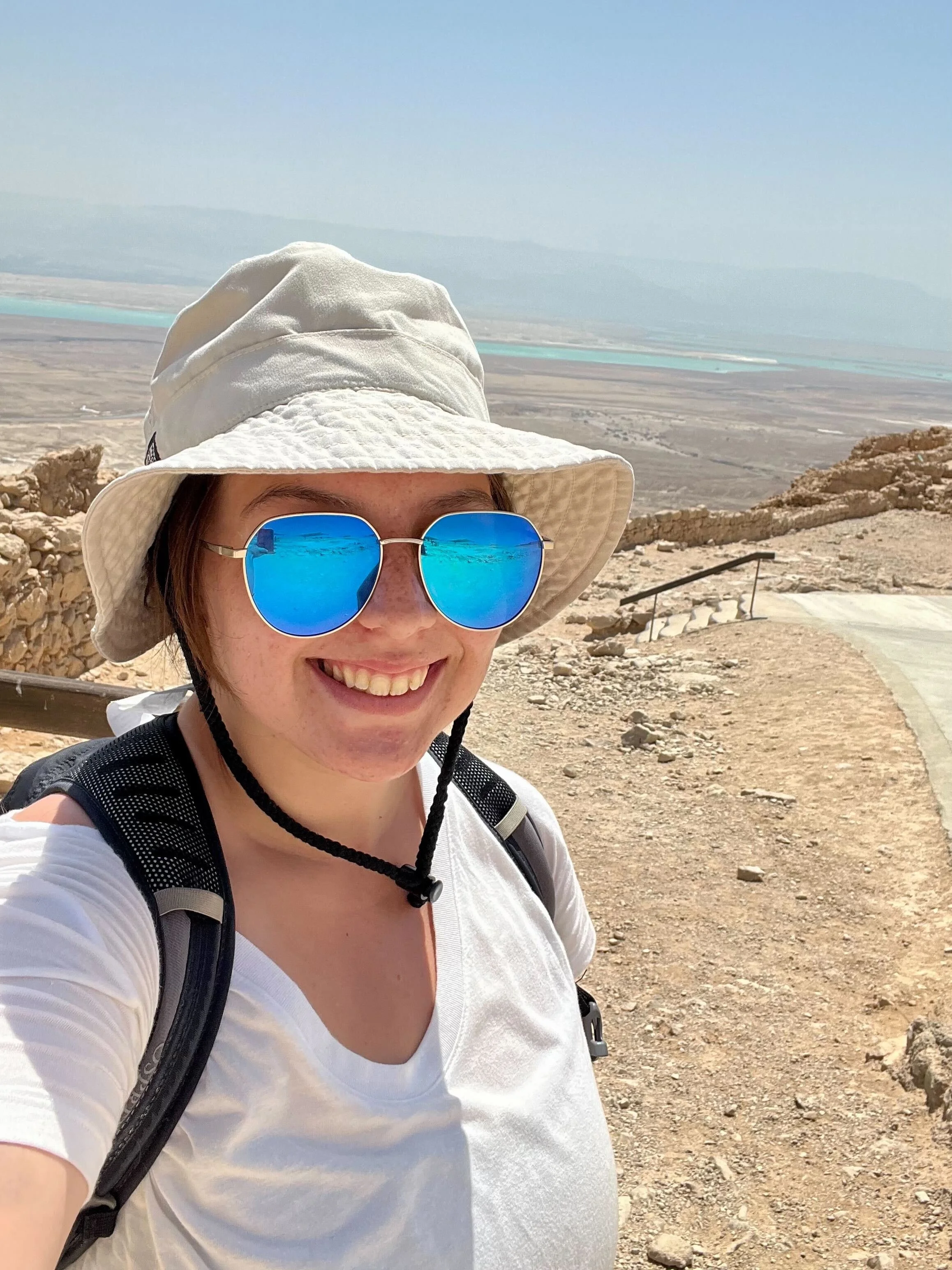
Kailey McCain
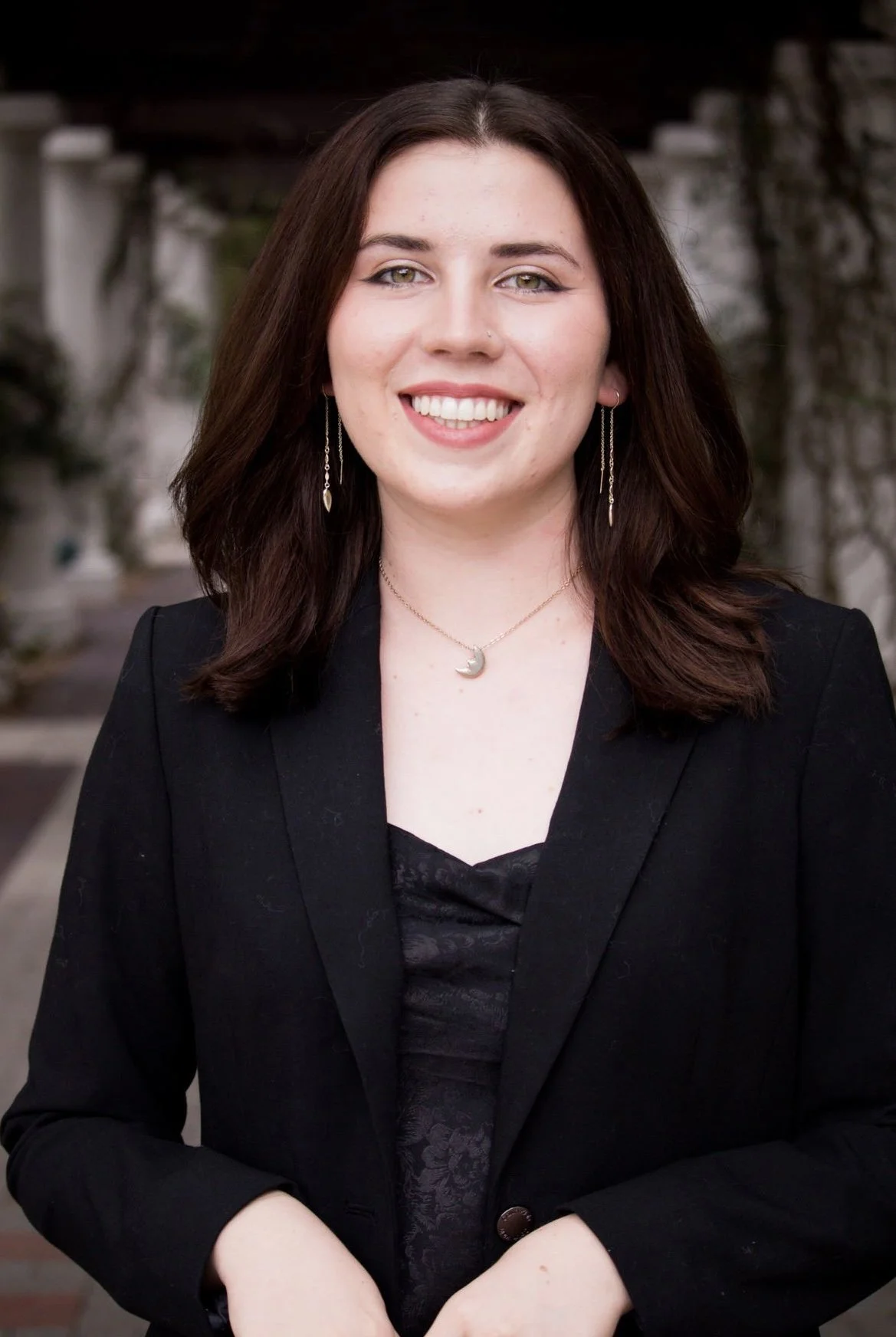
Caroline Merriman
What can we learn from the COVID-19 pandemic, and how do we apply that knowledge moving forward?
On this special episode of Big Biology, we’re bringing you the highlights from a conference called “Covid Conversations,” which was hosted at the University of South Florida last December. The event brought together scientists, public health experts, medical doctors, historians, students, philosophers, and community leaders—for one big, open conversation about COVID-19. The episode shares the different perspectives these speakers had on the virus, the pandemic response, and our future preparedness to disease.
This episode is hosted by Caroline Merriman, a former Big Biology intern and a research fellow with the Association of Public Health Laboratories program, and Kailey McCain, a PhD student in Marty’s lab at USF and a former Big Biology intern.
Cover art: Keating Shahmehri.
-
Kailey McCain:
Hey everyone, and welcome to Big Biology. Today’s episode is going to be a little different. This week we are switching things up. I’m Kailey McCain, a PhD student in Marty’s lab at USF, but also a former Big Biology intern. I’ll be guest hosting today with Caroline. Caroline, would you like to introduce yourself a bit?
Caroline Merriman:
Hi everyone! My name is Caroline Merriman. I’m a recent undergrad from the University of South Florida and now a research fellow with the Association of Public Health Laboratories program, a network Marty’s lab is also part of. You know, Kailey I actually just came back from working at a summer camp, and I don’t think I’ve been sicker in all my life. I came down with a bad case of RSV in the first week. And as soon as I felt a little scratch in my throat, I completely went overboard. I was calling out of work, isolating, wearing a face mask, and everything.
As I was laying in my bed in the 76th hour of isolation, I realized that before the COVID pandemic I would have just powered through like nothing was happening. I would have continued going to work, and not taking all these precautionary measures. It’s hard to believe it’s been over four years since the world came to a standstill. Looking back, COVID-19 really reshaped our lives: how we work, how we learn, and how we connect. And it also fractured trust, revealed the cracks in our public health systems, and forced us to ask hard questions about science, policy, and leadership.
Kailey McCain:
Yeah, it seems like just yesterday I received the call from the university that we would be closed for a week after spring break, and then that week turned into a year of lockdown. But, looking back now, I realize how confusing the early pandemic world felt. Luckily, today we will be exploring the origin, response, and uncertainty of the COVID-19 pandemic!Caroline Merriman:
Today, Kailey and I will be sharing some of the highlights of a “Covid Conversations” conference, held right here at USF last December. Because the event spanned two and a half days, we won’t be able to spotlight every topic and panelist. But if you want to listen to the whole Covid Conversations event, head to USF’s digital commons for live recordings of every panel. We’ll paste a link to this event on our Substack page and share it over social media, but feel free to email info at big biology dot org if you can’t find it!
Kailey McCain:
Before jumping in, we also want to thank Heterodox Academy, or HxA, at USF, as this event wouldn’t have occurred without them, especially Amber Gum, Kris Kaliebe, Stephen Turner and regular host of Big Biology but also USF Professor of Public Health, Marty Martin. The USF team followed Heterodox Academy’s mission…Caroline Merriman:
to advance open inquiry, viewpoint diversity, and constructive disagreement across higher education
Kailey McCain:
…to identify guests and develop an event plan that fostered honest, candid and hopefully productive discussion on very fraught topics. HxA exists to empower its members to organize on their campus and within their disciplines in an effort to promote and protect open inquiry across higher education.
Caroline Merriman:
The event was also facilitated by USF Health, particularly Dr. Charles Lockwood, executive vice president of USF Health and Dean of USF’s Morsani College of Medicine. In his opening address, Lockwood explained the purpose of the event.
Dr. Charles Lockwood: Many of us in this room have treated patients with COVID. Many of us have done COVID related research. Some of us have helped set policies. And I think that if we were to summarize our experience during the pandemic, it was really a venture into the unknown, and we kind of made up stuff as we went. What we may not have done is to admit how much we didn't know. And so that I think is probably the cornerstone of the edifice that we built that may have led to some of this mistrust.
So clearly, my goal, at least for the next day and a half, is to examine what we did right, what we did wrong, to have an honest discussion, maybe a bit of a debate. And to think outside of our silos and really view deeply the lessons that we've learned from COVID and the sequelae of COVID.
Kailey McCain:
The event also brought together people from all walks of life—scientists, public health experts, historians, students, and community leaders—for one big, open conversation about COVID-19.
Caroline Merriman:
From the origins of the virus to the global and local responses that followed, conference participants considered the questions: What can we learn from the COVID-19 pandemic, and how do we apply that knowledge moving forward?
Kailey McCain:
You’ll hear reflections on how misinformation spread almost as quickly as the virus itself, what worked and didn’t in public health messaging, and how we prepare—scientifically, socially, and politically, for the next pandemic. These were honest, but sometimes difficult discussions. This event wasn’t about just reliving the past, though—it was about learning from it. So, whether you’re in science, public health, policy, or just trying to make sense of it all, this conversation is for you.
Caroline Merriman:
Before we jump in, we would like to send a big thank you to Brady Quinn, the student at the University of South Florida and Big Biology intern whose hard work was crucial to bringing this podcast to life. Brady was unable to record the show with us, but it was his hard work that identified the highlights you’ll hear today. It’s not easy to transform nearly 20 hours of material into a 90 minute highlight reel!
Kailey McCain:
On to the show!
Caroline Merriman:
I’m Caroline Merriman
Kailey McCain:
And I’m Kailey McCain
Caroline Merriman:
And this is a Big Biology, HxA, USF Health collaborative special episode!
Kailey McCain:
We’ll start today at the obvious place, the highly debated origins of the virus that caused the COVID-19 pandemic. You’re about to hear from Dr. Alina Chan, a molecular biologist who’s been at the center of the scientific discussion around COVID-19’s origins as the co-author of “Viral: The Search of the COVID-19 Origin”. In this clip, Alina talks about why the source of the virus is more complicated to discern than most people realize.
Dr. Alina Chan:
Just to put this point across that this is not a China problem. This is not a US problem. This is a global problem.
And so when you look at any emerging outbreak that you really should not be looking at just precedence, but looking at the specific context of that outbreak to understand whether it came from a market or whether it came from a lab.
And so today we're going to talk about COVID-19. And what we know is that the closest relatives of this virus come from South China in Yunnan province or Laos, so bordering Yunnan province. And both of them, what, are about a thousand miles away from Wuhan city. And the scientists who have been studying these viruses had to make numerous trips from Wuhan down to these regions, including Laos every year to bring samples back up to Wuhan because these viruses are not endemic to Wuhan. You would not find them near Wuhan.
And what they found was that they could only rarely sometimes observe spillover of these viruses into people who were living right next to the cave. So these people live very close to the caves where they had found those viruses. They could not even measure this spillover in people in neighboring provinces. So when a SARS-like virus exploded in Wuhan city, which you can see is a highly modern city. So it was not well known for wildlife trade. It was actually well known for being a scientific hub in China. It had a premier institute of virology.
When that outbreak happened that leading scientists were studying these viruses for more than a decade said: “I was surprised”. She was shocked to hear the such a thing would ever happen in Wuhan because all their work had shown that these viruses were found so far away. And it was even rare to find those spillovers even near the sites of these caves.
And what was the mission? So why were these scientists going down there and taking all these samples back up to Wuhan? It was because of the 2003 SARS epidemic that really drew off interest into finding these viruses and understanding how it jumps from bats to intermediate host and then to people.
So these scientists, every year, they were collecting samples. They amassed a giant database of more than 20,000 samples collected from bats, wild animals, and they even took samples from sick people in the wildlife trade. They brought them all up to Wuhan. And once they had those samples, they were searching specifically for viruses that could infect human cells. So once they had those viruses, they could also create viruses that do not exist in nature by mixing and matching parts of it by putting in genetic modifications.
And in 2018, the year before the pandemic started, they specifically said we're going to find these novel SARS-like viruses in the wild and we're going to put novel furin cleavage sites into these SARS-like viruses. And in 2019, a novel SARS-like virus with a novel furin cleavage site insertion was causing an outbreak in their city.
Furthermore, the next step of this pipeline was they took these natural and synthetic viruses and they used them to infect human cells, including human airway cells. They used them to infect civets, the intermediate host of the 2003 SARS epidemic, and they also infected humanized mice. So these mice expressed a human H2 receptor that the virus used to infect cells.
And they were doing all this not to create a bioweapon, but just for basic science. This was just a pipeline for characterizing novel viruses in the wild and understanding how they might one day cause an outbreak in people.
Some trivia here is that unlike other labs, this institute had a very specific protocol for isolating viruses that would maintain the furin cleavage sites. So even though a lot of labs today when they are growing SARS-CoV-2, the furin cleavage site will fall out, this lab was actually using a protocol even before the pandemic that would preserve these features.
They used humanized mice and civets, not regular mice, not natural mice, and not ferrets. And so these models of humanized mice, especially when you pass viruses through these models, you can lead to viruses that are really efficient and jumping from species to species and into people. And they are well adapted for causing outbreaks.
And lastly, they were synthesizing these viruses without leaving any telltale signs of manipulation. And this was not being done for nefarious reasons. This technology had been developed in the states. It had been developed in North Carolina. And it was done just to more accurately study biology because you don't want to show other stitches and make alterations unnecessarily, you want to have a seamless cloning strategy.
So if you look at this whole pipeline, the risk of creating a pandemic pathogen is higher, it increases with every step. And the virus that escaped from this lab would not leave any telltale signs of whether it came from a lab, whether it had been genomically engineered and furthermore, it would be well adapted for causing an outbreak. And this is what we saw with SARS-CoV-2.
Caroline Merriman:
For students like us—who lived through the chaos of our campuses shutting down, remote classes, and nonstop headlines—it’s honestly surreal to now be sitting here and hearing this kind of detailed breakdown of what might have been going on behind the scenes.
Kailey McCain:
Yeah, I mean, back in 2020, the conversation about where the virus came from felt so polarized. It was either “natural origin” or “conspiracy theory”—and not much in between. But what Alina lays out isn’t speculation; it’s a detailed summary of what kinds of research were being done, why it was being done, and how something like a lab accident could have happened.
Caroline Merriman:
Right. It stood out to me when Alina mentioned: “This is not a China problem. This is not a U.S. problem. This is a global problem.” Because the kind of research she describes—working with novel viruses, engineering them to understand transmission—it was happening all over the world. And it’s essential work, but does carry serious risks.
Kailey McCain:
Totally. This isn't about blaming scientists—it’s about acknowledging the dual nature of biotechnology today. We have the power to study and potentially prevent the next pandemic, but we could also cause one if safety protocols fail.
Caroline Merriman:
But there were some opposing views on the origin of COVID. Let’s listen to this clip of Dr. Andy Dobson, Professor of Disease Ecology and Conservation at Princeton University.
Dr. Andy Dobson: SARS-CoV-2 contains a furin cleavage site created by the insertion of four amino acids at the junction of S1 and S2. But those are very common in coronaviruses. It's not an unusual thing. It happens all the time as it does in other RNA viruses. There's nothing unique about this. It is something that happens all the time. We also know, though there was speculation that SARS was present in Europe, these are now all known to be lab contaminations. So the first real emergency is that second half of December 2019.
If we also look at the medical data for what was going on in Wuhan, there's always background influenza, colds going on that time. But there's no spike up of cases until you get to the second half of December.
Now, what about allomer relatives of SARS? We know there are lots of current viruses in that as well as other species. The only one that was present that bears any resemblance to SARS-CoV-2 in the Wuhan lab was from this Rhinolofus bat. It has a SARS-CoV-2 receptor that's very close to the thing you see in SARS, but there's only 96.8% sequence similarity between the nearest relative of SARS-CoV-2 and what was in the lab. So if people were going to gain a function and modify this virus, they'd have to change about 3.2% of the gene. And that's a non-trivial task as I'll show you later.
We also know that the coronaviruses that are in bats can also spread from bats into other wild animals, particularly pangolins. And this is the Sunda pangolin, which is from way south of Wuhan, but they are hugely traded in the markets of Southeast Asia.
If we look at the distribution of the different bats, we can see that essentially the SARS-CoV-1 viruses are in the bats from the northern part of this area, this sort of range here, where the SARS-CoV-2 bats, as I was pointed out, very leaner, tend to be way down in the south of the region, so a long way from Wuhan. However, the wildlife trade brings lots of pangolins and other things from these islands of the Sunda area, Indonesia, into China. They've probably been exposed to bats in the boroughs and places that they live. And we know when we go and sample them that they have lots of different viruses in them.
So the most viable scenario for COVID origins is that the ancestor is in a bat. All totally in agreement about that. It likely then jumps into some intermediate host, most likely a pangolin or something like that to have, perhaps some other mammal. And those mammals are transported in the wildlife trade to the market, where two different strains emerge, lineage A and lineage B.
Kailey McCain:
So Andy is a strong advocate for natural spillover—wildlife trade, bat reservoirs, and pangolins as possible intermediaries. He says that when we investigate the likelihood of contact with an intermediary host, maybe a pangolin, the natural leak becomes much more plausible . At this point, the jury is still out. What matters to Andy and Alina is figuring out how to prevent the next pandemic. And that means being proactive, not reactive.Caroline Merriman:
Even though Andy, Alina, and many others disagree about where SARS-COV2 came from, they agree about one major thing: we were not prepared enough. And honestly, after sitting in at the whole event, I didn’t get the feeling that most experts there felt we were any more prepared for the next pandemic. Some even suggested that by comparisons, SARS-COV2 was much less destructive than a pandemic could be.Kailey McCain:
Yeah, and part of the problem is the complexity inherent to pandemics generally. We’re gaining new knowledge in real-time, so the science is always changing. In fact, even among the four experts on zoonotic viruses, there were still different conclusions.Caroline Merriman:
Dr. Christian Bréchot, former president of the Global Virus Network, criticized some of Alina’s points, agreeing with her on the lack of transparency from Chinese authorities, but disagreeing about the meaning of genetic and epidemiological evidence gleaned early in the pandemic.Dr. Christian Bréchot:
And finally, for the virus, you have actually not one strain. On this, we disagree. There have been two lineage A and B from the very beginning and identified in the market. And this is not consistent with a lab leak being at the origin of the pandemic.
So finally, in the lab, and again, no evidence for genetic recombination, no evidence that the RATG-3, the famous isolate, has been the precursor of SARS-CoV-2, no evidence that Changli Shi had the virus.
I must say, as well, I agree with you, really, on the opacity of the Chinese authorities. And the fact that they are largely responsible for the controversy. I really agree with you on this. I would not take this for the scientists. And for members of the GVN, including myself, who know Changli Shi,
I think that we have to be careful. No infections in the lab. And finally, the fact that, actually, when you look at unbiased epidemiological analysis, it is clear that the first cases were around the market. And that it is in a second step that it spread. So at the end of it, do we have a lab leak?
I really agree with you that, because of your opacity of the Chinese. There are many things that we do not know. So our conclusion is really that there is no evidence that a lab leak was at the origin of the pandemic. The origin of the pandemic was at the famous market. I think that we will agree on this. But can we exclude that in a second step, there were some cases of infections in the lab, and then which contributed to the further expansion of the pandemic? We don't know. We never know because the Chinese have just cut off the possibility to investigate. But we will, but we cannot exclude.
Kailey McCain:
That’s the complexity, right? Even the experts don’t agree, but open and honest conversations, ideally while data are coming in, is how we navigate uncertainty and propose best-practices as we understand them.Caroline Merriman:
Right. And although we still don’t know unequivocally where the virus came from…and might never know for sure at this point, the critical next question was: how do we respond medically to a global pandemic in the 21st century?Here’s what Dr. Kami Kim, medical doctor and professor of infectious disease and global health at USF thinks. In the clip, Kami shares what it was like on the front lines of patient care.
Dr. Kami Kim:
And you know, it was an uncertain and scary time, right? And so we had a lot of uncertainty in evolving circumstances. And I think you can tell, you know, from this audience, but you know, from your personal experiences, physicians and scientists hate not to know what's going on. And, you know, there are always the overachievers who like to be very strong and definitive and the fact is you couldn't be.
Now, as physicians, you have that sort of emotional definition of who you are of helping people and not know having a command of the facts, but we didn't have enough facts. As physicians, you have to get used to the idea that you make decisions and you have to make decisions with imperfect information. And you also have to seek out information as it evolves to make better decisions. And you also have to remember that not doing something is also a decision. Okay, so those are all the things that we had to deal with.
And people were also very scared. I had colleagues who would write in the chart: “Cannot go into the room because it's too unsafe for me to go into the room.” You know, obviously, I went into the room. So obviously, you deal with that kind of fear. And then you have, you know, some of these, you know, the janitors, the people cleaning up who had to go in and clean up. And we had to protect them as best we could. And keep them safe as best we could.
And then, you know, there's a lot of uncertainty. I would have people call me up and say: “I got the vaccine. I want to go on vacation. Should I go on vacation?” I'm like: “I don't know if you should go on vacation.” But you know, this is the level of uncertainty and confusion and anxiety that people had that we were dealing with.
But as doctors, public health officials, policy people, you have to decide something. You can't just sort of sit there and say, “I don't know”, you can admit you don't know, but you still have to decide something. Alright, so that's the context that we were in. And I think one of the things that we tried to do was admit when we didn't know and explain why we were making a decision based on what evidence there was.
Kailey McCain:
Now, I wasn’t in the hospitals or making life-or-death decisions, but I remember how overwhelming it felt even from the outside, trying to trust the system, not knowing what was true, and just hoping the people around me were okay.Kami goes on to talk about how as a doctor in the Tampa community, she watched professionals come together to protect patients and workers, such as the rapid setup of telehealth resources and other interventions. She even said: “We had to figure out how to provide the best care for the sickest patients.” While Kami saw unity in care on the local level, there was still animated debate on what the “right” way forward was.
Dr. Kami Kim:
The other thing that was really difficult about COVID is that there was a first phase of the virus that was the virus propagation phase, the viral response phase, okay? And then there is a second phase, which when people died from the virus, was your host response. You know, there is you trying to kick the virus out, and then your immune response went overboard. So it was that second phase that killed people if they were dying of the virus, which was completely unusual for a virus and probably had to do with the fact that this was a new virus for our immune systems. And treatments, it turned out, there were the early treatments that prevented viral infection and treated the virus. And then there were later treatments that prevented the inflammation. But this is also something that we didn't really know when we were trying to test and treat patients.
Caroline Merriman:
For those of us who aren’t in medicine, I think this is a perspective we don’t always fully grasp.
Most of us spent those early months at home, refreshing news pages, trying to figure out what was true, what was safe, and what our next steps should be. And it was frustrating when even experts didn’t have a clear answer.
Kailey McCain:
Kami reminds us that experts didn’t just have straightforward answers ready. They had to treat patients in real time when they hardly knew what the pathogen was, much less how it caused sickness or what medications or other interventions could alleviate disease and death.
Caroline Merriman:
Can you imagine the pressure of that? Doctors couldn’t really just tell people: “We don’t know,” throw up their hands, and hope someone else saves the day. They had to confront and mitigate the unknown, making the best decisions they could with little to no effective information to go on.
Kailey McCain:
Yeah, that moment where she said: “Not doing something is also a decision”—that really hit me. Because we often think of indecision as safe or neutral. But in medicine, and especially in a crisis, it’s not. Every choice, or lack of one, has weight. It also stands out how Kami described the evolving understanding of COVID, how the virus had these two distinct phases: the viral response and then the immune overreaction, which is what ended up being the most dangerous part for many patients. That explains why so many treatments kept changing.
Caroline Merriman:
And that’s what makes honest, candid conversations like these so important, not just for reflecting on what happened, but for understanding how science and medicine work under pressure.
Kailey McCain:
Well, we’ve so far covered the early months of the pandemic, the times of greatest uncertainty and fear, but let’s turn to how governments responded politically and epidemiologically, namely lockdowns and vaccine mandates.Caroline Merriman:
In his talk, Dr. Martin Kulldorf, epidemiologist and co-author of the Great Barrington Declaration, discussed how pandemic mitigation strategies differed across the world. A major thread of his message was that too many governments didn’t follow the less-is-more approach that much research supported.
Dr. Martin Kulldorf:
So during the pandemic, there was only one country who, actually, or one major country, who followed evidence-based medicine and the basic principles of public health. And that was Sweden. Being in Florida is very great to be here because Florida, after some initial lockdowns, it also changed to an evidence-based approach.
So how did that play out? Well, at the time, in the spring of 2020, Sweden was vilified internationally by the media by politicians and some scientists as a cautionary tale, “Sweden's gamble”, “high death tally”, “Sweden claimed it worked, but the numbers tell a different story”.
So you would think that Sweden would have the worst outcome during the pandemic. The opposite is true. Sweden, among major Western countries, Sweden had the lowest excess mortality rate of all countries, much less than both the US and the UK. The other countries that did well with other Scandinavian countries, who fairly quickly sort of adapted and followed a similar approach to Sweden. So they also had more of an evidence-based approach.
If we look at, this is excess mortality, which is the ultimate measure because COVID mortality, you can have different definitions in different countries. Excess mortality is the number of actual deaths, it's much harder to fudge that number. And it also incorporates both COVID as well as collateral damage from whatever measures you take.
Florida was also vilified in the mainstream media and by public health officials in other states and by other politicians. So how does Florida do? This is age-adjusted COVID mortality and we see that Florida did better than the average in the US. And I think Tracy actually showed another with excess mortality where Florida also did okay. So that's what happened if you follow evidence-based medicine and the principles of public health.
And I'm going to give a few examples of that. So already in February of 2020, we knew from the data from Wuhan, the very early data. At that time we didn't know what absolute rates were, mortality rates, but we knew the relative rates. So I did some calculations on the back of an envelope, showing that there was more than a thousand fault difference in mortality between the old and the young from COVID.
One can get affected, but the mortality was a big difference. I was unfortunately unable to publish this in the US. At the time I was the professor of medicine at Harvard, but I guess they didn't consider that to be credentials enough to publish something in the US. I had no problems publishing my thoughts in the major newspapers in Sweden.
So it was very frustrating because there were actually many people who were advocating youth-based on a targeted approach or doing a better job protecting older people while letting kids go to school and young people be more normal lives. And that became, you know, The Great Barrington Declaration.
And there was nothing new here. The only thing new was that previously people had dismissed, they were just one person or they weren't in the head of the right credentials or whatever. But there were three of us. We all had worked for a long time in the infectious disease technology. We all came from three reasonably respectable institutions, Harvard, Stanford and Oxford. So there was impossible to actually ignore us.
So this broke the bubble because there was a pretended there was a consensus for lockdowns. There wasn't in the scientific community. Most of my colleagues did not agree with it privately. Some people try to speak up without success. Other people were silent because they were slandered if they spoke up. So I think by now Sweden has been proven right and the Great Barrington Declaration has been proven right that that was the best approach to the pandemic.
So I'm going to give a couple of examples about evidence-based medicine. So Sweden famously did not close schools and daycare for ages 1 to 15 during the spring of 2020 as the only major country not doing so. Out of the 1.8 billion children in this age group, there were exactly zero deaths, only a few hospitalizations. This we knew in a report that came out in July 2020 by the Swedish public health agency together with the Finnish one. We also knew that teachers were at no higher risk than other professions. So we knew that it was perfectly safe to open schools. But for some reason we didn't because we didn't follow evidence-based medicine even though the evidence was there.
Kailey McCain:
But, before we discuss Martin’s sentiments, let’s hear an opposing view.Dr. Sten Vermund:
To me, to say that lockdowns were not evidence-based is extreme. I don't agree with that. I think that it was a thoughtful, reasonable thing to do for the United States to ask people to stay at home and not socially and engage during an emergency period in the early part of 2020. And when one looks at some of the social media research looking at the degree to which lockdowns were adhered to, there is some correlation to the flattening of the curve just as we intended to do. I think it's extreme to say that that was not evidence-based.
I also think that mask use is a stochastic process. The more effective the mask, the better it's used, the more likely the surgeon is not going to infect their patient with a bacteria or a virus that they might be carrying. Similarly, in the reverse, that we're using mask to protect ourselves, we do use masks very rigorously and vigorously for persons who are immunosuppressed so that they are not exposed to organisms. No one second guesses that. I don't think Martin would second guess that. So there is a utility to masks in the field of medicine, public health. And to simply say that they don't work is oversimplistic and not compatible with the bulk of literature. They may not work as well as we would like, but from a stochastic point of view, the more one blocks the emergence or the ingress of viruses and bacteria, the better off you will be.
Vaccines, I think there are two systematic reviews on vaccines in children this year, both of which are very favorable as to the impact on both moderate and severe disease. There's a systematic review published, just this year, on vaccines in adolescents and also favorable. So I think that what you're seeing now is do vaccines work as well in severely immunosuppressed people? Do they work as well in people with cancer? Those are the sorts of questions we're asking because the evidence from effectiveness studies is absolutely overwhelming. Vaccines are a huge boon in reducing severe disease in COVID.
Now I'm evading perhaps some of the specific policy issues that were brought up today. Should we mandate vaccines for healthcare workers? I think we should the way that we mandate hand-washing. To me, it's a courtesy and a protective factor to help healthcare workers not do harm to patients. The CDC does not recommend vaccination for people who have had recent COVID. They recommend that you wait at least three months before you get a booster. We do have variants that are emerging that are different from the ancestral and delta strains. There is immunologic benefit from being boosted for the emerging strains and I don't think that's irrational to mandate. In the face of the diminution of the magnitude of the pandemic, in the face of herd immunity to mandate vaccines, I think for other populations, it doesn't make sense. But I'm a militant, and I would have to agree to disagree with people in the room.
Caroline Merriman:
That was Dr. Sten Vermund, Dean of the College of Public Health. Well now we have two very different takes on how we should have responded policy-wise to COVID.
Kailey McCain:
And I remember that not too long after mandates began, two camps started to form: a compliant group that tried to make the best of the situation, and a resistant group that didn’t follow some or most mandates.
In the US, state and federal policies came to divide groups of people. Martin suggested that some of this division arose because countries like Sweden—and later, states like Florida -- took a more evidence-based approach to mandates, avoiding broad lockdowns and focusing on protecting the most vulnerable populations.
Caroline Merriman:
Yeah, but Sten raised the great point that those early and extreme interventions seemed very reasonable to an unknown and rapidly spreading virus. It’s much easier to recognize over-responsiveness in the rear-view mirror. He thought there was plenty of reasons to accept and follow the mandates.
Kailey McCain:
And what’s so interesting and confusing: how can two respected experts in their fields be so at odds in their perspectives? Both are using data to make and support their case, both are trying to support public health, and yet both are still arriving at different conclusions? Part of the answer lies in the scientific process. We just can’t have good answers till we collect and analyze lots of data.
Caroline Merriman:
True, but even boatloads of data won’t be the answer. We’ve had many such data for years now, and still experts don’t agree on what the “right” approach was or is. Some experts feel that the lockdowns saved lives, and others feel that the collateral damage like social, educational, and economic impacts were too great.
Kailey McCain:
So again, it’s for these very reasons that we need more conversations like this one. If we know that both overreaction and underreaction carry risks, maybe the key is finding the middle ground, finding a flexible response that can scale up or down depending on what we know and what we don’t.
Caroline Merriman:
And I don’t think it would be the worst idea to give a little more air time to the scientific method in school. A lot of the confusion and frustration during the pandemic might have been avoided if people were generally more comfortable with science as a process versus science as a set of facts scientists just look up and act on.
Kailey McCain:
There remains a great cloud of uncertainty and mistrust of expertise amongst the public worldwide, and I think part of this tracks back to experts giving mixed signals or outright conflicting advice at different points in the pandemic. Of course, there was a lot of back and forth between medical professionals about what was right and wrong, and that’s science. But there was a lot of smearing of opponents, and this led to public mistrust by and of politicians but also scientists.Caroline Merriman:
To be honest, if I’m told first that masks don’t work, so don’t use them. Then, I’m told I can’t get on a plane, go into public, or see my sick family member without one, I’m going to start to be skeptical too, and I study infectious disease as a job.
What would’ve happened if our thought leaders and people guiding policy simply said early and often we don’t know what’s best because this is new, but any guidance we give you is based on the best info we have now? At some times, experts did do this, but I think too often, they didn’t trust the public to understand that science is a process.
Kailey McCain:
Agreed and Dr. Jason Salemi, department chair and professor of Epidemiology at USF, spoke about the value of open conversations about future pandemics.
Dr. Jason Salemi:
During the pandemic, probably like I think all of us on stage here, I participated in well over 500 interviews, TV, podcasts, radios, print media, you name it. And all of them, right? Left leaning, right leaning, everything in between. I wanted to get information to anybody who would listen to it. I also had the privilege of being invited to talk to communities about COVID. And I worked hard to build an interactive dashboard. Thank you for the kudos. It's really Donna's leadership. I just built a dashboard. And I tried to bring reliable information to everyday people in a way that was unbiased. And that was easier said than done.
I was very used to hearing differing opinions, ranging from bold alternative ideas about handling aspects of the pandemic, like the Barrington Declaration. And then the constant buzz that we all had of the intentional disinformation that was that background noise. All of these experiences forced me to grapple with the complexities of communicating the inherent uncertainty in science without sparking mistrust or adding to confusion.
I also want to acknowledge something uncomfortable to hear, I think. But I believe it's crucial to this discussion. I bet some people here today, and I see it. I see like high five on the comment that you made. Yeah, we really got them. Just by looking at the names on this list: Dr. Kulldorf. Dr. Hogue. I think everybody automatically assigns a label to them based on the positions that they take. They felt a sense of unease. And how am I even going to get on the stage with these people? Maybe that's a visceral reaction fueled by past debates, public discourse, or those labels that are assigned to certain viewpoints. But during the pandemic, again, I've been told you can't reason with people like that. And you can't engage with them because it only gives their thoughts undue legitimacy. Worse yet, it's almost as if agreeing with even one aspect of what they're talking about, like closing schools, or simply advocating for open dialogue like we're doing today, it makes you some sort of a traitor. I've been made to feel that way.
And that's the elephant in the room in this entire session. The pull of whatever is mainstream in your field or the pressure to align with it, the fear of ruffling feathers with your colleague that's a powerful force. And it can silence thoughtful considerations and shut down meaningful nuance discussions that we're having today. I don't think dissent should automatically be a threat. When good faith dissenting voices are not only dismissed, but the people behind them vilified, labeled as fringe or insidious, or assumed to have something other than pure motives it shuts down the possibility of learning from one another. It also creates an environment where the attempt to find common ground becomes a sign of betrayal rather than an opportunity for progress. And so to me, we can't afford to let that dynamic undermine the meaningful conversations necessary to address the uncertainty in science and sketch out well-balanced solutions to complex problems.
Finally, I know not all dissent is equal. I want to be clear about that, and I hope we talk about that. There is bad science, and there is the intentional omission of data that is relevant for the context of weighing these things. And it's happened in Florida, and it's happened everywhere. We need to draw a clear line between productive dissent, I would argue, that we're doing today, and scientifically unsound proposals. But I hope we don't get fooled by this false dichotomy. It's not us versus them. I don't even know what that means. We can find common ground and innovate when we take the time to really listen to each other, to put all ideas through a lens of rigour and evidence, and hold each other accountable. And so, you know, outside of these politically charged pandemics, it's this type of process that we're doing today, which I think, you know, in the history of science, that's the way we truly serve the public's health.
Kailey McCain:
What Jason brought up cuts to the core of what made the COVID-19 pandemic so different. It wasn’t just a public health crisis. It became a crisis of trust.
Caroline Merriman:
Exactly. Trust in science in the government, in the media also took a hit.
Kailey McCain:
And when trust breaks down, it becomes really hard to move forward. We stop listening to people who disagree with us. We assume bad intentions. And like Jason said, even just being willing to have an open conversation can get you labeled as "on the wrong side."
Caroline Merriman:
But that’s the danger, right? Because public health doesn’t work without public trust. You can have the best data in the world, but if people don’t believe you, or worse, if they feel dismissed or ignored, it won’t matter.
Kailey McCain:
Again, this is why this kind of dialogue is so important. It needs to occur between scientists and the public, between people with different experiences and perspectives. What Jason described sitting down with people from across the spectrum and talking it through, that’s the model we need going forward.
Caroline Merriman:
Because ultimately, this isn’t just about COVID. It’s about the next public health challenge. Whether it’s another virus, climate-related health risks, or something totally unexpected, we’re going to need people to believe in institutions again. And that starts with transparency, humility, and exactly the kind of open dialogue we heard in that session.
Kailey McCain:
But the question remains, where do we go next? Let’s hear from Dr. Donna Petersen, Professor of Community Health Sciences at USF.
Dr. Donna Petersen:
So I'm old enough, and as one of the earlier panels, I had this memory flashback. I'm old enough to have run one of the CDC-funded preparedness centers, which I think were a result of anthrax. Is that what triggered that? I don't even remember anymore. Tons of money was flooded into systems to, you know, make sure everyone had disaster preparedness plans and response capacity and recovery plan. You know, all of this work and then the money went away and those plans sit on a dusty shelf someplace, which is why, you know, we weren't as prepared as we should have been, could have been. But maintaining those long-term investments in something that hasn't happened and might never happen is very difficult, especially when you have other competing priorities.
And Dr. Kulldorf is absolutely correct. Public health is about everything we do to try to create the conditions in which people can be healthy. And that's, I think, Dr. Michael said at a moment ago, you know, it's housing, it's jobs, it's health care. We don't guarantee access to health care in this country, not even close. We don't guarantee a living wage. We don't guarantee, you know, we're watching the education system erode. I mean, there's just so much we don't provide that's critical to people's health.
So it's no wonder the public doesn't trust us. And when we come out and say: “Oh, well, we have this calamity, and this is what we want you to do, because it's going to help you,” and you know you're living in a substandard house. You don't have enough food to feed your family. You can't get health care. These things ring hollow.
So it's, it's both, you know, he's absolutely right. We don't trust the public like we need to, but we also don't provide basic foundational supports for people to be in a position, to make those kinds of decisions and engage with us when these things happen. Where were you last week when I really needed you? So I think we have to really think about that in our role is as public health professionals in really helping create those policies that support people's health across a lifetime, not just when there's a crisis.
Caroline Merriman:What hit me was how Donna laid out the problem that poses great risk for pandemic preparedness—we put money into mitigation and surveillance after a crisis, then we let it all fade when our attention goes elsewhere.
She brought up Edwin Michael, epidemiologist and professor of global, environmental, and genomic health sciences at USF. In his panel, he specifically brought up the idea of resiliency, which, like Donna said, looks more like consistently building healthcare, housing, and wellness infrastructure as opposed to sporadic spending when a crisis does break out.
Kailey McCain:
So, to wrap up today’s episode, there’s clearly no simple, single answer to predicting and navigating a pandemic. From origins to response, the problems are complex.
Caroline Merriman:
What we’ve heard today, though, from researchers, doctors, and public health experts, is that making space for open dialogue, even when we disagree–
Kailey McCain:
Especially when we disagree
Caroline Merriman:
–is essential. If we want to build a more resilient system comprised of trusting and informed citizens, we must learn from the past, acknowledge where we fell short, and commit to doing better next time.
Kailey McCain:
Moving forward, events like this COVID Conversation, built around constructive disagreement and the inquiry of many viewpoints, should position us to better predict and mitigate pandemics, while also keeping the public abreast of the reasons for expert actions and the sources of ignorance. Science is a process, and as the public comes to better recognize that, trust in science and public health will likely return.
Caroline Merriman:
Like we mentioned earlier, these ideas generally represent the HxA way of thinking. By creating space for honest and unbiased conversations, we generate a more diverse and nuanced perspective and understanding of complex problems.
Kailey McCain:
Thanks for joining us for this special episode of Big Biology. And don’t forget to check out the COVID Conversations recordings for more COVID perspectives from additional panelists.
Caroline Merriman:
If you like what you hear, let us know via Bluesky, X, Facebook, Instagram, TikTok, LinkedIn, or leave a review wherever you get your podcasts. And if you don’t, we’d love to know that too. Write to us at info at bigbiology dot org.
Kailey McCain:
Thanks to Steve Lane, who manages the website, and Molly Magid for producing this episode.
Caroline Merriman:
Thanks also to Dayna de la Cruz for their social media work. Keating Shahmehri produces the cover art for each show.Kailey McCain:
Thanks to the College of Public Health at the University of South Florida, our Patrons, Substack subscribers, and donors, and the National Science Foundation for support.Caroline Merriman:
Thanks also to Heterodox Academy and USF Health, especially Charles Lockwood, for supporting this event!
Kailey McCain:
Music on the episode is from Podington Bear and Tieren Costello.