Ep 137: Student Spotlight: Finding passion in science communication and advocacy (with JP Flores)
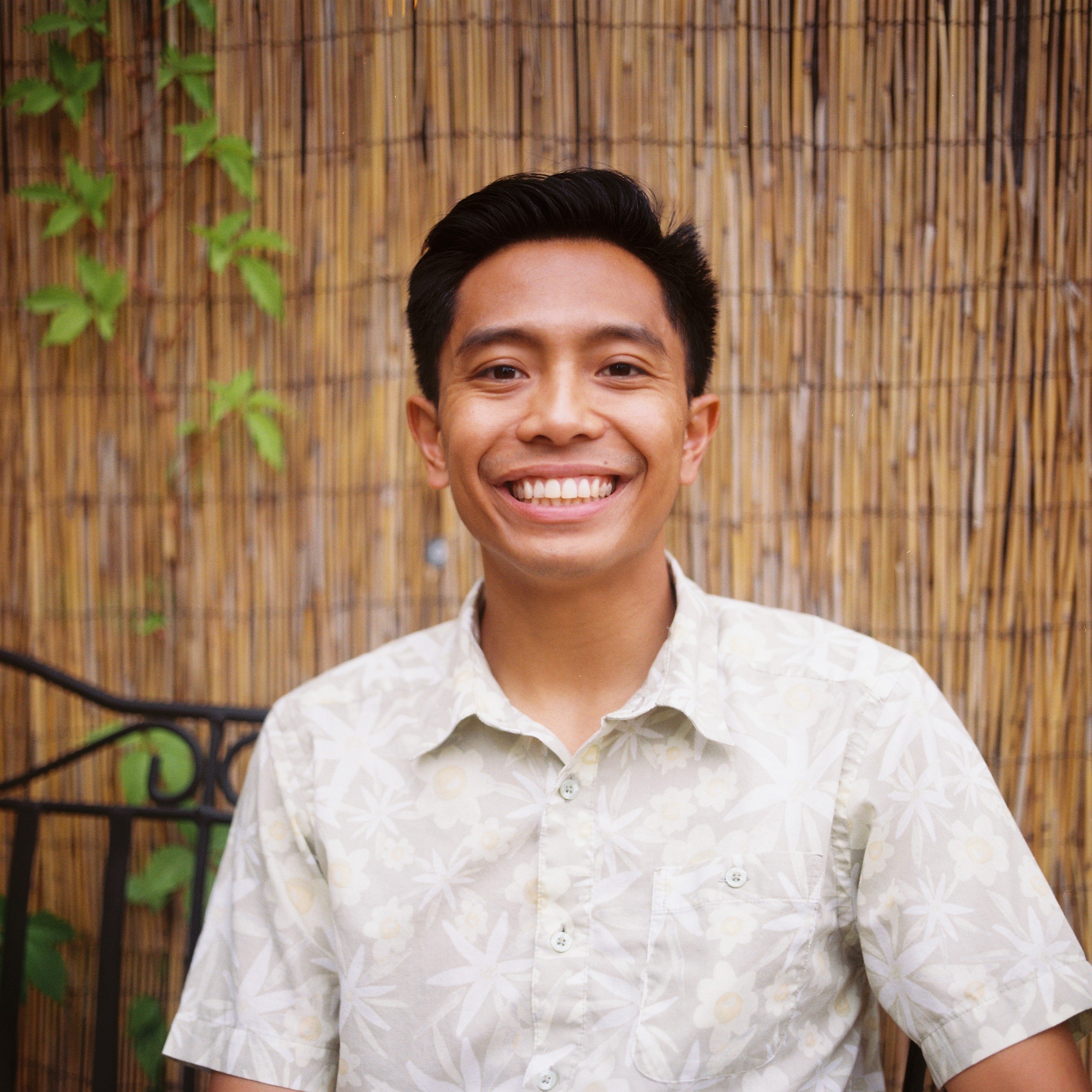
How can grad students advocate for science policy? How can science communication make research more accessible and inclusive?
On this episode of Big Biology, we bring back our “Student Spotlight” segment. We talk with JP Flores, a PhD student studying bioinformatics and computational biology at UNC Chapel Hill. JP does more than just research, he is also deeply engaged in science communication and hosts the award-winning podcast From where does it STEM? He has also worked in science policy as an intern at the NIH and is part of the Science Policy and Advocacy Group at UNC. Earlier this year, JP helped to organize the Stand Up For Science protest and as a result of the movement, co-founded the non-profit Science for Good.
-
Molly Magid 0:04
Hi Big Biology listeners. I'm Molly, the producer of Big Biology. You may have heard my voice before on an episode, but if not, hello, welcome. This is a special episode of Big Biology. It's something I've been working on for a little while. I'm a former grad student myself, having gotten my master's in biology, and I remember being really inspired hearing the journeys of people in their mid to late careers of research. But sometimes that can feel kind of far away. So that's why I decided I wanted to bring back a segment we've had on the show before, the Student Spotlight. In this segment, we feature undergrads, Masters and PhD students.
Molly Magid 0:48
This week, we're hearing from JP Flores, a PhD student at the University of North Carolina, studying bioinformatics and computational biology. But JP does a lot more than just his PhD research. JP has a huge passion for science communication. He has his own podcast called From where does it STEM? He is also deeply engaged in science policy, having worked as an intern at the NIH. And he was also a key organizer for the Stand Up For Science protest that happened earlier this year, and was modeled after the March for Science in 2017. On the episode, JP talks about his path to science, his passion for science communication and science policy, and his commitment to making science more accessible, inclusive and impactful.
Molly Magid 1:37
I'm Molly Magid, and this is Big Biology.
Molly Magid 1:52
JP Flores, welcome to Big Biology. It's great to have you on.
JP Flores 1:55
Yeah Molly, thank you for having me. Glad to be here.
Molly Magid 1:57
Yeah, I'm so excited to talk to you about your research, how you engage in policy and science communication, and I especially want to talk about your podcast: From where does it STEM? But first off, I just want to learn a little bit more about you. Right now you're getting your PhD in bioinformatics and computational biology. So what was your path to this work and what got you interested in science in the first place?
JP Flores 2:20
Yeah, great first question. So for the viewers that can't see me, I'm actually wearing an LA hat, and that is because I was born and raised in Los Angeles, California. I'm Filipino, and so are my parents. For as long as I can remember, they've really just preached, you know, school and education being super important for my future. They've really pushed me into like, medicine and science because they believe that that was the best way for me to make money and give back to my family and support them in the future. And it's funny, because that was kind of my way into science. But that's not how I got into science.
JP Flores 2:53
What happened was I went to Occidental College, which is in Los Angeles, California, and I was recruited to play baseball there. And I absolutely loved my time at Occidental, because not only did I play baseball there, but I did my love for research. In my first year, I was there, in my head, for baseball, not necessarily for school. And in my first semester, I had a GPA that was just above one, so not not a fun academic start to my journey. But what happened is, I went to a bunch of my professors, and I basically was like, hey, like, I want to keep playing baseball here again, not even emphasizing school or anything I do to get my grades up. And, you know, I talked to a bunch of the biology faculty. They gave me some pointers on how to study, because I was very successful in school, in high school, but I didn't know how to, you know, study in college or anything like that. I'm first generation, and one of my professors actually took me into his research lab, and he fed this snail a fish. So my undergrad research was actually studying these venomous fish hunting cone snails. And I was like, I've never seen anything like that ever before. Why do you have these snails? What? Why are they here, you know, like, what? Why is it that they can eat fish like that? And he basically went on to tell me about natural product research, right? So he was saying that this venom that the snail has when it envenomates a fish. The fish flails around because its neurons are getting over excited, over stimulated. The hope was perhaps we can use this venom to combat neurodegeneration, right? If we are over stimulating neurons, perhaps we can revive dying neurons in diseases like Alzheimer's and Parkinson's, for example. And that's when I was hooked. That's when I was like, you know what, I think research is what I want to do. So I did research in his lab for four years, and a lot of things, you know, happened in those four years, but that's kind of how I found my way into science. And I really started to figure out my scientific identity, which was, I want to be a scientist. To, you know, does a lot of outreach. I want to do a lot of science policy. I want to do a lot of science communication.
JP Flores 5:07
You know, in baseball, I coached a lot as well in in baseball, and a lot of times, you know, I would say to my to my athletes, baseball is just a vehicle for learning, tools for life. And that's kind of how I approach science, right? Like, yes, it's this amazing thing. People are discovering things all the time that are going to be benefiting human health. But it's also a way to build community, for example, it's a way to build resilience, right? With the amount of experiments failing every now and then, you know? So, yeah, I really credit Occidental for not just, you know, helping me find my passion for science, but also figuring out, how do you make science most impactful?
Molly Magid 5:45
Yeah, I can kind of imagine those snails. But like, just thinking that there's a snail big enough to, like, eat a fish. Like, in my mind, of snails, like, you find them in your garden, like,
JP Flores 5:56
Yeah and these fish are the size of your thumb, like they were eating, like, fish twice their size. Yeah, yeah, the ones, the ones in Australia, are gigantic, and those are some that can actually kill humans. They've been known to accidentally sting a human, and it would kill them. So yeah, pretty well,
Molly Magid 6:12
Oh, wow, these snails are gonna be in my nightmares, in a good way. Maybe you just mentioned, like, you say that baseball is a tool for learning about life. What do you mean by that? What did you learn from baseball? And were there any sort of, like, cross experiences between science and baseball, where you felt like you were, you know, learning from one, applying to the other, vice versa?
JP Flores 6:33
Oh, 100% it's the ability to deal with failure and trying to figure out how to make the time in between failures shorter, right? So it's in baseball, you're failing more than half the time, right? It's very rare for you to actually go up to bat and hit a home run in every at bat. And when you're coaching, when you're playing, right? You've got to keep telling yourself, you need to forget the last at bat that you had, because if you ruminate on that failure, it's going to get into your next at bat, and you're pretty much screwed for the rest of the game. So I tell my athletes that, because that is literally life, right? Like you do not. In my opinion, you shouldn't wallow too much on your failures. You should figure out how you can get back up and keep going. And I think science is the same way. I think, you know, in the lab, like, I'm dealing with a failed experiment right now. This is an experiment that I've been working on that I know how to do. It's been four years since I've learned it, and I'm still failing every other time I do it, right? And I think it's very easy to get frustrated, but at the end of the day, it is, you know, thinking about how you recover from that, right? Like, okay, cool, it failed. Let me take a couple days off and get back into it and not let the past failure.
Molly Magid 7:46
Yeah, you're given the great life advice already.
JP Flores 7:49
Like his is a science podcast, right? Yeah.
Molly Magid 7:53
But as you said, science was about life. I realized I hadn't actually asked you much about, like, your current PhD, like, how's that? And you're on your way, right, four years in?
JP Flores 8:02
Yeah, I'm four years in. I had a committee meeting the other day, which is, you know, five professors who can say whether or not you graduate, and they said that I can graduate as long as my paper gets favorable reviews. So, yeah, I just need to finish my experiments, submit this paper, get the reviews back, and I'm set to defend. So my PhD is in bioinformatics and computational biology, very different from cone snails. I chose it because I felt like computers and programming was the most versatile degree you can get. Like, I wouldn't be limited to just genetics. I can also go into infectious disease, biochemistry and imaging, but I could also become a data analyst for the Los Angeles Dodgers, the MLB team, if I wanted to right, like it just gave me this, this huge skill set of different things. So I do that. That's my training. What I study is gene regulation, so how, when and why genes turn on or off in disease. I'm really fascinated by this because of the idea of chromatin structure. So I studied chromatin structure. So a lot of people think that DNA is kind of just this thing in your cells. It's kind of floating around. What really drew me to the field is the fact that if you were to stretch DNA from end to end, DNA from one cell, it's about six feet long, right? So you have to jam pack six feet of DNA into one of your cell nuclei, and your genes still need to turn on at the right place at the right time to keep you healthy. And that just absolutely boggled my mind, that six feet of DNA needs to fit in there and it still can help you function properly, right? So that's what I study, is I study chromatin structure and how that can contribute to disease.
Molly Magid 9:41
Yeah, I want to know what started you on your path to be like, I want to do this PhD, and kind of what sparked that decision?
JP Flores 9:48
Yeah, so one, I did think cone snails were really cool, right? Like, it's just the curiosity of how that venom works and how you can actually apply that to figuring out how to keep humans healthy. You. But really, what drove me to the PhD is the fact that there weren't a lot of people that looked like me in science, right? Again, being first generation, being a person of color, it was just weird not having a faculty member that was Filipino, for example. So for me, the PhD, I like to tell this to a lot of people. The PhD, for me is just a way to get power, quote, unquote power, so that I can empower other people, right? Because no matter what I think when, when you're enthusiastic and passionate about science, you're going to want to find the answers to questions. But what really drives me is the fact that, no, I can also use this as a way to bring people into science, right? I want to make more people culturally aware of what goes on in science. I want to make science a mainstay in our local communities. I want to make sure science reflects the diversity of our country. Here in the US, it is very diverse, but science and the scientific workforce is not, right? So that was truly my motivation for pursuing the PhD.
Molly Magid 11:01
Yeah, absolutely. And that kind of sounds like the mission of your podcast. From where does it STEM ? I should say STEM is the acronym, S, T, E, M, science, technology, engineering, math. So from what I can glean from some of the episodes I've listened to and what I've seen you're really sharing the stories of scientists who we don't often see like we were talking about, kind of talking about the challenges and also the rewards and the interesting parts of going into science, I'd love to hear, yeah, when they made you want to start it?
JP Flores 11:36
Yeah so "From where does it STEM?" is a passion project, right? It's where I interview scientists from all over the world and ask them how they got there. And I think it's important to hear that, because from my experiences with my identities, right. I've never had a role model or someone that I can look up to that looks like me, or someone that has had similar experiences as me. And you know, when I was creating the podcast, I was trying to figure out, yeah, like, is this the right medium? Is this a good opportunity to just get stories out there so that people in the public can hear them and just understand: "Oh, is that what happens in higher education?" Is that how, you know, I can, like, find a mentor? Is that how I should be mentored? Right? So, yeah, it's more of a storytelling project that just tries to get people's experiences out there so that others can benefit from it.
JP Flores 12:21
Yeah, I started it at Occidental so I was a senior during the time the peak of the pandemic, COVID-19 pandemic, and the murder of George Floyd here in the US and our biology department at Occidental College came together, and they created a course called the Broader Impacts of Biology. And in that class, we discussed injustices in STEM and medicine. So for example, the lack of diversity in the scientific workforce, funding discrepancies on diseases that might be seen as mutually exclusive in black populations, et cetera, like sickle cell anemia, right? Like the cause of that disease is very similar to that of cystic fibrosis, but the funding is very different. So we would literally bring research articles, like data driven papers that show and discuss these injustices. But a portion of that class was also one where you had to have a project that would benefit the broader public. So a lot of my peers were creating ecology curricula for middle schools, things like that.
JP Flores 13:23
I decided to take advantage of the Zoom world and start the podcast, because, again, I wanted those stories to get out. And it just has been a wild ride. I think it's on its fifth year. You know, I got a Spotify award in 2021 I've been able to write commentaries about it, and it's just been really cool to just talk to many scientists, to a bunch of different scientists from all over so like former NIH director Francis Collins, has been on the podcast, a lot of amazing people in science policy, a lot of diverse scientists. And right now we're actually trying to turn those conversations into data qualitative content analysis. On all my episodes, I have all the transcripts, theoretically, we can just kind of ask the question, what factors influence a scientist's journey, and just code it all up and try to put it into a paper. And that's and we're in the middle of that right now. So, you know, it's been weird to think of this as a class project that started as a senior during a very vulnerable time in history, to, oh, now it's like an academic thing that I've turned it into Yeah, that's kind of how the podcast started, where it's at. And another fun thing about the podcast is I bring on co-hosts with me, so they can be high schoolers, undergrads, grad students, postdocs, faculty. And we just try to interview people that we think have cool stories and interesting, interesting stories to tell.
Molly Magid 14:38
Yeah no I appreciate that. And I think we feel similarly at Big Biology about science communication, but I actually was going to ask you even more about science communication. You know, what are your reasons for doing science communication, and why do you think it's important, especially if you have any sort of like advice or reasons why other students or other people should get involved in science communication?
JP Flores 15:00
Yeah so I think science communication is one of the most important tools that a scientist can have. Here in the US, right, a lot of our science is funded by taxpayers. And I think for a long time, scientists have just been in this echo chamber or vacuum or ivory tower or whatever you want to call it. And I think a lot of scientists, they get really stuck in the whole publish or perish mode, where it's like, oh, yes, to keep my career going, I need to keep doing experiments and keep publishing these big papers. But in reality, it's, I think people stop at the publication. I think we really need to focus on incentivizing disseminating the results. Right? It's like, yeah, who the heck is this gonna benefit, right? If I'm doing research on rare diseases, right, and I find a variant that causes this rare disease, it doesn't just stop at let me publish this and send it out to the community. I think that is huge, right? That's a really important step so that more people can, more scientists can be involved in the project and help you figure out what is going on, help you find treatments, whatever, but it's also, well, how do we get this back to the rare disease patients that are really that have the disease, that have the lived experience of this phenomenon, right? And I think when we're thinking about science moving forward, that's what we need to do, right? So I that's why I think science communication is important for every scientist.
JP Flores 16:21
Right now we're in a moment where a lot of scientists are going to Capitol Hill, right? They're going to Washington DC, to talk to lawmakers about why funding science is important. I think it's going to be really hard to convince a lawmaker that science is important if you're just talking at them using your jargon, right? We need to figure out how we can get the main idea of our research, talk about why it's important, who it affects, why it's important for their constituents, and hope that they get it and will advocate for science funding.
JP Flores 16:50
How do you talk to someone on a podcast about your science? How do you talk to a news reporter about your science in a way that isn't going to mislead the public? How do you talk to your grandmother at the kitchen table about or at the dinner table about your science so that she can tell all her friends at pickleball tournament, right? Like, how do we do that most effectively? And I do think it needs to be part of a lot of curricula for graduate students and undergrads. I think it's just part of it. Same with equity and inclusion. It shouldn't be thought of as these separate entities. It should be built into the fabric of science.
Molly Magid 17:21
Yeah, 100% agree with you. And I feel like sometimes there's this, there's this idea that it's like, well, you're studying science. Study science like we only care about the science and and I think it's at the expense of all these incredible things, not to mention at the expense of getting funding, potentially, if you can't convince people that your science is important, you can't do the science. So I feel like it's sort of a myopic thing to say, oh, no, I don't want to do any of that. That's I want to do the
JP Flores 17:55
science. Your neighbors are paying for it. Yeah, science, but just know that the that the homie next to you is probably helping pay for it
Molly Magid 18:11
So on the topic of science funding, you've actually done a lot of work with science policy. In particular, you were a science policy intern at the NIH. I'd love to hear a little bit about that work. And also, just in general, why are you interested in working in science policy?
JP Flores 18:28
Yeah, so they had me on a bunch of things. One is the NIH, at the time, was trying to reimagine how we did clinical research engagement. And I thought this was the most fascinating thing ever, because there was so much crosstalk with science communication, right? So I was basically helping these NIH staffers talk to a bunch of academics in the field who are experts in community engagement, and they're talking a lot about really just having all these focus groups, really centering the person that you're asking about their experiences and building around them. I do think it's important for scientists and patient advocates and patients to come together and work together in a very synergistic way, in a way that acknowledges the power differential, all the power dynamics of that relationship, etc. So I was doing that for a little bit.
JP Flores 19:17
Another thing I was doing was a very intern thing, right? I was sent to basically listen to a bunch of scientists testify in front of Congress. At the time, this was during all the things with the origins of the pandemic. I think the big gap in knowledge here was a lot of lawmakers just didn't know how science worked. They didn't understand the grant process, they didn't understand how hard science was. They didn't understand how the controls worked, et cetera. And this is one of those situations where I'm like, Well, I feel like scientists should just go out into the community and explain how we do it, right? I don't think we would have been in this situation if we had already been trying to educate the public on what we do.
JP Flores 20:00
So those are a couple of things that I did there, and I just got really into it, man, like, because a lot of things happen in policy that directly affect scientists. The funding thing is the best example I could think of right now, right? But scientists can go to Capitol Hill and advocate for their work. They can advocate for more funding. And I think people don't realize that. Scientists can develop and build relationships with their local representatives. So I'm from LA, I want to go back to California. I'm currently doing my PhD in North Carolina, but I'm building relationships with the lawmakers here. And it does feel impactful, because they're like, oh, like, yeah, I would love to get a tour of your lab. Like, bring me, I want to see how all this works, right? So that's why I'm really into policy, is there's a lot of implications for science. It affects the way we do things, and I think it's something that we should all think about when we're thinking about our identities as scientists. It's not just science communication, it's also the policy aspect of it too.
Molly Magid 20:57
That's really inspiring, honestly, to hear you say that you're kind of getting to know, you know, the local representatives, because it does feel like, I mean, we can talk about the current situation of, you know, there's a lot happening every day. It feels like that is sort of shifting the ground underneath scientists, whether it's science funding, the cancelation of DEI programs, the, you know, people just getting laid off. There's so many things happening on, you know, often on a federal level. And so I really could see that well, you know, if you go to your state level and kind of have a personal relationship with someone, maybe that makes it a little bit easier to then push for those things that are maybe getting canceled on a federal level.
Molly Magid 21:41
But I do want to get into some of the really cool stuff you have helped to organize to support science. So one of them is that you helped organize the Stand Up for Science protest, which happened earlier this year, and it was modeled after the March for Science. A lot of people might know of that, which was a march that happened in 2017 so first of all, just, I'd love to hear, how did this come about, and how did you do get get into organizing this, the stand up for science protest.
JP Flores 22:11
First thing I have to say is, my views do not reflect my employer, of UNC, and does not reflect the HHMI, which is my funding. But yeah, what happened was, at the beginning of the year, there's a bunch of a bunch of executive orders that were coming from the Trump administration about science, right? So a lot of DEI grants were getting cut. And, for me, as someone who's really passionate about diversity in the science workforce, someone who's passionate about bridging science and society, I just felt hopeless for the first time in my life. Like, this is, this is something that is seriously out of my control. Like, I can community build, I can do all these things, but I feel like everything has just been sucked out of me. And as I was looking for answers, I thought about 2017 right? I thought about March of Science. And I don't know why this idea got planted in my head, but I was like, why don't we just do that again? Like, that'd be really cool. So, you know, I, like, tweeted out. I posted on Bluesky, which is another social media app. And I was like, Whatever happened to the March for Science people you know where are they? Of course, there were no replies, because people you know were Doom scrolling, but not, you know, engaging with it.
JP Flores 23:17
And I decided to reach out to one of the original March for Science organizers. Jonathan Berman is his name, and I hopped on a zoom call with him, and he goes: "Yeah, so this is what we did. This is how we did it. This is what I wish I did differently. This is what I thought we did wrong. And at the end of the call, he goes, "Yeah, and it's been, like, eight years, and I still get death threats." I was like: "Okay, like, that's, that's like, like, I was so excited to, like, get this going, and then I had to think about that, and that was in the back of my head." So what I did is, after that call, you know, we hung up, I sank in my seat, and I was basically like, All right, well, let me get on Bluesky and see, see the same thoughts. And I saw that Colette Delawalla, who's currently still leading, stands up for science. I'm doing another thing, which I could talk about later too, but yeah, I reached out to Colette because she posted: "Who wants to do a protest." And I reached out and said: "Hey, I contacted Jonathan Berman, March for Science organizer. Let's get something going. I'm down to help you, if needed." At the same time, she was talking to three other people, we hopped on a zoom call, and we said, march 7, let's do it. We never organized something like this in our lives, like I've organized stuff, but not, not something like this, right? So we learned about all these permits that we had to get all these different things.
JP Flores 24:36
And a couple days after that Zoom call, I was going to the triple AAAS conference, the Association for advancing American science. And I didn't know this, but one of the other people on the Zoom call was also going to be there, Emma Courtney, yeah. So we literally met up in Boston. Went to this conference. We started making the rounds, man. We started talking to every single person we could find about stand up for science and how we needed help organizing it. And that is when a Science Magazine reporter realized that this could potentially be a big thing. She interviewed us, her name's Alexa, over at Science, and she put it out, and it kind of just exploded, like, Stand Up For Science. We thought it was going to be like some sites around the country ended up being a lot more than 32 because we only had capacity to support 32 rally sites. It ended up going global, like people in France were also in on it. But yeah the whole point: defend DEIA and science, reinstate funding, because there were so many cuts to employees in federal agencies doing science, there's one more, oh, and stop political interference and censorship in science. So that's that whole thing that was, Stand Up For Science. I got to high five Bill Nye. Yeah it was awesome.
Molly Magid 25:51
Oh my gosh. Wow, that's, that's, I know it was, you know, not just you, but I find that really impressive that you, you know, especially from feeling quite down about things were like: "Okay, what do we do next?" And then this is what you came up with. I'd love to know, you know, what's Have you kind of done with that momentum from Stand Up For Science? What have you turned that into? And what have you continued to do?
JP Flores 26:14
Yeah, so stand up for science is still going. They're doing a lot of political activism. Collette Delawalla is leading that, but two other organizers so me, Emma Courtney, and Sam Goldstein, we decided to branch off and create a nonprofit called Science for Good. And the idea with that was, yeah, we were thinking about how to rebuild science once we weather this storm. How do we think about science communication and how do we embed that into the fabric of science? How do we get science policy and advocacy in the minds of scientists, and how can we help develop this workforce so that they are thinking about these things? So we have a lot of things going on right now.
JP Flores 26:50
One initiative is called Brewing Scientists. This is initiative where we basically pair research labs with breweries in their local town, and put their research facts on beer labels. And we, like basically track the engagements, and we can evaluate the impact, because we're putting a QR code on all these labels. So we're trying to figure out how, if we can't bring people to us, right, how do we just get science into communities? This is one way we thought would be really innovative and cool. The reason why we did that is because a lot of people, a lot of scientists, have done outreach in breweries, and they would have events, right? But that brought in people that were already interested. So we wanted to figure out, well, how do you just, you know, put science where people least expect it, and that initiative is being done by Angelique Allen, who is an HHMI Gilliam Fellow at Oregon, and myself, we're both leading that.
JP Flores 27:44
Sam is spearheading this initiative called "What's the big idea?" So she has sites all over the country where she calls these science open mics, where scientists are just going up to a microphone and talking about, you know, how the funding cuts affect them and how it affects the public.
JP Flores 28:00
And our whole premise with Science for Good is we are nothing without communities, the only people, the only things that we should be thinking about right now are communities and how we could best have our impact there, right? It's not, oh, we're in the ivory tower, and we need to tell everyone to support us. I don't think that's how this should work. It is how do you get scientists into communities and have them talk to everyone such that the community takes them in, right and actually cares and supports them? That's what we're trying to do for science, for good.
JP Flores 28:34
So I'm also leading, helping lead a group called SNAP. So it's called the Scientist Network for Advancing Policy. This was a wild story too, because that group came together at the triple AAAS conference. What happened was a bunch of graduate students were talking to each other. We were the graduate students organizing Stand Up for Science. And these folks at UCLA, Aaron and Audi, Natalie, also at UCLA, and some people at Penn so like Miles and Dimitris, they're basically like, Hey, we're creating the Slack channel filled with science policy minded people. Do you want in? And I don't know how they did this, but at some point it got to like, 80 to 100 scientists, graduate students, in this Slack channel. And one day, Izzy and Emma Scales, they're at Cornell. They put in the slack. Hey, we have an idea. We think it'd be really cool. Who wants to help us with it? And that's kind of how this McClintock Letters Initiative came to be. We got over 500 scientists signed up all across the country to write op-eds in their local newspapers about how they're being affected by these cuts in a way that is not speaking from the ivory tower. So that's another project I'm working on. And the next thing with SNAP is we're gonna do congressional visit days. So how do we utilize the network we just made, and how do we build up a workforce of scientists that will go to the representatives and talk about science.
Molly Magid 30:01
I feel like that kind of makes me feel, makes me feel like there's a lot of stuff getting done. When we see the big headlines of like defunding this and changing that, it can feel like really disheartening. But just to hear you talk, I'm like: "Oh my gosh, there's, there's some cool people. They're doing just some amazing work with science policy, so that's awesome.
JP Flores 30:24
Yeah, but there's no way. I really believe in the collective, like, there's no way in heck we could do this by ourselves. So I'm really big on, like, throwing people up on the podium, and I'll step down. I'll step up when I need to. But it's like science, right? Like, I don't think one person should get a Nobel, I think a whole lab group should.
Molly Magid 30:44
Definitely, that's maybe one of those science teaches you about life things. So you kind of answered this a little bit already. We're sort of talking about how it can feel disheartening to see some of the changes happening at a federal level. I want to know how you personally keep the faith, how you kind of feel like you have some hope for the future around science and continuing to do DEI and continuing to do these important science policy and communication things.
JP Flores 31:14
Yeah, honestly, like some days are better than others, obviously, but it truly is -- the way that I, that I stay inspired and motivated, is talking to my peers and talking to the next gen, next generation of scientists. So at UNC, we still have a lot of mentees. We still have a lot of undergrads. And, you know, a lot of them will come up to me and be like: Should I stay in this? Like, Can I become a graduate student knowing that all this is happening? And, you know, a part of me is kind of thinking to say no, like, it's really hard to stay in this right now, but that's, that's kind of what drives me. It's, it's, I'm not just fighting for myself, and like the scientists that are already here, it is the next generation. Like, who knows? Like, one of my mentees could possibly win a Nobel Prize because they discovered that cone snail venom is a cure to Alzheimer's. I don't know, but that's what keeps me motivated. It's also all the people that I work with, right? It is all the colleagues in SNAP, in Science For Good, those communities are amazing. Like, we have a breaking news channel in our Slack channel, and it's literally just like, oh, this just happened. How do we? How do we, what are we going to do? What's our initiative to, like, try and combat this? And I'm like, man, y'all don't sleep, dude. Like, like, I love it, but that's what keeps me motivated and driven. It's also my communities outside of science. So I also play a lot of music on my Instagram. I think it's not even science. It's mostly me playing guitar and singing, so I do a lot of that. Here it's older generations of scientists telling us that, like, it really is in your hands. Like I'm learning that there's no power greater than community, like the strength that I get from all these different folk wild, like I feel like a superhero sometimes because of how much inspiration and motivation they feed me. So, yeah, it's, I can't even say that this is all intrinsically motivated, like it is definitely all the people that I work with.
Molly Magid 33:08
I love that. Well, you talked a little bit about what's next for Science For Good, but what's next for you, if you know, and if you could talk about it.
JP Flores 33:17
Believe it or not, I'm still on the academic track. Yeah, I still want to be a PI, but I do know that I want to maybe move into the field of rare disease genomics. So the reason why is at UNC I'm also taking some business classes, and there's a class I'm taking called Design Thinking for the Public Good. And this is the idea that if you design solutions for the people that are the most marginalized or minoritized, that solution will extend to many, right? So if you design a solution for someone without an arm, you're designing a solution for someone with a broken arm, or someone who's a new parent and has to take care of a newborn, right? And I had, I just had this weird epiphany where I was like: "Oh, wait, rare diseases are super marginalized in the scientific community, underfunded, not a lot of people have these rare diseases. You never know the cure to cancer or a neurodegenerative disease could be in the rare disease community, right?" So it's like, not only can we, you know, help the rare disease community and their conditions, but it can also help possibly, you know, a lot of other people. So I'm trying to find a postdoc in the rare disease world, and for my future lab, I want to be a lab that studies rare diseases, make sure that whatever we discover gets back to the communities that we're trying to help. And I want to make sure my lab is very involved in science communication and science policy, because, again, that's where I think science needs to go it is trying to be a more well-rounded, complete scientist that thinks about society, not just their pipettes and computers.
Molly Magid 34:49
Cool. Well, I want to ask you, and you maybe do the same thing on your podcast. Is there anything that you wanted to talk about that I didn't ask you about, or anything you want to add?
JP Flores 35:00
I feel like you've asked me questions that encompass most of my identities in life, like I really wish that I did have more. And you know what I might hang up and think of something, but I think you really covered a lot, right?
Molly Magid 35:15
Well, thank you for being the center of attention of this episode. It's been really awesome to speak with you.
JP Flores 35:20
Thank you for making it enjoyable and making me feel like I can actually talk about myself in a vulnerable way. Appreciate it.
Cameron Ghalambor 35:37
Thanks for listening to this episode. If you like what you hear, let us know via Twitter, Bluesky, Facebook, Instagram, or leave a review wherever you get your podcasts. And if you don't like what you hear, well, we'd love to know that too. All feedback is good feedback.
Marty Martin 35:52
Thank you to Steve Lane, who manages the website, and Molly Magid for producing the episode.
Cameron Ghalambor 35:56
Thanks also to interns, Caroline Merriman and Brady Quinn for helping with this episode. Keating Shahmehri produces our awesome cover art.
Marty Martin 36:04
Thanks to the College of Public Health at the University of South Florida, the National Science Foundation and our Patreon and Substack subscribers for their support.
Cameron Ghalambor 36:11
Music on the episode is from Podington Bear and Tieren Costello.