Ep 136: The call of the wild (with Rae Wynn-Grant)
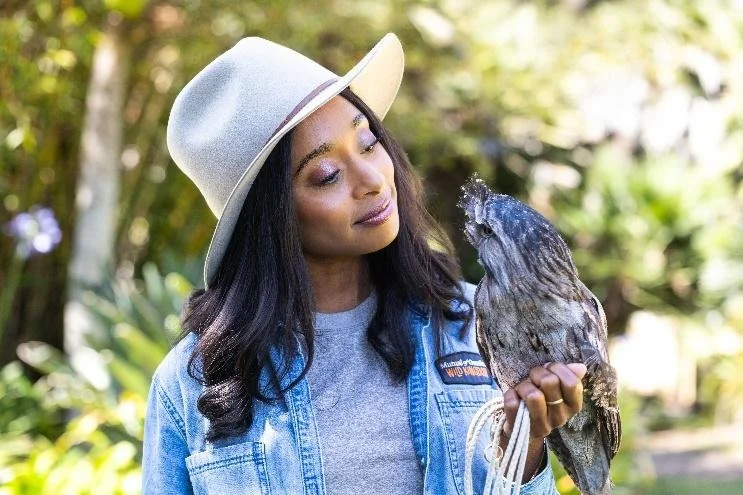
What role does storytelling play in conservation efforts and inspiring future generations of scientists? How can science communication make scientific knowledge accessible to the public, especially for communities underrepresented in science?
On this episode, we talk with Dr Rae Wynn-Grant a researcher at the Bren School of Environmental Science and Management at UC Santa Barbara and a research fellow with National Geographic Society. Rae is also a science communicator and co-host of the 2023 reboot of Mutual of Omaha’s Wild Kingdom show. We talk with Rae about her path to wildlife ecology and science communication, how the Wild Kingdom show has changed over time, and her experiences hosting it, and the importance of nature shows to public understanding of science.
Cover art: Keating Shahmehri.
-
Cameron Ghalambor 0:04
Hey, Marty, who did you want to be when you grew up?
Marty Martin 0:06
Wait, don't you mean, what did I want to be when I grew up?
Cameron Ghalambor 0:10
No, no. I meant, who. Like was there a person who you looked up to, a role model that you wanted to be?
Marty Martin 0:16
Uh, yeah, Indiana Jones, of course. I remember seeing the Temple of Doom with my mom when I was about 10. And archeology seems so cool till I did an internship for an archeologist in high school, and I learned that the movies in reality didn't overlap much. The actual work of an archeologist is tough and not as adventurous as Spielberg would have us believe.
Cameron Ghalambor 0:38
That's pretty interesting. For me, it was the tennis player, Bjorn Borg. I remember watching him play these epic matches as a kid, and I used to dream of growing up and winning the US Open. But alas, aside from playing high school tennis, I wasn't really that good.
Marty Martin 0:53
Great. That makes perfect sense. So your trajectory into evolutionary biology follows perfectly from passion about tennis
Cameron Ghalambor 1:02
Exactly. Well, our guest today, she wanted to be like David Attenborough, and unlike you and me, that's pretty much what she's done.
Marty Martin 1:09
Yes, our guest today is Dr Rae Wynn-Grant, a researcher at the Brent School of Environmental Science and Management at University of California at Santa Barbara, and a research fellow with the National Geographic Society
Cameron Ghalambor 1:20
And the co-host of Mutual of Omaha's reboot of their super famous Wild Kingdom.
Marty Martin 1:27
Rae grew up watching a lot of documentaries on TV, realizing that what Marlin Perkins and team did on the original Wild Kingdom was her dream job.
Cameron Ghalambor 1:35
But as she explains in the episode, her path from watching wildlife shows to hosting one definitely was not a straight line. She initially studied theater and then journalism in college, before finding her passion in environmental science.
Marty Martin 1:49
And before becoming a TV host, she got a PhD working in carnivore behavior in ecology, namely, how human activity influences black bears.
Cameron Ghalambor 1:57
But all the while, she was deeply engaged in science communication. For example, as the creator and host of the award winning podcast going wild with Dr Rae Wynn Grant.
Marty Martin 2:08
It was really fun to talk with Rae about her work on Wild Kingdom and how the focus and production of the show have really changed since its debut in the 60s.
Cameron Ghalambor 2:16
We also talked about the importance of programs like Wild Kingdom to the public understanding of science and conservation.
Marty Martin 3:34
I'm Marty Martin.
Cameron Ghalambor 3:35
And I'm Cameron Ghalambor
Marty Martin 3:36
And this is Big Biology.
Marty Martin 3:49
So Rae Wynn-Grant. Thanks so much for joining us on Big Biology today.
Rae Wynn-Grant 3:52
It is awesome to be here. Thanks for having me.
Marty Martin 3:55
Yeah, we're really excited to talk to you about your path from professional scientist to serving as co host of NBC's reboot of Wild Kingdom. But first, congrats on the Gracie award. Just today, I think, you won the Gracie for best on air talent in lifestyle entertainment. Tell us about the award and how that competition works.
Rae Wynn-Grant 4:13
I am hours away from winning, actually, so the event, the award ceremony, is this evening, so soon enough, I'll be a winner. The Gracie awards are amazing. This is the 50th anniversary. So this is the 50th year right now today of the Gracie awards, and it's from the alliance of women in media. It's essentially like the Oscars or the Emmys kind of combination of both women in media. So it celebrates women in television and film doing amazing work. And there's a lot of women in media, right? But often in these other award shows, there's politics involved, there's a lot of competition, and there isn't much of an emphasis on the contributions that women are making. So they are doing awards for everything from, you know, Best Director, Best Original Screenplay, Best Actor, you know, supporting role, all of those things to the award I'm winning, which is Best Television Host. And that's major. I couldn't believe that I won it. I knew that, you know, I was being nominated by Wild Kingdom, we nominated ourselves for the award, but in no stretch of the imagination did I think that I would win against all the other women who host television shows, you know. So last year's winner for my category was Gayle King, who is a veteran television host, and this year it's me.
Rae Wynn-Grant 5:43
And one of the things that is really kind of hitting me about it is that I believe, if I'm not mistaken, I'm the first scientist to win such an award. It's a Hollywood
Marty Martin 5:58
Wow.
Rae Wynn-Grant 5:58
A Hollywood award, right?
Marty Martin 5:59
Wow. Extra congratulations.
Rae Wynn-Grant 6:01
It's congratulations. And I think it's also a nod to or a symbol of the fact that science is very much valued, right? We're in a very complicated time when it comes to science and being a scientist and having funding to do science, so it's incredibly encouraging, not just to me, but I hope for the whole scientific community that the folks here in Hollywood, you know, and the judging committee are saying, like, this is what we want to see, and this is what we want to keep seeing, and this is what we want to keep learning about from television hosts. So, so that's what you know, and I'm going to say all this in my acceptance speech, but that's what's really hitting me right now, is like, one being the first scientist, but two, being the first scientist, particularly right now. And so it's just a huge honor. Also, I'm not trained in this, so it's also like, Oh, wow. Like, maybe, maybe this was meant to be, because all my training is highly technical, you know, biology and ecology, and yet, here I am. That's awesome.
Cameron Ghalambor 7:03
Well, let's talk a little bit about your path to getting this award. I've met so many biologists over the years who you know will say something like, you know, I would love to have David Attenborough's job. Like, that's, I can't tell you how many times I've heard that. So how did you go from doing research and being a scientist to doing science communication? Can you talk a little bit about that path and your background in wildlife biology and how that happens? Because I know a lot of our listeners are going to be very interested to know what that path looks like, you know,
Rae Wynn-Grant 7:41
Yeah, I was one of those people, you know, one of the scientists that said I always wanted to do what David Attenborough did. So it really starts in childhood. I grew up in, you know, it's as an audio podcast I always forget. So I grew up, I'm Black. I come from a pretty, like, I think, regular, shmegular Black American family. I grew up in inner city areas and had a wonderful upbringing, like in urban spaces, but my family didn't go like hiking and camping or skiing or hunting or, you know, to this day, and I'm turning 40 this year, but like to this day, I can say I've never been to a national park with somebody in my family that's just, it's just not, that's not part of my upbringing or our world. And it was fine. It was great. I mean, I had this amazing childhood, but my exposure to nature and the outdoors and particularly wild animals, was on TV. And so I would watch nature shows, and I didn't just enjoy them or think they were fascinating, I very much was like when I'm a grown up, I want to do this job. I want this to be my job. I want to spend 100% of my professional time doing what I'm seeing these guys do.
Rae Wynn-Grant 8:56
And it was complicated, mostly because of there's a lack of representation. You know, I was a seven year old Black girl from an inner city, you know, upbringing and watching like, British and Australian middle-aged white men who just seemed to, like, inherently know everything about nature, right? They didn't talk about, like, wow, there was a time when I didn't know this stuff, and this is what I did to gain this knowledge. That wasn't their job. Their job was to just present.
Rae Wynn-Grant 9:27
So I didn't understand the path to becoming a nature show host, but I went to school, you know, kindergarten, saying I want to be a nature show host. And I went to middle school, and I went to high school, I kept saying the same things. And eventually I went to college expressing, like, hey, I really want to be a nature show host, like, can someone point me in the right direction? And I had a college advisor, you know, my first week freshman year, say, yeah, like, we have a theater program. You know, you should like actors go on TV. So that's you should do that. And then, you know, a couple days later, going back to that person maybe, like, that's not quite right. Of them saying, like, well maybe, like, maybe journalism right? Because it's like, it's unscripted TV, it's more like, kind of reporting. So let's do the journalism program that wasn't quite right. And then finally, I met someone from the Environmental Science Department at my college, and they said, "Oh, wild animals and their conservation. Girl, did you know that there's actually a whole field of studies surrounding this? It's called, it's called Science, and welcome join us." And so that was a hit.
Rae Wynn-Grant 10:40
And I, you know, again, I didn't I think that, I think that there was perhaps, maybe a assumption that everyone understood, everyone who's watching nature shows understood that there was like a career, there like a pathway, and that they were watching science. But I was under the impression that science is like done in a laboratory with a lab coat on pipetting chemicals, and if it's not that, it's not science. So when I realized, like, oh, there's environmental sciences, there's ecology, there's conservation science, there is a science to the process of saving wild animals from extinction, and that's what I'm watching on these shows, it was really easy for me to kind of adopt this mindset of like, well, I still don't know how to be a nature show host, but it appears that I can do all that nature show host stuff without the cameras, you know, without the show, but with a lot of purpose, you know, and a lot of impact. And so when I was about, you know, 18, I became an environmental science major at school. When I was 20, I went on a study abroad program to East Africa, and that's where I saw my first wild animal, and that's where I got involved in my very first research project. And that's where it solidified for me that, like, Oh, I'm going to be, I'm going to be an ecologist, and going to do science.
Rae Wynn-Grant 12:02
So you asked me about like, Oh, how did I end up being a host? Because I am the co- host of Mutual of Omaha's Wild Kingdom, protecting the wild, you know, reboot of an iconic nature show, one of the ones that I used to watch back in the day. And you know, I got that offer two years ago. It was exactly, almost exactly two years ago. It was in June of 2023 that we started filming, and it was just like a month or two before that that I had signed my contract to do it. And honestly, I had put down the dream. I had held tight to the dream through undergraduate school, you know, and graduate school. I said, I want to, I really ultimately want to be a nature show host, because I want to communicate this science. I want to get more inner city Black kids like interested in ecology. I want to, you know, I want to shout about nature on the rooftop to anyone who will listen. You know through my master's degree, through my PhD, through my postdoc, through my first, you know, research positions, and eventually I got to a place where I was like, I had an agent, and I was pitching myself at you know, networks, and saying, you know, hey, I really do. I've been all around the world. I have all of the pedigree you could ask for. I'm really interested in doing this. I'm the real deal.
Rae Wynn-Grant 13:24
And, you know, and I had, I got, I got a lot of rejection. I had, you know, folks tell me, like, you know, what's really popular right now is veterinarian shows, you know, like could you do dogs and cats? Could you do? Could you do like a bunny rabbit? Can you, you know, the vet shows are really what people are tuning in for. Could you pretend to be a vet? Like, no, that's not ethical, and I can't. And also, I had network you know, one particular network executive who could have paved away for a show, you know, say to me, Wow, you're amazing. You really are the real deal. This is incredible. The stuff you do is, is like, beyond what we would expect. But you don't have the look of a wildlife you know, of a nature show host. Look at all the nature show hosts out there. They're not like urban, millennial, Black women. Sorry, you know, like, that's just not going to work. It'll never happen, and you should probably quit trying. So that happened a couple years before I got my nature show. But between that time, I stopped. I really stopped. I thought to myself, You know what? I am satisfied. I travel around the world. I work to save endangered species, I mentor graduate students. I really believe that the work that I do makes a difference, and that's the main point, right? Is not to like be on TV, but to help heal ecosystems and to teach other people to do the same. So I stopped. So I got rid of my agent, I stopped pitching. I, you know, really focused in on my carnivore ecology research, and felt great about all that, and really accepted that I would not be a nature show host. I'm telling you I did not audition. I didn't apply. I had no idea that Wild Kingdom was returning to the air. It was a huge surprise when they came knocking asking me to consider joining them.
Marty Martin 15:19
Wow. So I want to, I mean, you know, that's inspiring, but did you intentionally pick your research topic? Because, you know, you became a biologist, a conservation biologist, and you always wanted to be a nature show host, but what you chose to work on, among we biologists, we know that's not the easiest set of species to work on. You've worked on bears, you've worked on lemurs, you've worked on lions. There's a lot of easier species to study out there. Did you, did you work on those, particularly because you thought that would be useful in the SCI com space, or was this sort of just a passion for bears, maybe from some experience that you had in childhood?
Rae Wynn-Grant 15:58
You know, I blame the nature shows truly. I mean, a lot of people assume that, like, I was a nerdy science kid before my formal science training. But I don't think I've ever been a nerdy scientist, like, even when I was in, you know, in school, you know, and getting my training, I, like, really loved it, but I very much compartmentalized, like, I'm, like, when I'm in school, I'm studying this. When I'm out of school, I'm really interested in, like, Beyonce concerts and music and, like, you know, other stuff. I've just always had, like, kind of this box around my professional interests.
Rae Wynn-Grant 16:39
So when I was coming up, I'd watch nature shows. And like nature shows don't give you much about soil bacteria, you know, or like marine invertebrates, like, you know, there's, there's not much out there. It's like polar bears and elephants and big cats and, you know, it's large mammals. So that was my interest. In fact, my supreme interest the two animals that I really thought, "Gosh, I would love to pioneer, you know, studying them," were gorillas, mountain gorillas and tigers, Bengal tigers. To this day, I have never in my life seen a mountain gorilla or a Bengal tiger in the wild. So it's like bucket list, you know, and I've never studied them, but those are the animals that really like stood out to me in these in these shows.
Rae Wynn-Grant 17:28
So when I had the opportunity to, kind of, like, pick a study abroad program that would introduce me to, like, real hands-on research, I was like, the one that takes me to East Africa, done absolutely. And when I got to graduate school, and I got to choose, you know, a mentor to work on and a project to focus on. I remember, again, walking in and saying, like, there was a carnivore ecologist on the faculty. And she said: "What are you interested in?" She studied wolves in the Western United States. And I was like: "Lions in Africa." And she said: "Why?" And I said: "Because that's what nature shows are about. Why else?" You know, I didn't have a research question. I didn't have, like, kind of the technical details, I really showed up without a lot of background, right? And sometimes that was that was very innocent and well-received and whatnot. And other times, it really highlighted to me that people like me, from my background, were truly not communicated to, right? Like, I was kind of like, I know a lot of stuff about, like, urban Black communities and like, kind of Black issues and things that are very different than a research question about carnivore ecology, right? I was like, I need to be taught the basics, you know, because a lot of folks think that I've made it to these esteemed universities and programs because I have all of this inherent science knowledge, but I, but I really didn't. I was kind of like, I'm really passionate about doing what I saw on those TV shows, but, but from the science side.
Rae Wynn-Grant 19:00
So anyway, and unfortunately, I have a, like, not very good story of how I came to study bears. And I've been studying bears longer than any other species. And I wish I could say it was because, like, oh, I had a teddy bear when I was young, and I always wanted to study bears. It's actually not that I was doing just an incredible lion project throughout my undergrad and my master's degree, and when I entered my PhD program, I intended to take the next steps on that same project in central Tanzania. And turns out that my PhD program was less of a conservation program, so it was Ecology and Evolutionary Biology, much more focused on theoretical ecology than anything. And again, little old me was like nature show, nature show, nature show, no one spelled out to me that, like conservation science is much more applied and it is different than ecology. Ecology kind of informs conservation. So essentially, the lions that I was working with needed some interventions, right? They needed some conservation to happen to keep them around. But the PhD program I was in really needed me to like study patterns of a species over time without intervening. And I was advised to switch my study system or switch my species or my research question in order to fit. And I ended up kicking and screaming. I mean, I cried about it for months. My advisor said, like, well, there is this black bear project in the Western United States, and maybe that would be a good one, you know, they're not an endangered species but they're doing these interesting things, recolonizing historic habitat, you know. And when I tell you, I almost dropped out of school
Marty Martin 20:45
Wow
Rae Wynn-Grant 20:46
because I thought to myself, I've been living and working in East Africa for six years. This is my place. Like doing lions is what I always thought I would do. I thought I would permanently live over there and to do work closer to home, on bears, which I at that point, I had never seen a bear in my life. You know, in the wild. I'd never, you know, people have bear stories of going camping and stuff like, again, I had never gone camping for fun. I'd never had these, you know, these experiences. And I didn't want to study bears. And I decided, You know what, let me give it a shot instead of just throwing all of this away. And I would say, on my first day of field work, you know, the first summer of my PhD, I was working with my mentors, we captured a bear to put a GPS collar on and track her movements and, you know. And from that moment, I was kind of like: "Whoa, oh, this was right. This was right." And studying bears absolutely gave me the opportunity to do a lot of informal science communication for years. And I would say bears changed my life.
Cameron Ghalambor 21:50
That's awesome. Rae, your background really resonates with me, because I kind of had a similar upbringing, and I'm kind of curious for a lot of the graduate students and other students that like listen to our show, you know, I think we all know people in the field who grew up in the outdoors at a young age, you know, going to parks or camping and hiking and interacting with with wildlife or nature in some way, and and I also had a very sort of similar experience growing up in Los Angeles, urban environment. My parents were not outdoorsy people. I did watch the nature shows. I watched Marlin Perkins and Jim Fowler, you know, catching bears and anacondas, other large animals. And I remember for myself, I mean, I started when I got to be an undergrad. I started going out with my friends and camping and interacting more. And I took a course, a field course, and we went out to Sequoia National Park in that area. And I was out with the professor, and we were walking, and at some point he stopped, and he looked up at these really tall trees, and he said: "Oh, do you hear that? That's a Ruby crowned kinglet." And I remember it hit me like a ton of bricks, because I was like, there's a bird, like, a hundred feet up in the tree. And he just identified it based on its song. Like it never that connection was never made, you know, was never obvious to me. And, and I remember, like, sitting down on a log and like, thinking about growing up and like, I could hear the crow that was like, you know, in the neighborhood. And I was like: "Oh yeah, a crow makes a certain sound and"
Rae Wynn-Grant 23:41
And you recognized it.
Cameron Ghalambor 23:42
Yeah, and it was always there. But, like, I never had made that connection. And so that was a really pivotal point, I guess, for me. But then, you know, I also was, was really captivated by, you know, I watched the Johnny Carson Show with my parents, not because of the of, like, you know, the the guests that were on, but because, like, Jim Fowler would come on with, like, you know, a baboon that would, like, punch Johnny Carson in the face or something, and spill the coffee on the floor and, like, that was why I watched watch those shows.
Cameron Ghalambor 24:16
And so anyways, my one question I have for you related to all of that, especially with regard to Wild Kingdom, is that when I, when I think back to that show as a young boy, especially, like a lot of the allure was catching animals. It seemed like every episode involved, you know, Jim and Marlon, like,
Rae Wynn-Grant 24:42
Like tackling an animal
Cameron Ghalambor 24:43
Exactly, exactly like, you know, and, and, and that was super exciting to watch. And in sort of preparation for our conversation today, I went on YouTube and I watched some of those old episodes, and some of them were a bit, you know, cringy, because, like, I was like: "Oh, that seems really invasive." And I'm I'm curious how you approach that now, because you know wildlife biology often does involve catching animals and putting radio collars on them or various other things. And then I'm curious how, how you approach the sort of that balance between just observing wildlife, because now we have amazing technology with cameras and everything that are much better than they used to be, versus being more active in like handling and capturing and showing like boots on the ground, I guess, you know wildlife biology, conservation biology. Do you do you guys have that conversation at all about how to deal with those kind of issues?
Rae Wynn-Grant 25:00
Oh, absolutely. So, you know, one of the blessings of rebooting an iconic show is that it doesn't have to be the same. It has to be similar enough, but not the same. And so with this revival of Mutual of Omaha's Wild Kingdom. And with our kind of like, like the second part of our title, "Protecting the wild," our show is distinctly for focused on conservation. And as a co-host, I get to travel to different wildlife conservation projects all over the world, but we have guests. And so it is very different than Marlin Perkins and Jim Fowler, where they were kind of the main characters of every episode, and they did the action. We team up with guests. So so, you know, even recently, we filmed an alligator project in the southeastern part of Georgia, in the swamps of Georgia. And like I am not an alligator expert. I have never touched a wild alligator before, but we teamed up with these herpetologists who work for the University of Georgia, and they had us hands on with alligators, but they had to talk to us about what we're doing and how we're doing it, and that's what appears on the show. So we kind of introduce these folks and say: "These people are doing this great work, and this is the mission of the project, and these are why we need to protect these alligators. This is the ecosystem we're in. And then they show us how to do their hands-on work." And it's very, I mean, it's very like, it's very permitted. It is very by the books, it is very careful.
Rae Wynn-Grant 27:26
And you'll, if you, you know, if you watch a bunch of our episodes, you'll see that there are certain episodes where our guests will say, like, actually, I'm not going to have you do this handling, because you need to be trained in this way. And it takes, like, years of training, and then we'll say: "Great." And we'll say: "What can I do? Can I hold your, you know, your thermometer? Can I, you know, hold the tape measure? Whatever can I do?" And I'm really proud of that, because we've been able to make an exciting, like badass show, while not being overly invasive or aggressive with wild animals while following every rule and really respecting them. So no one can watch our show and come away with the wrong idea. You know, that they can, like, go into, you know, whatever habitat and do whatever they want with wild animals. We have filmed some species that I have expertise in. So we did, you know, hibernating black bears, where I was kind of like "Great. I've been doing this for 15 years, and I've been leading these projects, so I'm actually going to be the person explaining to other people what can and get be done, and I'm going to be the first one to touch the bear and whatnot." But that's, you know, we're really proud of that, and it's necessary, and we really hope that people walk away from watching the show, not necessarily comparing it to the old show, because, like you said, there are some moments there that were like, oh, that didn't age well, you know, like, we really wouldn't do it that way. I mean, even with, like, what was available.
Rae Wynn-Grant 28:52
I mean, in the Mutual of Omaha's Wild Kingdom began in the 60s, 1963 so even in a lot of legitimate conservation projects that were going on, you know, they were tying an animal up with rope, you know, or something. And we're kind of like, okay, like now we have these types of harnesses or even a cage, or, you know, things have improved in those ways. And then we often try to emphasize, you know, the power of technology, or binoculars, you know, observing animals from a safe distance. You know, tracking them with GPS collars so that they're captured once and then never again. And you know, all of those different advances, so that we're painting a picture of careers in wildlife sciences, but not necessarily like recreation, if that makes sense.
Marty Martin 29:40
Yeah. So I just watched, you know, the new show, the version that you guys do for the first time on Friday night with my wife and daughter. And, I mean, this is going to sound like, you know, just being, getting, getting the chance to talk to you about it. I'm gushing over the show But it's, it's truly fantastic.
Rae Wynn-Grant 29:55
Oh, thank you.
Marty Martin 29:56
I mean, it's, it's so well shot, the interactions that you have with people. I think that what you were just saying, the personalization of the process, you know, that these are people the puffin show was, you know, one of my favorite from from the season one, because the person you had on, I forgetting his name, but, you know, he was on the original show. And so you had clips of what they were doing before, and then the chance to talk about the successes and new challenges with puffin conservation. I mean, the science in practice part of it, it was just so compelling. I love nature shows, but most of the ones don't really have that element. And so there's both the, you know, the wow of, oh my gosh, this is a hibernating black bear. But then it's the details of, you know, why we're doing what we're doing, how it helps conservation, and then the involvement of the people, like the legacies of some of these folks, the conservation that they're doing and that some of this stuff is still continuing. I mean, it's just fantastic to have that touch. It's really cool.
Rae Wynn-Grant 30:51
Thank you. And I, you know, the way I see it is that there are, there are lots of nature shows out there right now, and there have been for, you know, a couple decades. So you have a lot to choose from. But many of them kind of make the suggestion of like, if you know, a host might kind of suggest, you know, I'm the only one out here. And in our show, we really try to emphasize like, there are so many people out here doing this work. Here's several of them, right? You know, to kind of demystify that. And, you know, I wanted to go back to Cameron, one of the things that you were saying, which is the bird in the tree when you went on that field trip. You know, as much as I just adored nature shows growing up, I do believe that they caused me to think that nature was very far away, right? That you had to, like, cross oceans and go to other continents to find wilderness or nature or wild animals. You know, I didn't think to myself like, oh, seagulls count. And, you know, squirrels count, and the things that I'm familiar with in my urban space count. And so I really appreciate how you were able to make that connection to like, oh yeah, I know what some birds sound like. Like, I guess I do have some, you know, familiarity, you know. And again, with Wild Kingdom, we do go to these incredibly exotic and remote places, but, but we also sometimes do episodes, like, we have a episode on the Great Lakes, right? So, Michigan, Wisconsin, Illinois, you know that area, and I'm really proud of that, because that's a place that is familiar to so many folks, right? We keep thinking of whether we'll do an episode on the Los Angeles River, which goes through the city, but it is one of the most biodiverse river systems in California, a lot of folks don't know that, even though it's urban. So we're trying to kind of fuse in, not just, you know, next week I go to Australia, so not just like, you know, the the wild, remote outdoors, but also the ones that folks might be a bit more familiar with, to allow people to feel that they too, have some understanding, some like, kind of local knowledge of nature, and you don't need to necessarily have a bunch of money and go really far away to get that.
Cameron Ghalambor 33:18
So a lot of people, and I've had this with students in particular, like freshmen coming in, that they have this impression that, like doing research on animals is similar to what they see on nature shows. But you know, for those of us who are practicing biologists, you know, we know that the reality is that, you know, it's often a lot of tedious data collection, you know, there may be some few moments here and there of, like, exciting work, but, you know, it's, it's usually a long, you know, slug going through, you know, hiking through like hot conditions and being in remote areas. And what was your experience, I mean, so you worked on these charismatic, you know, megafauna, bears and lions, when you when you started doing your actual research, was there initially, like, a disconnect between like, "Oh, this is like, this isn't like what I saw on mutual of Omaha's Wild Kingdom. This is, like, hard work." Or did you go into it and be like, I'm living my childhood dream, like I'm doing what I always wanted? How did that play out?
Rae Wynn-Grant 34:29
Yeah, well, I mean, you nailed it. So if there's anyone listening who thinks that what they see on TV is the full picture, then yeah, we've all got news for you. Like, it's part of the picture. So what, at least on our show, what you're seeing on TV is authentic and real and a real part of the scientific experience, but it's a part of it, like you all are saying. And even before, I was working in TV, when I was leading, and I still am, but like when I have been leading my own carnivore research projects, I've been very fortunate that I deal with, like, really active animals that are, you know, like, let's use bears as an example. Like they're freaking active when, when they're active. I mean, they also hibernate.
Marty Martin 35:12
When they're active, yeah.
Rae Wynn-Grant 35:13
It's like one or the other. They're either, like, doing nothing or doing the most. And so the field work that I've always opted into has been exhilarating, and I want to emphasize opted into because I have stretched myself and my capacities, and, you know, my time to include field work in every year of my research career. It's not really necessary. There's always teams of people, you know, who can do that field work and that data collection, and then, you know, I have grown to be the place where I'm do the data analysis, you know, I really kind of manage the project. But it's the best part. It's a, I mean, 100% if you're, if you're a nature person, the field works the best part. If you're not a nature person, you've got a lot of choices. But if you're a nature person, the field works the best part. So I have always opted in for that. And I would say, like in the best seasons, we are catching bears left and right, you know, maybe one a week. And there's a lot to do, and it's really exciting, and it's like, it's tough work, but, you know, you've got stories, you've got adrenaline gushing through you. You're just, it feels great. And then in the more kind of typical times, you're, you know, I have found myself camping for ten days, you know, setting traps for bears to try to get them so we can get a collar on them and coming up empty handed, ten days in one spot, ten days in another spot, ten days in another spot, you know. And maybe a whole summer goes by, and the only bear, you know, there's a summer where the only bear I got was a bear in someone's backyard going through the trash, not a bear in the ecosystems that I was trying to trap them in. So it's everything you can imagine.
Rae Wynn-Grant 37:02
And I spent most of my research experience as a graduate student. And then, if this is, it's 2025, this is the 10 year anniversary of me having a PhD, and so I've spent the last 10 years leading these research projects as a PI. And yeah, it's less field time, it's less handling animals. But I would say, at this point, like a couple times a year, I'm handling wildlife in my own projects, and it really is enough to keep me going. But if anyone ever thinks that there's like, a type of field science or wildlife biology or ecology where it never feels like work, then you're either a magical person or you're fooling yourself, you know, I don't want to say it's impossible, but there are certainly times where I'm like: "Oh man, like, I don't want to go, you know, or I don't want to go today." Maybe I don't want to, it's not they don't want to go at all. I don't want to do it today or this week. You know, life happens. Life gets in the way. You know, I know that all three of us on this call can really vibe on the fact that science, especially the natural sciences, you know, are based on funding. And so the stress and the pressure and the time commitment to, you know, writing grants and applying for grants and trying to fit yourself into the requirements for grants is a whole job in itself, and it's unpleasant, you know. It's like sitting at a computer and thinking and revising, and it's, you know.
Rae Wynn-Grant 38:36
So I will say that, okay, this is something that I that I discovered, or noticed when I was in graduate school, was that the folks that I was working with for my research project studying bears in western Nevada were people who got their hands on bears most days, almost every day, they were like, helping bears, like with their hands and releasing them and finding good habitat for them, taking data and whatnot. And they were not technically scientists like with that training, they worked for the state wildlife agency, and they were state employees. They did not have a graduate degree in sight, and they were outside every day in their trucks, and they were in the Sierra Nevada Mountains, and they were saving bears every single day. And then there was me, you know, "Miss trying to get her PhD", trying to collect data and do some novel work that was coming out once a year, you know, for a month, to join in on that. And, you know, kind of collect some data. But I realized at some point I was like: "What do I want to do? Do I want to be with animals all the time?" Because there is this pathway that is not like an academic science and research pathway, it's a management pathway, and there are different ways that you can make a huge impact on wildlife conservation, and it's not all science research or science communication.
Marty Martin 40:00
Yeah, yeah. So you know you be, I want to come back to how you've become a science communicator, because you know you went to school knowing you wanted to do that, and journalism wasn't right, theater wasn't right. Biology was right, but it's still you didn't tell us your magic to transform from a biologist into a scicommer and doing this podcast, that's not trivial, so I want to come back to that.
Marty Martin 40:29
But can I ask you first, because you're talking about the research that you're still doing, which is amazing, to keep a research program going while you're doing other things, has your scicomm effort influenced the way you do research? Because I think that you know, creativity doesn't get the credit in science that it should. I tell my graduate students all the time that there's a ton of artistry in what we do, creating the hypotheses, designing the studies, even figuring out how to analyze data. Has your efforts in trying to explain complicated conservation projects to the general public influence the way that you do your own research?
Rae Wynn-Grant 41:07
Oh, I wish I could say yes. I really wish I could say yes. And I feel like there's this assumption that, because I have, like, achieved a level of success in science communication, that I have shit figured out, and I really do not have it all figured out. I sometimes I'm like, why don't why are these? Why do I have these two very separate careers? I will admit that I am the product of some very traditional academic programs, and so I will admit that my science research still kind of fits in that box of, like, pretty traditional, mainstream wildlife ecology. I mean, it's like it, you know, it's making some groundbreaking discoveries, but I would not say it's been injected with much creativity yet. You know, I'm still very much looking at, like, the movement and behavior of large carnivores in novel ecosystems, and there's a lot of potential there. But I really find that at least the way my brain works, it's like one side is like traditional, like biology research, and the other side is like, ooh, loosey goosey, like science communication. You know, one is like what I have been trained for, and the other is like what my brain just does kind of automatically.
Rae Wynn-Grant 42:30
However, I really, very much believe in what you're saying. And I when I mentor students, when I'm helping them, you know, rise into leadership positions, I definitely always suggest, you know, a creative look at things, or really almost sometimes simplifying a hypothesis or a research question to something that is so very simple that it can actually help them do better research and also communicate it well. I had this great experience in my PhD with my advisor, who had done a lot of zebra research at Princeton back in his day. And my PhD advisor said that his PhD advisor had challenged their entire lab to sum up their dissertation results, sum up their dissertation into one sentence, like and like, without any complexity. And he studied zebras, and he said his one sentence for his whole, you know, six, seven years of research was: "Lactating females need more water."
Marty Martin 43:41
There you go.
Rae Wynn-Grant 43:41
There you go. Not, that's like, not like mind blowing at all.
Cameron Ghalambor 43:45
No
Rae Wynn-Grant 43:46
But that's what he found, you know. And, and he said that he was kind of crushed by it, you know, back in the, I don't know, the 80s, or whenever this was happening, he was kind of like, oh, man, that's it, you know. But his advisor was saying: "No, you know, don't be crushed by the simplicity of your findings. Actually be encouraged that you're able to summit you have a conclusion." Because so much of science and even wildlife sciences is being sure that we know what we know, right? Because if we're going to, like you know, if we're going to protect a landscape for an endangered species, we want to make sure we're protecting the right landscape with the right resources. So we need to test it, and we need to be sure, and we need to, you know, see if it's true under all these different conditions. And if it's lactating females need more water, then that helps us inform conservation. So for me, I remember trying to do that exercise, and I was thinking, oh, man, what is this going to be? Which, you know, what can I say? And I had a couple different options, but I ended up with: "Black bears are everywhere."
Marty Martin 44:49
I like that. I like that.
Rae Wynn-Grant 44:51
You know. And I had this, like, fancy schmancy, highly technical dissertation title. And, of course, you know, as you all know, it's hundreds and hundreds of pages long. All these different chapters and all this research and statistical analyzes and GIS and all this stuff. And I was kind of like, black bears are everywhere. That's, that's what I've got folks,
Marty Martin 45:12
That's really cool. If I had to summarize my research, it might be house Barrows are everywhere. So we, you know, we have something in common. The simplicity.
Rae Wynn-Grant 45:20
There you go. Yeah, they're everywhere under different conditions and different scenarios and different you know, they show up.
Rae Wynn-Grant 45:28
And so that's a way that I, like, I'm really glad there's actually kind of that legacy here I can trace, like, my mentorship to my mentors, mentor, and I tried to pass that along. That's just a really good exercise to ground a lot of students and like, what is the basics here? And that can, that can spark some science communication.
Cameron Ghalambor 45:49
Yep, Marty, and I think, kind of talk about this. But, you know, I joined Marty on this podcast sort of later, after the show had already started, and I've, I've struggled with this kind of imposter syndrome of like, I've never been trained in science communication. I don't, I mean, I love talking to other scientists about their research, but, you know, I always defer to Marty. I'm like, Well, you've been doing this longer than me, you know what? What tips do you have?
Marty Martin 46:19
Who also has no training in scicomm.
Cameron Ghalambor 46:20
Yeah, so it becomes kind of a Wild Kingdom wasn't your first foray into science communication. I mean, you're, I was looking at that. You also were the creator and host of an award winning podcast Going Wild with Dr Rae Wynn-Grant that was put out by PBS nature. So, you know, you obviously, before even Wild Kingdom, you were dipping your toe and taking a role in this type of science communication. So what was the motivation behind that, and how did that lay a foundation for then doing what you do now?
Rae Wynn-Grant 46:45
Well, okay, I have a lot to say about this. There was this one day when I was in my master's program, and I went to what is now called the Yale School of the Environment, and I was studying ecology, wildlife ecology. And, you know, this was like, I like to think it wasn't that long ago, but it was long enough ago that climate science and kind of climate change education was not like a mainstream thing that was automatically taught like you'd have to, like, seek out classes or information about climate science. So obviously, I knew that climate change was a thing I knew, you know, I knew a little bit I knew, like, you know, fossil fuels, but I truly will admit that I did not know much I cared, but I didn't understand the mechanics, you know, of how climate change was happening. And so I remember being like in a class, and my ecology professor just, you know, did just a little kind of demonstration or something where he explained how trees sequester carbon. And my perception was that everyone in my class understood this already, because he just kind of like glossed over, and I was like, but I did not. No one had ever, I mean, I had not come across this before, and I was like, say, what? Like, they suck in the carbon, and it gets stored in the trunk of the tree and the roots of the soil, and then if you cut the tree down, all the carbon comes out, and that's why deforestation is causing climate change. I was like: "That makes so much sense." I thought it was just that, like, trees are important. I didn't realize it didn't realize, like it released carbon. And so I was sitting there, and I was like, Listen, I am a person in a lot of ways without a lot of privilege, but here I am at Yale University, privilege all around me. I am studying what I love. I really care about this, and yet, just for the first time today, I learned about carbon sequestration.
Rae Wynn-Grant 49:05
And I don't know what kind of clicked in me, but I just thought to myself, like, I don't think Black people know this. It was honestly that was my pure thought was I was like, I am deeply rooted in, like, my Black community, and I would bet you that no one that I know in my community knows anything about carbon sequestration. And I just think that this is, like, super basic and important to understand, as we just say: "Climate change, climate change, climate change, you know, like, it's going to rain a lot, it might flood." I think people need to understand this part. And I felt like empowered with this, like, 60 second bit of information that was very simple. And I made a PowerPoint presentation. I just, like, went home that day, made a PowerPoint presentation and took it to the New Haven Public Library, which was like in walking distance. And I went to the library, and I was like, and, you know, and if you don't know, New Haven, Connecticut is where Yale University is, and it's a predominantly Black, low income community, and I walked in, and I was like: "Hi. Like, do you all let people do like public speaking and presentations? The librarians, like, could not have cared less about me or what I was doing. They were like: "What do whatever you want, you know, but you have to reserve a room or whatever." And so I was like: "Okay, let me reserve a room for tomorrow." And I reserved a room, and I, like, printed out flyers, and, you know, I was like, climate change, you know, information session, and I had it the next day. And I think, like, three people came, and two of them were my roommates. And then one person was just in that room, in the library anyway, already, and chose not to leave. And I did my PowerPoint about carbon sequestration, and which I had just learned I didn't like research more stuff, because I was like: "Okay, I've just got this little basics, and that's all I think people need to hear."
Rae Wynn-Grant 51:00
And I gave a presentation, and it obviously made zero impact on anybody, right? No one was even there. But for me, it felt like really important service to my community and it was something I could do on my own. I didn't need a network to give me the opportunity. I didn't need, you know, like funding. I didn't need all this stuff. I was like, I can do science communication to my community about stuff that's impacting my community. So I very much remember that moment, and whatever it did, it kind of lit this fire in me to, like, just do what I can, you know, instead of looking for, like, the biggest platform ever, to just do what I can, because I think it's the right thing to do, and I enjoyed it, right? So this is my era, I'm sure you all can relate, of all of the presentations I was giving were formal research presentations, like you do at a conference, right? And there's like, a Q and A and the Q and A isn't about like, what more do you know the Q & A is about like: "Oh, I think your method is wrong. I think your statistical method here, like, what can you justify it?" So I, so I, what I also found was that, like, it was fun to do that presentation. I found other scientific presentations scary because I was a student and I was being evaluated, but to do a presentation where I was not receiving any kind of evaluation felt fun. And I thought to myself, like: "Well I'm always going to do research presentations, and if they're not fun, I don't hate them, but I would not say that they're fun. They don't bring me, like tremendous joy. Perhaps I can kind of balance it with doing presentations that feel joyful and feel fun and feel low stakes and feel like an offering.
Rae Wynn-Grant 52:48
So it's not that I kept doing presentations at the public library. That wasn't it. I kept feeling like racial identity really mattered in how I talked about science, there is kind of this like moment where I was kind of like there could be all kinds of different variables going on here, but I just really feel like there's an aspect of my experience as a Black woman that is playing into the understanding, or not understanding, of certain scientific concepts that are relevant today. So as I moved through, I started thinking about the stories I had, you know, the experiences I had had. I knew that I was one of the only Black women doing the work that I did, but I started feeling better talking about it.
Rae Wynn-Grant 53:36
And that's really how my podcast got started. It was that in the 2020 pandemic, I have a very close friend who's the head of digital content at PBS Nature, who, you know, again, this, you know, two months into the pandemic, when we're all locked down, she realized, like: "Help, like, all of our content is takes, like, requires travel and, you know, people are not getting content from us. What can we do? Let's start a podcast. Maybe we can bring stories about nature to listeners who are trapped inside." And so she tapped me because she knew I had a lot of stories about nature, and as we started developing the stories, we realized that like as I was telling a story of, like, some grand adventure with wild animals and amazing habitat. There was this parallel story about kind of a journey in identity, which was, like, maybe kind of coming of age or womanhood, but often involved, like, kind of a racial identity element. And I found that I really wanted to, you know, it's also 2020, so there was, like, a lot of attention to the Black experience and inequality, etc. So it was a really gentle moment, or I should say, accepting moment, for me to do this.
Rae Wynn-Grant 54:48
And so we started this podcast, which I always say is like, you know, it tricks listeners. You think it's a podcast about, like, crazy experiences with wild animals, but it's actually about like racism and it's a hit. I mean, we've won so many awards. We've been nominated for some of the top literary awards, not even podcasting. We've just released Season 4 of Going wild with Rae Wynn-Grant and all of my guests after, you know, we exhausted my stories and brought on guests. They're all Black and Indigenous and Latino scientists who've had these incredible adventures with wild animals while having adventures in personal identity. And they bring their full selves, they choose to bring their full selves, you know, to these stories. And it's just incredibly rich. And it, you know, it happened because of the pandemic, honestly, and it's one of the things that I'm most proud of, because it is, it's complex, and it offers solutions, you know, so it is, like, kind of positive, but it really shines a spotlight on how, like racial identity, mostly, but also it could be sexual orientation, it could be the intersection of several things. Intersection of several things, plays a role in who ends up in environmental leadership, and how we can kind of make positive change in that for the future. So it gave me a lot of experience like talking and getting better at speaking and editing myself down. I mean, I'm sure you guys can tell I'm like, a talker.
Cameron Ghalambor 56:25
The podcast is still going right? It's not still going,
Rae Wynn-Grant 56:29
Yeah, it's still going strong. I fit it into, you know, my limited amount of free time. I have this incredible production team that does a lot of the research and the editing and the production of it, and it's still going. We just finished season four, and it's, you know, again, we have, we have just millions of downloads and support and reviews, and it's just an incredible project that's awesome.
Marty Martin 56:54
All right, so we would be remiss without asking you for advice to aspiring psych commerce. But a few more questions about Wild Kingdom, given that the award is just a few hours away. So do you have a favorite episode or one that you would direct first time watchers to? Are you allowed to say that?
Rae Wynn-Grant 57:16
Okay, so this is where I'm like, oh gosh, I'm not as much up on which ones are out. So right now, season two is out. You can watch it Saturday mornings on NBC, or stream all seasons, all episodes on peacock. And I believe you can also like watch it on nbc.com and of course, we have wild kingdom.com so you have lots of choices. My favorite episode to film is maybe not our best episode.
Marty Martin 57:46
I could see that.
Rae Wynn-Grant 57:47
But the experience filming it was just freaking awesome. And it's from season one, and it's on the Ozark hellbender, which until-
Marty Martin 57:58
Ok
Cameron Ghalambor 57:58
Oh cool
Rae Wynn-Grant 57:59
Okay, so you guys are like, familiar with this animal.
Marty Martin 58:01
Oh yeah
Rae Wynn-Grant 58:01
Oh yes, I wasn't. I was not. The Ozark hellbender, a giant salamander that's in, we went to, like, southern Missouri, northern Arkansas, to the rivers, and filming that episode was so awesome. One because, again, as a mammalogist, I did not know a lot about, you know, these herbs, and this is this, like, huge salamander with this weird skin, and they're very, very sensitive. And we were working with the US Fish and Wildlife Service to release some hellbenders that were born under human care into the river system of the Ozarks. And our production team, again, wasn't, this is early in filming, and so we, none of us, were as prepared as we should have been. And so my co host and I didn't realize that we were going to be diving in the river to release the hellbenders, because you can't just kind of like put them in the water. They actually need to be inserted into what will be their caves, they're rock crevices. They need these certain rock crevices to burrow into at the bottom of the river bed, and it can't be too cloudy, like the water can't be murky, because they really don't see well, like they have to have these perfect conditions, and they have to be placed in their homes. And so we ended up, you know, there was the actually time was, it was at the essence, there was a storm coming which was going to, like, dump all this more water in the rivers and churn it up. And we were with Fish and Wildlife, and we ended up wading into the river, which was freezing cold, and then diving. And we were equipped with, like, snorkel masks, but that doesn't really help when you're underwater, you know, deep underwater, like, like, six feet under. You can't breathe with a snorkel when you're underwater. So I don't know why we had those, but we had the masks, and we're holding our breath with hellbenders and diving underwater while holding on to the hellbender, which is like slimy and trying to escape. And like trying to swim down deep enough to the to the river, like the floor of the river, the river bed, while the current right is like coming and hold your breath long enough to find, like a really good kind of rock formation to insert the hellbender into, and if it tried to go out, you had to put it back in. And it was this, like crazy mission. And it was really stressful and and like weird, and I was out of my depth, and, but the adrenaline of it and, and just kind of knowing that, like someone is doing this, like there are these invisible, like, armies of people that don't get media attention, that people don't know are out there, like putting, you know, these two foot long salamanders on the bottom of the river in these crazy conditions. You know, and being a part of that for a day, it was just, it was just awesome, especially as someone who's been just, you know, done bears and lions and all these mammals and things. That was my favorite experience to film.
Rae Wynn-Grant 1:01:09
And then as far as episodes go, you know, the season two, we start with a black bear episode. It's really good. It gives us great glimpse into hibernation, you know, bear cubs. That's wonderful. We did beluga whales, which I think is just an incredible episode. We went to the Arctic, you know, to learn about beluga whales. That's a great one to watch. And then in season one, we have an episode on kelp. And I would say that none of us would have predicted that it would get such a good response. It's one of our most watched episodes.
Rae Wynn-Grant 1:01:43
And it's on kelp, and it's not just kelp, but kelp and sea urchins and an animal called the sunflower sea star.
Marty Martin 1:01:50
Oh, they're so cool
Rae Wynn-Grant 1:01:51
Yeah, and how these three organisms are kind of working together or against each other to restore healthy kelp forests. And it's one that people love and like filming. It was fine, but truly the product that we came out with, the actual episode itself, is very, very special and beautiful, and I think, very different from what a traditional nature show might give you. So I would look out for those very cool.
Marty Martin 1:02:16
Is there a place or a species that you really want to do and you don't yet have plans or have it in the production pipeline?
Rae Wynn-Grant 1:02:24
Yes, yes, but we have not yet been to the continent of Africa and,
Marty Martin 1:02:31
A few species to cover there, right?
Rae Wynn-Grant 1:02:34
Yeah, most of my favorite wild animals are African wildlife. So we, I'm sure, once we start going, we will be back over and over and over to so many different regions in Africa. And then, you know, tigers were what kind of got me started. I got really interested. My co-host on the show, Peter Gros, has a lot of experience with tigers. He had experience with tigers under human care, and he would hand raise some of them, but tigers in the wild are a whole different ball game. And I really hope we get the chance to showcase tigers.
Cameron Ghalambor 1:03:06
Cool so, you know, for people who are watching the show, they see the this final product, but behind the scenes, I know there's a tremendous amount of work that goes into it and, you know, travel time, setting up shots, and, you know, doing all the legwork. Are there some aspects of the of making the show that you know you don't like that you know are sort of difficult, kind of the reality of making this type of production? Or do you find it all rewarding? You know, the other kind of thing that comes to mind is like dealing with conservation issues, you know, sometimes there are success stories of, I saw the episode with the black footed ferret, and, you know, from the brink of extinction to coming back. But you know, the conservation stories aren't always good ones. And you know, there are a lot of species that are that are threatened and being on the front lines, like is, yeah, how do you deal with all of those like, the good and the bad side of making a show like this?
Rae Wynn-Grant 1:04:24
So we only focus on conservation success stories that is for Mutual of Omaha's Wild Kingdom: Protecting the Wild. So my work in that is it's like joyful stories of like, oh, the species wasn't doing very well. Here's the people who helped to bring it back, and this is their process, and this is what it's like today, and this is how we're going to keep it going. I put, I'm using my hands to, like, put that in a little box, because that is not my whole life as a conservation scientist. That is the Wild Kingdom life is stories of conservation success. In other parts of my world, I'm dealing with the realities of endangered species or habitats like facing decline and what to do about that. So in some ways, it's like a nice break, you know, from the more challenging realities of being an environmental scientist. But it's very deliberate. It's not to kind of make everyone think that, like, all wildlife conservation is going well. It's helping people understand that a lot of wildlife conservation is going well, you know. And so it's to, like, keep that motivation, that momentum, that optimism, you know, and that participation in people.
Rae Wynn-Grant 1:05:36
For filming the show, it's really, really fun to be on set. I just love when the cameras start rolling, or when we arrive in our location and we're there for, you know, a week or so. I love it. I find them so locked in, you know, a part of it is that, like, I'm a millennial, I'm like a geriatric millennial. I'm technically a millennial, and so like screens, you know, are a big part of my life. If I'm in my office or even traveling, I'm usually doing something productive, you know, with a screen. But what I love about the work of filming the show is that I like put my phone down for 12 hours at a time, you know? And, like, my mental health would be good on those days, it really is, like, I just, I feel so well, not just because I'm interacting with wild animals, and then I'm sat in nature and I'm with these great people. But I also know that part of it is that I'm, like, there's no use for a screen, you know, I have no cell signal anyway, so I don't, I don't need it. I can't use it.
Rae Wynn-Grant 1:06:43
What I am really challenged with is the amount of time I'm spent away. I'm a mother to two young kids, and so it's a very, very non traditional lifestyle. It's hard to be a mom in any situation. It's hard to be a parent. It's just hard in America, it is not easy to be a parent. Young children, you know, are it's joyful and tough, but I really miss my family. I really, really do. And you know, I have seasons where I'm kind of traveling a couple times a month, but there are seasons when I'm traveling and I'm home for three days. I'm actually, I'm away from home right now, and I'm actually facing six weeks where I will be home for maybe three or four days in the next six weeks. You know, I have, like, a preschooler and an elementary school kid and it, it's not, it's not ideal. So that is imperfect, and it is obviously a choice. So if it was, like, really bad or too hard, I would be I have choice of whether or not I work on a show like this, and I'm choosing to be here because it is where I want to be and what I want to do. But it's absolutely imperfect I have, I mean, honestly, I have a husband who's a stay at home dad, and we made that decision so I could work on this show, and we're all really happy with that, like, he's really happy being a stay at home dad. He's like, kind of in heaven right now with that. But for me, my heart really aches for my kids. My mom was home every day when I was growing up. She was home. I can't even think of a time that she was not home. So I know that my children have a very, very different lifestyle with not seeing me sometimes for weeks.
Cameron Ghalambor 1:08:29
Have you ever considered bringing the family along? And I asked that because we, Marty and I, talked with Rosemary Grant this past season, and she talked about how her and Peter would take their kids with them to the Galapagos while they were studying Darwin's finches on these, you know, remote islands, and that it was this great experience. I guess maybe it's a, it's a different situation when you're filming on set in these places.
Rae Wynn-Grant 1:08:58
It is, you know, the reason that I don't take my family, so the answer is, no, I don't bring my family to on these Wild Kingdom trips, even though they would probably get a kick out of it, is that I would need childcare. So it's just, you know, it's actually, like, a, like, a matter of dollars and cents, like, I would need, like, I would need someone to be watching my kids full time, I don't do a good job of, like, working when my children are present, or parenting when I'm working. So like, you know, my littlest is four, like, I would need to have, like, a full time babysitter, or my husband full time, or, you know, or something. And so I it's what we have found is best for our family is to have them stay put.
Rae Wynn-Grant 1:09:47
And I will bring up something I really, really will, because every so often I have folks give me an example of someone they know that has field work and brings their family. And I'm usually like, are they white? Like they're white. I know that they're like, you know, you have to, like, ask, like, they're white, and it's probably different, like, I've asked, like, do they own their home? Do their parents own their home? Is there some kind of, like, financial foundation that is more prevalent among white Americans than anyone else? Because there's also, like, this kind of, you know, and this is me, see, now I'm like, I feel like I'm on my podcast, like, talking about, like, intersections. But my husband and I come from families where, like, no one in our family owns their home, like, not even us, right? Like, we're kind of the first professionals, you know, in the family, there's a lot of kind of, just basic foundations and stability that we are working really hard to get in place that I think, allow for a bit more freedom and a bit more of a non-traditional lifestyle, you know? So it's like our kids are the first kids who are getting a high quality, like elementary school education. And we're kind of like these kids are like the first kids to have a nicer life. And so one of the things that my husband and I really do talk about is like, although there is, it's possible to bring them on my trips, like, we really want them to, like, have this nice, kind of stable, safe resource to life, especially at this young age, because that's not something that that we experienced and so so that actually does play into it.
Rae Wynn-Grant 1:11:33
Like, you know, the bigger thing, honestly, is that, like, I do better at work when I'm just focused on work, and I wouldn't want to have, like, my kids and be like, can't talk to you right now. Mommy's filming, you know. But the other part is that we, we've arranged ourselves to really, kind of settle in and and we really kind of, we're making that choice, even though it separates our family more we can already see kind of the benefits of having different kinds of stability for our kiddos.
Marty Martin 1:12:07
Yeah, those ages too. I mean, that's really tricky. Mine are teenagers now, and to take them to the field for research, or, you know, filming, or anything very different thing than your kids' ages that that would be difficult.
Rae Wynn-Grant 1:12:20
I think my oldest could be patient, you know, like, she would love the like, exciting points, but there's a lot of, like, downtime. And I think my oldest now could be patient in those times, and she asks to come so, you know, it's like, one of these days, I'll find the right one.
Marty Martin 1:12:41
How did you make this transition from scientist to scicomm? And for people you know these days, we get lots of questions and comments from our listeners about, how do I start my own podcast? How do I make this transition? I mean, how did you become a communicator? Was this the deliberate thing? Clearly, you have natural talent. I mean, it's, it's not easy to communicate complicated things, and you just can't say to certain, certain people, just do that. It's hard, it's hard to do these things. But what steps would you recommend for somebody with this passion to try the same kind of thing?
Rae Wynn-Grant 1:12:59
Oh, man. Well, first to answer that question, I want to acknowledge that I did not create my own television show, and I did not give myself the job. I was like chosen. There's a whole corporation behind Mutual of Omaha's Wild Kingdom that created the show and chose me, so I don't want anyone to compare themselves now against me as the host of the number one wildlife show on television, because I didn't. I didn't do that. I did all I did. I have become the best person I can be, but I didn't like create this, and I just like often with young people, I want to make sure that it's loud and clear that like there are some of our idols and the people we admire the most who have been brought into positions, but they didn't build it themselves, right? And that matters, because sometimes young folks put a lot of pressure on themselves to, like, create their own shit, and then we don't have a lot of examples of that.
Rae Wynn-Grant 1:15:07
But some of my advice is, there is something to being a big fish in a small pond. And another way people might say that is, like, find what's really unique about yourself and lean into what's unique about you. But I do think a good way to start is to find your small pond and be a big fish in it, right? So whether that's like your university or your neighborhood or your hometown or your state, in fact, some of the science communicators that are, like, more successful than I am, and, like, have more followers than I do, got most of their attention from their home states, right? Like, there's a person that I really admire who does outer space work, and she's from West Virginia. And so she really, like, would call up her local newspaper, her local news channels, and would say, like: "Hey, I'm doing this research. I'm doing this work, and I'm from West Virginia. Not a lot of West Virginians do this." And so actually, like, her following got built really, really quickly, because there are, I don't know, like, hundreds of thousands of people in West Virginia, and finding how you can be a big fish in a small pond, I think is a really great way to launch, especially if the work you're doing is for good, right? Like you're not, you know, like none of us, I hope it's clearly like none of us in wildlife conservation are, like, profiting very much from this work, right? So it's like you're really doing the work for good. And I think that can really take you far if you get the attention of local media outlets. When I was in New York City, like, my first time talking about nature on TV, was with, like, the local news in New York. I was in neighborhood newsletters, you know. And not that long ago, less than 10 years ago, you know, is where I started. And from there, I built a website, and I would put all the little local news articles and all the little local news clips on my website to be like she has appeared on television. Might have been 45 seconds on a channel they've never heard of, but I was there. Did I get paid? No, but I was there and that's available. I mean, I really do think that any student that I have could call up some newspaper, some local channel, some radio show and be offered a few minutes to talk about their work and why it's important. And that really, really adds up and adds up and adds up.
Rae Wynn-Grant 1:17:40
The example that I got when I was coming out of my postdoc. Was with, there's a ballerina named Misty Copeland, right? She's like prima ballerina. She was the first Black soloist for the American Ballet Theater. And I thought to myself, well, I'm the Misty Copeland of bear ecology. I'm the first Black woman to do this work. And I was, I had some time speaking with Misty Copeland's publicist, who said, you know, yeah, people know about her now, but we've been trying to get her in the public eye for years. And you don't know how many unpaid presentations that she did to at the YMCA and the Boys and Girls Club and, you know, elementary school assemblies we've been doing for years before, finally, someone at the New York Times noticed, or at Vogue magazine noticed, or, you know, and so there is, you know, an aspect of of building that way. But I think that especially when the science work is to make the planet a better place, even those small outlets like they really, they really help you feel like you're touching people, yeah, and you're really connecting and pushing this work forward.
Cameron Ghalambor 1:18:50
Yeah, that's really, yeah. I think that's really good advice, taking those small steps, adding up. I think hopefully that resonates with those aspiring scicommers out there. So one, one last kind of question that you alluded to, kind of at the at the beginning, kind of on a more serious topic that Marty and I have also been kind of thinking a lot about lately is the current situation of federal support for research and conservation and science being kind of especially basic science and ecology, kind of being under attack and not valued at the federal level. Do you see a role with Wild Kingdom? I mean, I would hope that people who watch the show gain this appreciation, and maybe are inspired to contact their congressmen or their senators and say: "Hey, this is really kind of important, and you should be supporting this." Does that happen like, do you passively or or, how do you walk that line, I guess, between advocacy where you're more explicit and you say: "Look, this is really important", and be in the audience's face and say, like, go out and and do your part to help save beluga whales and black footed ferrets and sharks, versus just making it more sort of implicit that, like, here's a great success story.hopefully you're inspired, but without actually being very explicit and forcing it on the audience.
Rae Wynn-Grant 1:20:30
Sure, yeah, you know, Mutual of Omaha's Wild Kingdom has always focused, always has and continues to focus on endangered species, and that requires, like, there to be an endangered species act, which currently, like, literally, yesterday was the deadline for public comment, for people to try to fight back and push back against some of the current administration's decrediting of the Endangered Species Act. My TV show, I can't make statements on behalf of the show, and I can't predict how the show will react or not to the administration. So like with my Wild Kingdom hat on, I don't know. I don't know. And one thing I'll say is that, you know, nature is typically fairly bipartisan. Like, conservation is interesting in that, like people on both sides of the aisle usually support conservation, typically for very different reasons. You know, like some folks support land conservation, wildlife conservation so that there can be sport hunting, right? Because you can't do sport hunting without the animals, so you gotta conserve the animals first, and then hunt them, and then have them,and then other people support conservation, because, you know, nature is inherently like valuable and good, and you know what we want. It's the right thing to do. So what's interesting is that some of the major pieces of environmental legislation, you know, in this country have been fairly bipartisan in support. And so it's interesting to be in this new era where science and science funding is really being stripped away, but also attacks on nature and the environment. And so I don't know how the show will react. Mutual of Omaha's Wild Kingdom is sponsored by Mutual of Omaha, which is a life insurance company in Nebraska, so I don't know.
Rae Wynn-Grant 1:22:31
But if I were to take off my Wild Kingdom hat, like, it's like, all hands on deck, we've got to fight this fight. This is ridiculous. And like it and it matters. I mean, the things that could happen in the next days, weeks, months, or, or, you know, three and a half years, could change the course of human history, you know, for the worse. And there's, there's like, so much bad that could happen that it like, it's terrifying.
Rae Wynn-Grant 1:23:02
One of the things that keeps me like, like, hopeful or positive in times like this, when it comes to science, I mean, because the humanitarian crises that we're facing are different, but when it comes to science, is that we have the answers, like, particularly to the climate crisis, or also to, like, you know, wildlife conservation, like we have the answers. You know, scientists have been working really hard for many, many years to give us the solutions that we need. Whether or not they're being implemented is different than whether we know what to do for step one, step two, step three and onward. So I feel a little bit of peace knowing that we know what to do, and it's just the fight that we're fighting is getting those policies and plans implemented, rather than, like, figuring out, what do we even do? I think we have a really good, like, body of knowledge, and we just got to, like, force it in, which is monumental. But that's what I'm like, holding on to and grasping. I do believe that scientists and science communicators have a more important role than ever in reaching all kinds of people in an accessible way, in an entertaining way, in an inspiring way. I think that science communication hasn't necessarily been inspiring, you know, I don't think and myself included, I think that like, we all have a lot of work to do to help people realize like and you too, can be like this, can do this, can lead. So that's what I'm definitely trying to pivot towards as well, is to help folks feel that no matter what stage they're in in their life, they can have some power in shaping the future.
Cameron Ghalambor 1:24:41
Yeah, that's great.
Marty Martin 1:24:42
Awesome. Well, congrats again on the award, and good luck with the show. It's been fantastic meeting you.
Marty Martin 1:24:47
Yeah, big congratulations, and thanks for taking time out of your busy schedule to talk to us.
Rae Wynn-Grant 1:24:52
Thanks you all.
Cameron Ghalambor 1:24:52
Thanks for listening to this episode. If you like what you hear, let us know via Twitter, Bluesky, Facebook, Instagram, or leave a review wherever you get your podcasts, and if you don't like what you hear, well, we'd love to know that too. All feedback is good feedback.
Marty Martin 1:25:13
Thank you to Steve Lane, who manages the website, and Molly Magid for producing the episode.
Cameron Ghalambor 1:25:17
Thanks also to interns, Dayna de la Cruz, Caroline, Merriman and Brady Quinn for helping with this episode.
Marty Martin 1:25:24
Keating Shahmehri produces our awesome cover art thanks to the College of Public Health at the University of South Florida, the National Science Foundation and our Patreon and Substack subscribers for their support.
Cameron Ghalambor 1:25:34
Music on the episode is from Podington Bear and Tieren Costello.