Ep 135: Not all heroes have spines (with Drew Harvell)
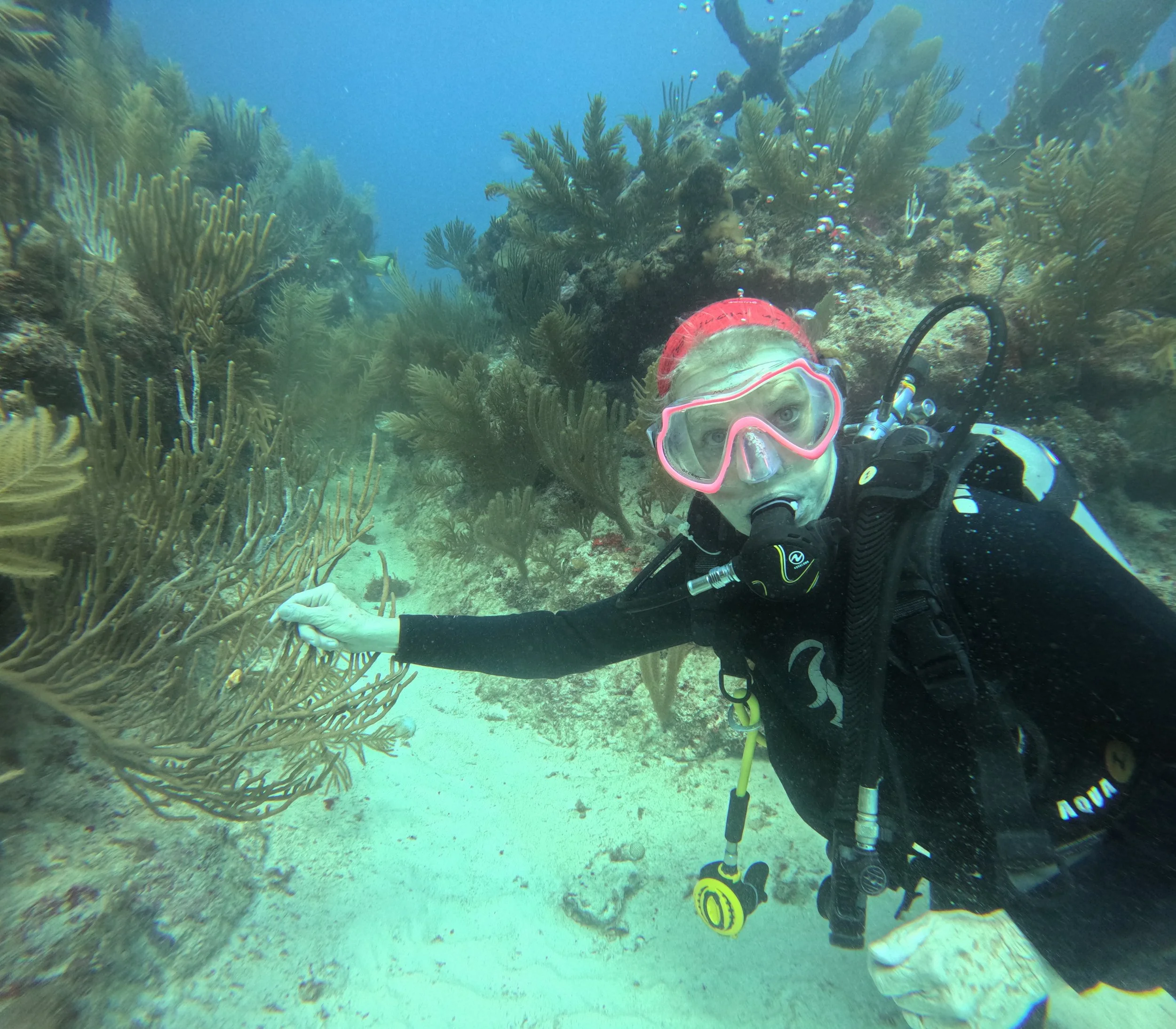
What biological "superpowers" do marine invertebrates possess? What challenges do they face and will their resilience protect them from anthropogenic change?
On this episode, we talk with Drew Harvell, Professor Emerita of Ecology and Evolutionary Biology at Cornell University, Affiliate Faculty at the University of Washington, former Science Envoy for Ocean Conservation (US State Dept), and former NOAA Aquanaut. Drew is also an author, and we had her on the podcast to talk about her new book The Oceans Menagerie: How Earth’s Strangest Creatures Reshape the Rules of Life. In our conversation, we focus on several organisms she explores in the book– sponges, corals, and sea stars. Drew explains the biological superpowers of each group and how their adaptations help them survive environmental changes and disease outbreaks.
Cover art: Keating Shahmehri.
-
Marty Martin 0:00
Hey Cam, have you by chance seen the documentary, Fragile Legacy?
Cameron Ghalambor 0:09
No, I don't think so. Is it good? What's it about?
Marty Martin 0:13
It's really good, and it's award-winning. In fact, it was a finalist at the Blue Ocean Film Festival the year it was released. And what is it about the Blaschka collection? You heard of that, right? Oh, yeah,
Cameron Ghalambor 0:23
I know that one. That's the glass sculpture collection at Cornell University. There are marine invertebrates made out of glass all on display in Corson Hall.
Marty Martin 0:34
Exactly. There are over 250 different species of nudibranchs, anemones, corals, jellies and octopuses in that collection. And the color, shapes, sizes and all the details of each one are extremely accurate biologically, because the people that made them-
Cameron Ghalambor 0:49
-a father and son team, if I remember correctly, Leopold and Rudolph Blaschka,
Marty Martin 0:54
Yes, when Leopold was traveling by ship from Europe to the US back in the mid 1800s the winds died down, so he was able to see the jellies floating around the boat once the sun went down. And he made detailed drawings of them at the time, planning to transform those images into glass when he was home. He thought that the sculptures could serve as a time capsule for what invertebrate marine life looked like, something that could be valuable for future generations.
Cameron Ghalambor 1:16
And boy, was he effective. Marine inverts don't have bones, so unless we preserve these organisms as glass sculptures, we can't really know whether past and present forms differ. Fortunately, Leopold and Rudolph were amazing glass artists. When I first saw the sculptures, I couldn't believe that they were made out of glass. It's amazing how intricate each piece is.
Marty Martin 1:39
And you know what else? What we have the great fortune today to speak to the former curator of that collection, Dr Drew Harvell. Drew is Professor Emeritus of Ecology and Evolutionary Biology at Cornell and affiliate faculty in the School of Aquatic and Fishery Sciences at the University of Washington. When she was at Cornell, she was curator of the Blaschka collection, but also author of several general science books, including ocean outbreak and a
Cameron Ghalambor 2:03
Sea of Glass, the one based on the blaschka collection and the inspiration for Fragile Legacy.
Marty Martin 2:09
Correct! And brownie points for paying such close attention. But today we talked to Drew about her newest book entitled The Ocean's Menagerie: How Earth's Strangest Creatures Reshape the Rules of Life.
Cameron Ghalambor 2:19
Well, by "we," you mean "you", as I wasn't able to make the conversation, but I did read the book, and I loved it. I found her focus on superpowers amazing.
Marty Martin 2:30
Me too, and as listeners will soon hear, the superpower idea links to the subtitle of her book, the rules of life Drew's sentiment is that a few exceptional innovations millions of years ago, transformed the marine environment, and really, much of the Earth into the system we see today.
Cameron Ghalambor 2:46
Yeah, I'm really sorry I missed the chat, but I heard the draft version. I really loved her stories about sea stars and corals and sponges, although I did think it was weird to call a sponge a super anything,
Marty Martin 2:59
And I felt that way too, till I read the book and I talked to Drew spongers are, without a doubt a missed opportunity by Marvel or DC for the next blockbuster.
Cameron Ghalambor 2:59
Why's that?
Marty Martin 3:03
Well, I'll let Drew tell you so stay tuned.
Cameron Ghalambor 3:09
Fair enough.
Marty Martin 3:10
I'm Marty Martin.
Cameron Ghalambor 3:11
And I'm Cameron Ghalambor.
Marty Martin 3:12
And this is Big Biology.
Marty Martin 3:26
Drew, thank you so much for joining us today on Big Biology. We're here to talk about your brand new book: "The Ocean's Menagerie: How Earth's Strangest Creatures Reshape the Rules of Life." Before we get into it. Tell us about your entry into the book writing world. So this is not your first book. What are the names of the others and what do they cover?
Drew Harvell 3:44
Oh, Marty, hey, thanks for doing this and for being here and for asking that fun question. My first book is called "A Sea of Glass: Searching for the Blashka's Fragile Legacy". The second book is Ocean Outbreak. And, of course, the third book is, "The Ocean's Menagerie.
Drew Harvell 4:03
And, you know, people do ask me, how did you get started writing? And I bet it's the same way that most of your listeners do also, which is doing blogs. And as a field biologist and a diver, I love just coming back and doing little blog and popping in my pictures from dives and talking about it. And I was so fortunate The New York Times, they used to have a series Scientist in the Field, and so they picked up some of my dives from Indonesia. And I was like: "Wow, the New York Times has published my blog?" And so that was very inspiring to me.
Drew Harvell 4:42
And then the New York Times did a whole interactive special on our Blaschka collection. And again, that just pulled me into really wanting to reach out and describe and show about it. And so that book was really about doing a lot of dives to find the living matches to the Blaschka invertebrates. There are over 570 models of perfectly, exquisitely formed glass models of marine invertebrates, squid, jellyfish, tons of nudibranchs, sea anemones, all the soft bodied animals in that collection. And so it was really such a fun treasure hunt, right to go through the world's oceans, looking for the matches for the exact species.
Drew Harvell 5:29
And the film kind of was being done in at the same time. So David O'Brown, actually, I was at a bar one night doing a like a science on tap type talk. And David O'Brown, the filmmaker, came up and said: "Wow, this is amazing. Let's do a film." I'm like: "A film? Like, what would that be? No, you're not going to film me." And, yeah, patiently taught me some things, and we had a wonderful time doing a lot of underwater filming.
Marty Martin 6:01
How were there any experiences with making the film or writing the other books that led to this book?
Drew Harvell 6:09
Well, actually, so the second book, "Ocean Outbreak" is a very research based book. I was leading a research coordination network on the ecology of marine disease. And by the time, you know, we were well into that. There were probably 60 people involved in various ways, including grad students, postdocs and other colleagues. And so we knew I had a lot of I was sitting on a lot of information again, that I felt was so important to convey, so that was really what that book was very research based on our own research with corals and sea star as well as salmon and sea abalone.
Drew Harvell 6:54
So the current book is actually quite a bit more like the Blaschka book, in that it's a complete celebration of invertebrate form and function. The whole goal, honestly, at this point in my life, was to just think about how fabulous the biodiversity is that we have under the ocean and and so that's kind of the connection. Because really, the "A Sea of Glass" was also kind of a celebration of invertebrates.
Marty Martin 7:20
That's an interesting word choice. I couldn't come up with a word that described how I felt while I was reading the book. So it was I told you online before we talked. It was unbelievably pleasurable to read. My favorite science books are the ones that are. I mean, I'm a field biologist too, so I'm not a marine person, but I'm stimulated by these same kinds of things. But I can feel your energy and your passion, but then it also has the depth of science. So sometimes the science books will pull punches, and I don't know it feels to me like I guess we assume that this is too much for the public, but your book never really felt that way. It was sort of the let me excite you, and now let me tell you some fairly complicated, jargon filled things. And then it's still, it's still got that excitement to it. Was that a deliberate thing? Is this a natural skill that you had? Or how did the book come to take that form? Well,
Drew Harvell 8:15
That is so kind of you to a natural skill. I like that. Thought that's a good one. I mean, the book really weaves together three themes. And in my original plan for the book, it was all about the invertebrate superpowers. I just wanted to celebrate, you know, my wonder and the biology of the absolutely mind blowing things that invertebrates can do. And then probably some of my readers, and my son was a big editor early on asking the questions. And so then the second theme of the, sort of the consequences, or the value for humans, sort of the bio-inspired design thread of the book came in, like, what's in it for us, part of it. And there are so many biomedical spin-offs, that it was fun to kind of pair each of the superpowers with a biomedical spin-off or some other, some other advantage, and that that wasn't enough either. And in the end, it came to both my editor and son saying: "you know, Drew really people want to hear about your diving and the adventures that you've had, and they they want you to kind of be the narrator and take us along on this voyage of discovery, given that you've been there to see it all or some of it." That's what they were saying. So that's kind of how those three things came together. And it's, you're right, I mean, we did have to tamp down the technical biology a fair bit over time, because, of course, I'm an invertebrate nerd, and, you know, I've taught invertebrate biology for, what, quite a few years, more than we need to say but.
Marty Martin 9:51
Sure writing for the, you know, scientific audience, you have to take a different approach than writing for a general audience. So it for me. Difficult to sort of make that turn is, you know, you would just use different words, different argument structure, just it's a very, very different kind of an approach. So it was, it was so refreshing to see it done so well. All right, two big picture questions before we dive into individual chapters. Given this is Big Biology, I want to hear about your big picture on the motivation for your book. So was the subject invertebrates only because it's what you do, or was there something more to that? I mean, there have been a few books about sharks, for example.
Drew Harvell 10:32
Well, I guess I am really supportive of invertebrates and spreading the word on invertebrates, especially after being at a place like Cornell, which again, fabulous privilege for my entire career to be in such an organismally-oriented department. And of course, there was a department, there is a department of Entomology, so I'm not the only invertebrate person on campus, but at least within in my department. So I think I just kind of grew up there, just thinking often about contrasts and comparisons between invertebrates and the various vertebrate group. And so I guess that was a natural thing. But also, in this book, I kind of was grounded by deep time, by just again and again, coming back to the, you know, 600, 700 million years of evolution, and the ocean. Of course, the ocean is a really important theme here, because, again, that's been my entire career in and the ocean is the cradle of life. And so that's kind of what set the grounds for the kinds of topics I have in the book. And so that's really why it was all invertebrates, because there weren't any vertebrates for, you know, hundreds of millions of years after.
Marty Martin 11:55
Yeah okay. That makes sense. That makes sense. And the other, the other big picture thing, you've said it a few times now that each chapter is sort of focused on a group of marine inverts, but they're sort of highlighted for a particular superpower they have. So you use that word a lot, and I think I have some inkling as to why, but I wondered if the other thing, the other sort of concept that you highlighted, at least in the sense that you put it in the subtitle of the book, "rules of life". Is there an interplay between these two things that you think is, was that any way motivating? Is there sort of a theme that's intended to run through the book lessons about organismal biology, in general, because of an interplay of superpowers with rules of life?
Drew Harvell 12:44
Well, again, I mean, if we think about these being the first animals on our planet, this being essentially the cradle of life. And in terms of animal design, right, the vertebrates eventually came out on land, from the ocean and from an invertebrate progenitor. So everything about their biology was in some way shaped, shaped by that early time.
Drew Harvell 13:09
And the other, I mean the rules of life. I mean, you know, Marty, there are no rules of life, right? Biology, as it was said so well in Jurassic Park, you know, by "life finds a way", right?
Marty Martin 13:22
Good old Ian Malcolm, yep.
Drew Harvell 13:23
Yeah. So, I mean, you know, there aren't actually rules of life, but there certainly are guidelines that we think about, and a lot of it is shaped by what we see from vertebrates on land. And these invertebrates, just like, you know, blow all those ideas out of the water.
Drew Harvell 13:42
And so as a kid, I actually did read Superman, Superwoman comics, and think, think about the fact that you had about impossible feats, like people flying, people being invulnerable. And so I got to thinking about the invertebrates, and certainly from the perspective of our land or vertebrate based viewpoint, the things they do are impossible. Animals do not photosynthesize And yet, there you have it. You have the corals creating underwater castles and living some species entirely Photosynthetically. In fact, the very definition of animal, if you ask ChatGPT, or even if you just, honestly no Marty, even if you just, I did it last night in preparation, even if you just look in the dictionary, what is an animal? It's right away that it's sexually reproducing, taking in organic matter, all animals, all animals eat things, alright?
Marty Martin 14:46
Uh huh
Drew Harvell 14:46
So here you have an animal that's photosynthetic. Some of the worms are chemosynthetic, right? They don't even have guts. And so I was like, wow. Like, do people know that these kinds of superpowers that exist? And so that was kind of, that was kind of what I got thinking.
Drew Harvell 15:05
And then the other, I mean, the other sort of rule of life and theme that rolled into that is symbiosis, because so many of the strange abilities and powers of the invertebrates derived from their symbioses with either bacteria or microalgae, probably in ways, well, no, not probably, definitely in ways we still do not understand that dance. So, that dance of life and and so those are the, those are the kinds of sort of deep time rules of life I was thinking about that are that were shaped in early evolution. And you know, when my colleague Steve Palumbi has been a really good friend in this, in this book, and we talk about this stuff a lot, and I was talking to his writing class last week about the book, and after he said, you know, drew what? How come there's no more new superpowers, like, Are there any new ones? And I'm like, geez, I don't know. I mean, what would that look like? And if there aren't, what does that mean? That everything was set 600 500 million years ago, the really big body plan, and there's no more new ones? You know what that? That's just mind blowing to think about.
Marty Martin 16:24
Yeah, well, that, and that's kind of where I was coming from, because, you know, biology, a lot of biologists do say, and have said, that there are no rules of life, because diversity, Malcolm, Life finds a way. But, but at some point in the past, there were these major innovations that have been so profound, and, you know, one offs that have set the table for most of the things that we have now. I mean, I don't know, maybe rule is not the right word for that, but it's sort of game changer in the sense that what we have is because of, you know, people called them frozen accidents, and Sean Carroll wrote a whole book on this not too long ago. We talked to him. And so it's not rule per se. This way, everything, all the biology we have to work with today is a function of these quirks, superpowers that manifested at some point 600 million years ago. So it's, it's pretty neat. I mean, it's, it's influential, but rule, maybe it's a little, it's a little semantic. Well, so should we talk about some of these superpowers? Maybe we'll start with the sponges. And I want to do the sponges, because I'll be honest, I think the last group that you wrote about that Marvel's likely to feature in its next Avenger movie is probably the sponges are not likely to be there. But dissuade me of that. Maybe there is something about sponges that does warrant a special new character.
Drew Harvell 17:42
Oh, boy, sponges. Well, I mean, you have to start with the fact the biology of sponges is basically a collection of cells without organs, or in most cases, real tissue. And yet you have this elegantly designed functioning, very sophisticated biology, kind of embedded in that very simple looking organism. So I mean a sponge, and I love them because they're so beautiful. They come in so many shapes and colors. I talk in the book about a lot of the dives we did sort of prospecting for natural products chemistry, just, you know, looking for sponge diversity, and that that was just a, you know, a joy. And so sponges are creatures of current. They sit on the bottom. The amazing choanoflagellate, or collar cells, create a current that draws water in phenomenal way, really, to engineering specifications in the hydrodynamics, through the tiny channels of these sponges to the region where they're where they're capturing and eating food. And so, yeah, it looks like just a bath sponge, right? But then you don't realize the precision of the shapes and sizes of those canals that are designed to make water flow really, really well. And so there's that.
Drew Harvell 19:10
There's also the fact that immunologically, they're quite sophisticated. So if you put two unrelated sponges next to each other, they will, they, they will produce chemicals against each other, and one of them may actually dissolve the other one away and kill it. So there's a very, actually, quite precise recognition capability in the sponges, which is, again, I love because that's kind of like to me, that's the beginning of our innate immune system. There it is. And that immune system even has a component of memory, the sponge will actually react more quickly the next time it comes across the same genotype. Wow. Okay, I could go on and dig deeper and deeper, but part of that sort of recognition. And you know that fighting for space thing between sponges is also the secondary compounds that they make. And that was really that's what I call the superpower in the sponge chapter, is the phenomenal sophistication and complexity of the compounds that were being found, many of which real biological potency in the sense of disrupting cell division or or reducing or controlling inflammation.
Drew Harvell 20:32
And so at the time we were doing the natural products chemical prospecting, sponges were the number one thing- tropical sponges had the highest hit rate, basically, on the planet for the discovery of new anti-cancer chemicals. And so the time we started that work, in the late 80s, we kind of thought the sponges made those chemicals. And then there started to be an argument about, well, what about the bacteria that live in the sponges? And so, again, you know, in terms of the wonder of biology, and I don't know, the aha moment, and the excitement for biologists of discovering new stuff, when the definitive studies came out showing that it was actually, in some cases, the bacteria in the sponges making those compounds. I mean, that was mind-blowing, and it was obviously very relevant, because instead of culturing the sponge, you'd be better off culturing the bacteria, if you wanted a little chemical plant to be making those compounds.
Marty Martin 21:41
Well, so this is weird. I mean, I was going to save this for later, but let's go ahead. You brought it up so brilliantly. Now you said you put two different sponges next to each other, and they'll battle it out. And yet, if you put the right bacterium in or near a sponge, it there's a partnership and protection. So both of those sort of involve this sort of two puzzles, who to battle and how to know you yourself are not the enemy, the self, non self dilemma. So this, this is strange. I mean, how I know this is a really big question that people have struggled with for well over a century. But I mean, how are you thinking about this now? What do we know about sponges? I mean, clearly there's some practical utility in anti cancer drugs. Just what are the bacteria? What are they making? Can we use it ourselves? But at a deeper level, what lessons are they teaching us about how to think about this non self idea in defense, in general?
Drew Harvell 22:46
Well, I kind of think of it when we think about our own immune systems. You know, this is kind of where it starts from. I mean, humans have both innate and adaptive immunity. So we do have an inner sponge, in that sense.
Marty Martin 23:03
I love it.
Drew Harvell 23:04
And it kind of gets back to my point about the biological sophistication of an animal like a sponge, that it's actually quite good at self, non-self recognition through through its adaptive immune system and and you know, in terms of the recognizing self from non-self with other sponges, that's kind of easy to see. But the more amazing thing is, as you raise the issue about the bacteria, and that is something we do, not that that is a knowledge. What we call a knowledge gap is, and I kind of talk about that in the book, is just, I think of that, again, as sort of the dance of life, the interactions between the sponges or the corals or even our own microbiome. We do not understand how that dance is choreographed for and we think about the sponges, they're sitting in a microbial soup in the ocean. And somehow, some species are being permitted to live and thrive within the confines of the sponge, and even, you know, grow their own chemicals, in fact, a lot of different species in any one sponge. And whereas others, of course, have to be rejected, or they'd be pathogenic and would kill a sponge. And I can't answer the question for you, Marty, you know?
Marty Martin 24:37
Yeah, well, I imagine there's a few Nobel Prizes awaiting and, you know, decades more research. So it's, it's not, it's not a simple answer.
Drew Harvell 24:46
Yeah, I mean, it's a question I do think about a lot. And in fact, I don't know if you ever saw the New York Times op ed I did during COVID. And let me see if I can remember the title of it. It was: "How starfish, salmon and snails fight pandemics", yeah.
Marty Martin 25:02
I remember this now that you Yeah. I remember this, yeah.
Drew Harvell 25:04
And it's kind of the same theme thinking about, you know, if we understood a little more the ancient origins of some of these interactions with pathogens, we might be able to do a better job in protecting ourselves. And in fact, I always thought, and I talk about this a little in the book, that when COVID first reared its nasty head, and there was the observation that older people were really getting hammered, and a lot of the younger people were just cruising through it, I right away thought about innate immunity, because in humans, we have both innate and adaptive immunity. And of course, the adaptive immunity is the aspect of our immune system that vaccines are built on, but our innate immunity is the is the rapid responding, immediate response to non-self. And so I immediately started thinking: "Wow, I wonder if it's the innate immune system that's protecting younger folks", because our as humans, our innate immune system kind of wanes with age. And there was even a group led by Robert Gallo, who was one of the discoverers of AIDS-
Marty Martin 26:16
He just moved to our institute a little while ago.
Drew Harvell 26:18
Oh, is that right?
Marty Martin 26:20
Yeah.
Drew Harvell 26:20
Well, let's celebrate him, because they said early on, we should attack this virus with innate immune resistance and some of the live activated vaccines. Basically, I think I want to get this right. It was, I can't remember the name of it. It's in the book, but it actually activates the innate immune system, and that was their pitch, that we should be doing that. And I've often wondered that would have been cool. Anyway, that was kind of a long answer to your question, but-,
Marty Martin 26:55
No, no, and we maybe not surprising, because you and I share a lot of research interests beyond, I mean, you're invertebrates and I'm vertebrates, but we have a lot of interest in the sort of defense side of things. We interviewed Bob and his colleague Chumakov on the show about exactly that idea. It was years ago now, but I, you know, stumbled onto that. It may even been, if you mentioned in the op-ed, it may have even been your New York Times op-ed that stimulated me to go and invite those guys on. But that was an amazing idea, very different than we ended up handling it, but still really interesting.
Marty Martin 27:30
Okay, there's many other taxas to talk about, but I two other things about sponges before we move on. You said that, you know, in the late 80s, they were the source for anti-cancer drugs, or maybe drugs generally. Why are sponges useful sources for anti or tumor control in something like a human? I mean, you know, we have the inner sponge, as you mentioned, but they're very, very different organisms than us. Do they get cancer? What is it? What is what would cancer be like in a sponge?
Drew Harvell 28:04
Oh, man, I'd love to know the answer to that. You know, I think that, I think that those compounds that end up being anti cancer drugs. One of them is called mitomycin. It's a cytotoxic chemical in actually a very common sponge, Holochondria panicea, the one you see in the intertidal. What does the sponge actually do with that? We have no idea. But, you know, it's a cytotoxic chemical so it disrupts cell divisions, so it certainly could be used as defensive.
Drew Harvell 28:36
In the early years, when I was collaborating with William Fenical, who is a natural products chemist. Their team was fascinated with what were these sponges doing with these chemicals in nature, and so that was kind of my job, was to look at the predator-prey interactions and sort of test some of these chemicals against fish, for example. And a lot of them definitely are defensive, so fish will vomit, spit out, avoid really palatable food that's laced with almost any of these chemicals. We even did experiments with snails.
Drew Harvell 29:12
But the more we did that work, the more I was like, you know, this isn't the whole story, because so many of these compounds are also anti-microbial. They don't only deter fish, but they're and of course, that's the biomedical gold mine. They're also anti-viral, anti-fungal, antibacterial. And so it started to really bother me, and that was why in the early 90s, when there was a huge disease outbreak in one of our study organisms, the sea fans, that we decided to focus on that and see if we could understand the antimicrobial fights that were occurring between, say, sea fans and this fungus that was attacking them. And so that was really exciting to kind of really dig into the immune system in that way.
Drew Harvell 30:06
So that's a long answer to your question, but certainly, a lot of these compounds probably are favored by natural selection as defensive but I think they also have functions we don't understand. I think there's been conversations about the very low, low levels of cancer in some of the invertebrates. And again, there may be some very targeted interactions between sponge microbes and, you know, potential cancer forming entities.
Marty Martin 30:37
Yeah so, you know, I picked on sponges as superpowers Marvel won't make a new character from them. But, you know, I'll take that back, because I think one of the things that you you said in the book, but, but tell me, if I'm misunderstood, there can, can any sponge cell become any other type of sponge cell, like do they have the potential to differentiate and sort of return back to some other form, because if that's a common thing, then control mechanisms, you know, to prevent that sort of process, the differentiation, proliferation, getting out of control. I mean, I could sort of see selection for that has that? I mean, did I get the first part right? And has that something been, something that's investigated the function of these chemicals for that?
Drew Harvell 31:18
The first part is right, that a lot of the cells in some species of sponges, obviously, it varies, right, depending on the group of sponges you're talking about. But in our kind of sort of generalized sponge, yes, the cells are what we call totipotent, which means that they can, the amoeba sites can wander through the tissues of the sponge that they can turn into reproductive cells, they can de differentiate and start engulfing food and do all sorts of really cool stuff like that. And,
Marty Martin 31:49
Reah, see, that's a superpower. That's cool. That's
Drew Harvell 31:52
Right? It is.
Marty Martin 31:53
That's a great superhero.
Drew Harvell 31:55
And I think I did compare it to, I think it's Deadpool.
Marty Martin 31:58
Yeah, exactly
Drew Harvell 31:59
Which is the superhero that can de-differentiate into different functions and so, so, yeah, it's like that.
Drew Harvell 32:07
Now the question you ask, Oh, my God, that's a good one. I don't know. I've not seen any studies that have linked some of the you might call it hormonal or chemical control of that differentiation and dedifferentiation? Yeah, that's, I'd say, knowledge gap on that one.
Marty Martin 32:27
Alright. Well, I have a thousand more questions about sponges, but we have many other chapters we haven't touched yet. So let's talk about corals. There are two different groups that we're going to spend some time on. Let's start with the hard corals. So yeah, tell us about their superpower.
Drew Harvell 32:43
Okay, well, I've spent a long time on coral reefs, and I never cease to be dazzled by just everything about coral reefs, the size, the scale, the color, the texture, and just the fact that that that they're the basis of, you know, 25% of our oceans, biodiversity and fisheries, and as a as a habitat, and all of this, all of this, is spun up by the coral polyp, a little creature that's no bigger than a than a caterpillar, right? You know, it settles from a larva, it begins to divide, and it grows a castle, does it and it's in nutrient poor waters, a lot of the tropical waters that are so clear where corals thrive are nutrient poor. And of course, the superpower there is the symbiosis between the coral and an alga called the zooxanthellae. And that's the strength, the power, the solar power of the coral to build such such massive structures, is that symbiosis. And some species of coral are completely photosynthetic. They're entirely dependent on the carbon produced by the photosynthesis of their algae.
Marty Martin 34:00
Well so these guys sort of have their superpower is spreads out from themselves, right? I mean, it's the not just having it, but using it, maybe not with any kind of an intentionality, but this ability to use the sun to build the castles and live is a superpower. But when they built that castle, that superpower manifest is, you know, one of the ways it provides structure and all sorts of other opportunities for diversification and the many other species that can live there. So they're a superpower in a multi-dimensional way.
Drew Harvell 34:31
Yeah, that's incredible. And it is sort of a double that adaptation of having a symbiosis with algae is a double win, because not only is the algal photosynthesizing, but it's also changing the pH inside the cells of the coral and optimizing the calcification process. So there's sort of a double reason why that superpower is pretty fantastic in allowing what I call the building of castles. And that skeleton itself is a hall of mirrors. And it was actually a pretty recent discovery that the shape and the planes and the architecture of that calcified skeleton reflects light in a way that also contributes to the speed and the strength of the photosynthesis. So there's just, you know, layers upon layers of adaptations associated with this, with this particular superpower, yeah.
Marty Martin 34:32
Yeah, the bio-inspired design that's emerged from, you know, studying more detail about the microstructure of these, of the coral, that was amazing. I'd never heard about that before, but what kind of evolutionary innovation, that is?
Drew Harvell 34:47
Yeah, I mean, I think the bio-inspired design ideas that come out of invertebrates, I tried to, you know, touch on as many as I could, but that's certainly one of them, the design of mini solar reactors and this hall of mirrors idea, and the idea that you have small cells like the algal cells that can be photosynthesizing, instead of, say, like a big tree that that, engineering wise, you can really optimize it. So, yeah, that's incredible.
Drew Harvell 35:54
And of course, the other, the other bio-inspired design, the biomedical one from corals, is again the skeleton and its use in bone implants. And I just, I just gave a talk last night, actually, about this book, and there was a doctor in the audience, and he got so excited. He's like, he's like, you know, they've been using the the various slurries of coral tissue actually sprayed onto the metal in some kinds of implants to encourage the osteoblasts to colonize and grow, so there's multiple ways that that coral skeleton is used biomedically in various implants. And so we, of course, we went running down that rabbit hole for a while, but it's just, it's good to know that these things are very, very valuable. They're rich resources for us.
Marty Martin 37:06
Yeah, I'd never thought about it until I read the book that coral could be used as a, you know, stand in skeleton. I mean, it makes complete sense, but until I read it, I never, never thought about it. I guess, this is unfortunate to have to do, but maybe we need to say something about kryptonite for these superpowers. And, you know, sort of the involvement that you've had, the research you've done on bleaching, I think we need to talk about, you know, the extent of the problem, where things are going, how things have been, what kind of mitigation is happening. So what is bleaching? Why does it happen? And I guess the mystery that I'd love you to explain just a personal thing that I've always wanted to know. Why does the zooxanthellae leave when it gets warm? Why is the house no longer desirable?
Drew Harvell 37:50
Yeah, yeah. Well, that's a huge question, and it's probably the sorrow of my life is watching, I mean, honestly, I get sad when I even talk about it, when I watch these incredible castles crumble during heat stress. I mean, this is an entire ecosystem. It's not even fair anymore to say it's threatened. It's being destroyed by warming events. And it's such a cruel irony that one of the most spectacular of the superpowers, the ability of a coral to build these castles, is also its Achilles heel, because bleaching happens when a coral overheats, and when I say overheat, it's just, it can be one to three increases in temperature. It can be quite a small amount above their optimal temperature that the triggers the bleaching. And it is the weird thing that it's, if you look at the heat shock proteins, if you expose a coral in its zooxanthellae to heat stress, the heat shock proteins in the zooxanthellae are activated sooner than the heat shock proteins in the coral animal itself. And so that's the sign that it's this, we call them zooxs, that it's the zooxs, the algae that are getting stressed, they're releasing reactive oxygen species, nasty, poisonous things in the cells of the coral. And that's what causes the symbiosis to break apart.
Marty Martin 39:21
Okay
Drew Harvell 39:22
And so, of course, there's, you know, there have been decades now of research to try to figure out ways to get corals somehow through this. Of course, as biologists, we wish we were more effective, policy-wise, and actually affecting, affecting our greenhouse gas emissions and climate change. But given that that's not necessarily our skill, the real focus is, how do we help our biota get through this?
Drew Harvell 39:52
And so there's been a lot of attempts to engineer corals with more heat resistant zooxanthellae, try to push adaptation to develop super corals that have more strength, that are resistant to this kryptonite. But I'd like to say I'm optimistic, but I do worry a lot about it, because the pace of warming is just phenomenal. It's just not something that evolution is going to be able to keep up with and so it's been, it was estimated, what, 15 years ago, that a third of coral species were at risk of extinction. So that's one of the highest extinction risks on our planet. And that's old data, so I'm sure we've lost a lot of them. So it is an enormous sadness. It's just, it's terrible, yeah, to me personally.
Marty Martin 40:46
Yeah, yeah. Well, let's again, for sake of time, I just wanted to move through a few of the chapters of the book. There's so much more we could talk about with bleaching, but let's spend a minute on the other corals, the soft gorgonians, the sea fans. Unfortunately, there's a sad dimension to that system too, which maybe we can spend some time on a minute, but introduces to that group, from your first work on them, I think you were working on what you called Hydrolab. So in the spirit of adventure, that sounds pretty adventurous, what's Hydrolab?
Drew Harvell 41:20
Wow. What a privilege, right to be a graduate student, and even as a grad student, even as an undergrad, I did learn to dive. I was able to work as a dive assistant, helping on invertebrate oriented research projects underwater at Friday Harbor Labs, where I had begun my studies. And so by the time I was a grad student, I wouldn't, definitely not a master diver, but I was, you know, I was pretty good underwater, and so Tom Saconic invited me to be part of his aquanaut team that was going to saturate in the Hydrolab.
Drew Harvell 41:57
And the Hydrolab is an underwater laboratory at the time in the mid 80s, it was, it was located at about 55 feet, just off the coast of St Croix in Salt River Canyon. And it's an underwater laboratory, and scientists like us, teams, could go and live in it. And when you're saturation diving, I don't know. I'm sure you've got listeners that are divers, and they know that normally, at say, a hundred feet, you've maybe only got 10 minutes, because when you're breathing compressed gas, it dissolves in your blood, and you have all these little, tiny bubbles, but you're under pressure, so as long as you stay on the bottom, those bubbles don't cause any trouble, but if you surface too quickly, the bubbles just expand. And so saturation diving is just living underwater for a week and staying there. And we could do excursions.
Drew Harvell 42:54
Our project was to study the fights between corals and sponges, or corals and soft corals, and I'll talk about that difference in a sec, at, well actually, 30, 60, 120 and 150 feet. And so we would have over an hour on our excursions at 120 feet to just map the reef. We would lay out a transect. We'd go out. It's kind of like a commute. We'd made a joke. We're gonna go commute to work now. We're gonna go off the deep edge of the canyon and work at 120 feet. We would lay our transect lines, take out our photo quadrats, and basically just map the entire transect to then come back a year later to see how it had changed.
Drew Harvell 43:39
And so the other thing that happens when you're breathing that amount of compressed air that has a lot of nitrogen in it is you get narcosis. So, so the four of us would get back, I mean, after, you know, an hour and a half underwater in deep water, you're tired and silly. Oh, my God. So, you know, the jokes, we practically drowned laughing, just making jokes as we were getting out of the water or talking about what we'd seen. We had weird things, like, there was a fifth aquanaut along whose name was Roger, and whenever anything weird happened, we'd be like, must have been Roger, you know. I don't know. I mean, it, it sounds silly. It was, it was silly. So, it was the adventure of a lifetime.
Drew Harvell 44:26
Some of the time we were in the habitat, we would just, we would just look out the picture window. We had a big picture, round picture window. We'd look out the picture window and just watch the flow of life. You know, in the morning, all the big fish, these giant, at the time, guacamaia parrot fish, would be go as a school off the reef. And then in the evening, they would all come back and go find their little niches on the reef. And then some of the work we did was at night so honestly, we were working, we were 24/7 we wanted to make the most of this incredible opportunity. So we would be doing night dives to go out and check our experiments at night.
Drew Harvell 45:10
So the project we were doing, why were we there? We wanted to understand how sclerotinia, or what we call hexacorals, were prevailing on the reefs against their competitors, which were the sponges or the octocorals. Now, the octocorals are a branch of coral that have eight tentacles and they're pin eight, instead of six. And they're, you know, just a very different group. And, in fact, although many of them are photosynthetic, they're not obligately photosynthetic. They don't all those species don't require photosynthesis. They tend to be a little bit more carnivorous. And the reason we did so much night diving is in both groups, the tentacles come out at night. And so if you want to see how a hexacoral is interacting with an octocoral, you have to go at night when their tentacles are out. And that, that was just so cool, because we actually set up these fights. And this kind of gets back to what we were talking about with the self, non-self interactions. Yeah, we would plant an octocoral next to a hexacoral, and then come back a couple weeks later, and what we would see is that usually, in both cases, the partners would have developed what we call sweeper tentacles.
Drew Harvell 46:33
Now, corals are cnidarians, both octocorals and hexa corals are cnidarians, and that whole group is characterized by stinging cells. And so sweeper tentacles are specialized tentacles that are induced by aggression that are extra long and extra loaded with these harpoon-like cells. And so we would come back at night and just watch them duking it out like just swinging these cells against each other and abrading and tearing away the tissue. And over time, one or the other the partners would not have any tissue left on it, right, it would be, it would be abraded. And so that was kind of the aggressive fights that we were watching, yeah.
Marty Martin 47:16
Yeah, yeah. How? How much do we know about how they know when a bad guy is there? I mean, the self, non-self mechanisms of identification is that? Is that clear?
Drew Harvell 47:30
Yeah. I mean, if that's, as with sponges, there's been a lot of interest in sort of these fairly ancient defense mechanisms. And again, it's a self, non-self recognition process, and the genetics of it have been, have been mapped out in a few groups. And so we know, for example, that if you divide a coral in half and put it back into contact with itself, it will not fight. It's like, oh yeah, yourself, I'm not going to hurt you, but if you divide another species and put it next to that coral, they'll fight like crazy. There are some recognition alleles. So for example, if you take the progeny of a coral and put it next to it, depending on the genetics, they might, they may not recognize it as self. They may, they may accept it as basically a kin. So it is a complex, genetically-based recognition process.
Marty Martin 48:26
Yeah, and this, this, so the battles and the different kinds of tentacles that they're creating that seems like a next level. There's a self, non self discrimination, and then there's a non-self. Oh my gosh, this guy's trying to take my space extra level of, you know, dealing with non-self. Is there any idea of how they Am I over overstating, or is there any way they sort of, do we know how they make that decision to ratchet up? There's most things that would settle around you might not be any big deal, right? Like oh, that's not self but who cares? But when this happens, it's a big deal, right?
Drew Harvell 49:07
Yeah, yeah, yeah, yeah, I would say we don't know how it is that say a reef building coral recognizes how different is the response, for example, to that octocoral versus another hexacoral, versus different species of the hexacoral. You know, that level of discrimination, we don't really have the answer for, for how that's done. It is really amazing in it. And for somebody like me who's also been interested in chemical defenses, I mean, honestly, my whole career, I've been interested in this whole dance of defense, counter defense. The sweeper, tentacles, an induced defense, like that I loved, because it was very clear cut what was going on, very easy to monitor how long it takes, how extreme the response is. The chemical situation is so much more complicated.
Marty Martin 49:58
Oh, yes, yes.
Drew Harvell 49:59
because the chemical. Locals have multiple, multiple functions, and so that was a lot harder to parse apart. Yeah? So, so this was really a pretty exciting, a pretty exciting thing to study, yeah.
Marty Martin 50:11
Yeah, yeah. Well, one more thing with the sea fans, and then I want to, I want to touch one last group, if we have time, you talk in the book about what you saw off of San Salvador near the Bahamas in '92 that you say changed the course of your research. So you've, you've done a lot of different things with a lot of different species, so such a major claim has changed the course of your research. This must have been a big event. What was it?
Drew Harvell 50:38
Well, it was the big outbreak of disease in sea fans. And so, you know, up until then, we'd been studying, as I said, the chemical defenses of sea fans, and also, to a lesser extent, sponges, and how those might be anti-predator defenses, maybe some of it anti-competitor defenses. But like I said, I'd been, you know, worried that we really had an issue with microbes, and how was I going to ever, I'm not a I wasn't a microbiologist. How was I going to ever get a hold of that? And so when a colleague of mine, it was Jim Porter, called or emailed me and said: "Hey, Drew, you know, there's a big deal going on with your sea fans. There's a major epidemic Caribbean wide that's taking them out, you might be interested in that." I'm like, Oh, yeah.
Drew Harvell 51:26
And so I thought, well, first I want to see this. But right away, in my mind was, maybe I can use this to understand something about the immune system to microbial attackers. So my postdoc at the time, Kiho Kim, and I flew to San Salvador in the Bahamas, where there had been reports of a recent new outbreak of this. Of course that was pretty sweet, because we were coming from Ithaca in the middle of winter, so we sort of landed right away. I mean, that afternoon we got there, we were out on the beach just sitting there, you know, looking at all our gear getting ready, and then, you know, swimming out across the back reef to this sea fan loaded reef, which is in very shallow water.
Drew Harvell 52:14
And, at first, they were just beautiful, these purple sea fans, yellow sea fans. And then we started to see holes in the sea fans. And then we started to see these holes surrounded by big purple halos. And that was, in fact, the lesions caused by this pathogen. And then we came to what was a graveyard. It was standing dead skeletons of sea fans that had just, they had just been completely dissolved away by this pathogenic agent. And so that was the moment I thought, we can study this.We can definitely, as ecologists, we can map the intensity of it, we can map the timing change of it, and we can watch how the sizes and shapes of those lesions change. And I'll bet you anything that that purple halo is a zone of immune response by the sea fan.
Drew Harvell 53:07
And so we did spend virtually the next 20 years in my lab studying what was going on in that purple tissue and how it was loaded with the immune cells of the sea fans, the amoeba sites massing to attack what was then discovered to be a fungus. And the cool thing, just to cut to the chase on this, and the kind of interaction, to come full circle back to a rather amazing interaction between the hexacorals and the octocorals, the sea fans, in the end, did prevail. They were millions and millions were killed in what we're sure was a selection event, a natural selection event by this pathogen to weed out every resistant sea fan throughout the Caribbean. And then, and then the survivors prevailed, and so we think they developed immunity.
Drew Harvell 53:54
And the interesting thing is, at the same time, we'd been losing hexacorals to bleaching events. And I was just back in Akumal Mexico this fall, diving, and it was surreal. These reefs are now filled with octocorals, filled with the roughly 39 species of octocorals that live in the Caribbean, and almost devoid of all the sclerotinians, which have been just hammered over the last 20 years, but particularly the last five years by not just bleaching but a horrible outbreak of an infectious disease that's just stripped their tissue and killed them. And so it's so ironic again, to me, that the thing we were studying the sort of ancient defenses of the gorgonians and the sea fans, you know, may be what conferred resilience and the ability to ride through some of these heating events and kind of take over the Caribbean reefs.
Marty Martin 54:55
Huh. Wow, that's interesting. Where did the original, the pathogen that was killing the sea fans, do you know where it came from? Was this something that had circulated in marine environments for a long time, or was this from the land?
Drew Harvell 55:10
Well, the pathogen is called Aspergillus sydowii, and it actually is a, evolutionarily, a land-based fungus. And so the two dominant hypotheses were that it actually was blown in African dust out of Africa into the Caribbean. That may sound a little bit improbable, but if you look at the sediments in places like the Bahamas, there's like a meter thick of red dirt, and that is the African dust that settled there, and the spores of those strains were carried in that dust. So it is plausible that that African dust was one of the conveyors, the other one was rivers, and that the soil was disrupted in rivers and then spread. This was a big issue in the Amazon.
Marty Martin 55:58
Okay, sea stars, another group, and this one was surprising to me, because you said their super power was their sticky skin. It's weird to think about skin stickiness as a superpower in general, but probably a lot of listeners have interacted held sea stars at various different aquariums and such. I don't know that I would call it sticky off the bat, but after reading your book, I think I know why. So why sticky? Why is that their superpower?
Drew Harvell 56:28
Well, the big word for it is mutable collagenous tissue.
Marty Martin 56:34
Okay, now I know why it's sticky.
Drew Harvell 56:37
I'm only gonna say that once.
Marty Martin 56:38
Yeah yeah
Drew Harvell 56:38
We call it. And actually there's two groups of invertebrates that I talk about in the book that have what we call smart skin. And a smart tissue is one that is activated electrically by neurons. And smart tissue is really cool, and it's so exciting biomedically, because if you can activate something with an electrical signal, you can swap in other sensor types, like light or temperature, by engineering the gene, the control genes, so smart tissue is of great interest.
Drew Harvell 57:18
Now let's talk about the sea stars' sticky skin, which is, as I said, a smart skin. And the way it works is that there are collagen fibrils in the skin that are under neural control, and they cross link when they get the signal, and the cross linking makes the skin very stiff, and they can also be uncross linked instantaneously, and that makes the skin slack. And of course, the other clever thing that sea stars do is they can autotomize or drop their arms. Oh, and then the third clever thing, they can then regenerate them.
Marty Martin 58:02
Yeah a whole, whole star, right?
Drew Harvell 58:04
So, so these animals really can do some pretty snazzy stuff that's actually pretty useful to us. But of course, why is it so useful to the star? Well, I don't know. I know you have amazing capabilities, Marty, there's a lot of things that you can do, but I'm pretty sure you cannot just pick up a clam and open it. You can't pry it open.
Marty Martin 58:26
No
Drew Harvell 58:26
And so that is what our sea stars can do by virtue of this sticky skin that they have. So the way a sea star does it is basically they activate their tube feet, they have these thousands of little suction cup tube feet underneath them, hang on to the clam and then exert some pull, and then they activate their stiff skin to just hang on. And so it doesn't cost them very much to hang on for hours. And again, this is one of those things, I'm not going to go into the detail now, but I spend a lot of time in the book talking about the scientists that studied this for hundreds of years trying to figure out, how does a sea star open a clam? And it's pretty cool the way those discoveries were made. So that's kind of the basis of their superpower. Is the sticky skin. Yeah,
Marty Martin 59:19
I can imagine a lot of people going out now and grabbing the clam to try to see if they can open it. So I encourage people to try to do that, to see the superpower that's happening. And like all of the other species we've talked about, there's other dimensions, you said, a few of them to what else the sea star can do related to this, but once they crack the clam open, what was it a millimeter? That's when they can put their stomach inside and digest the clam without ever needing to fully open it, right? So this is good luck doing that, even if you could pry it open. Good luck putting your stomach inside to do the rest of the process.
Drew Harvell 59:54
Right? And obviously that's a dangerous maneuver
Marty Martin 59:59
Yeah, no doubt.
Drew Harvell 59:59
So the sea star's got to be really sure it can hold that clam open when it's sticking its stomach inside it. Yeah, yeah. Very cool. And, you know, we watch them. I mean, the ochre star here in the Pacific Northwest can just clear the shore of mussels by pulling them open one by one and eating them up. Yeah. And they eat a lot. So we worked with our sunflower star, which is a species that has been highly endangered by, again, another disease epidemic. And it was amazing how many mussels or clams they'll eat. And in fact, they got so good at catching them, we would actually when, you know, when a person comes over to feed a sunflower star, the sunflower star runs to the edge of the tank. I mean, literally, runs on its two feet. And they could catch those clamps before they hit the bottom, and then open them up quickly and eat them up, and lots of them.
Marty Martin 1:00:52
So okay, now that's amazing, because I never would have given a star this much cognitive credit. But when that section of the book you're writing about, you know, these multiple different stars that you had in the lab, and I think one of your colleagues gave them names, and, you know, they all had their sort of dispositions. I'm thinking, wow, these things are almost like dogs in, you know, their way, begging for food and running across.Is this something that generally happens in stars? Is this something that's sort of appreciated and just not emphasized? I mean, we give a lot of credit to the cephalopods as these sort of sophisticated organisms, but I didn't realize that stars were really interesting like this too.
Drew Harvell 1:01:36
Yeah, I think the giant sunflower star is pretty unusual in the realm of stars. It's the only one I've seen that's like this. Now, I don't have a lot of experience with raising up stars, so it could be that there's others, but their way of interacting with their keepers, and just their different capabilities, you know?
Drew Harvell 1:01:59
So Dr, Jason Hodin is my colleague who's developed a captive breeding program at Friday Harbor Labs with the sunflower star. And he's, he's the one that came up with all the different names. I mean, initially, they had to name them because they were doing breeding. So they had to keep them separate. They had to know which were the males, which were the females. And so once they figured that out, they named them so they could keep track of it. But then they started to really, you know, name them based on their colors and their some of their personality characteristics. But, you know, anybody that's ever worked with sunflower stars notices the way they come to the edge of the tank waiting to be fed. I mean, that's kind of unusual, and definitely the keepers of these stars become really pretty attached to them. And so they are quite long lived. So, you know, the ochre star probably lives 30, 40, 50 years. We don't know how long the sunflower stars live, but, but it is the largest star in the world. They're, you know, the size, you can't see me, but they're the size of a they're the size of a manhole cover at full size,
Marty Martin 1:03:06
Yeah, with 24 arms, right? So I think I should have emphasized this before. They're not the conventional star idea that I think a lot of people would have. They're not really stars as a star, you know, the shape would look they're just very large organisms, very different types of creatures.
Drew Harvell 1:03:06
Yeah. And you know, the work that brought us into the orbit of the stars was, of course, the sea star wasting disease epidemic that started in, roughly, 2013. Actually, it probably started in 2011 on the East coast, but hit the West coast in 2013 and the only thing to say about it is it's been recorded as the largest disease epidemic, it basically is a pandemic based on the number and numbers of species and the level of mortality that was seen. So for a non-farmed species, it's the biggest epidemic. And everybody experienced it because stars were dying on everybody's beaches, so the public was involved in it. There were massive monitoring events trying to figure out the size and scope of it. And it extended from Southern California, actually, the border with Mexico, all the way to Alaska, millions and millions of stars dying. And since we were disease ecologists and, you know, working on disease issues, we really got involved early on in trying to figure out the causative agent and what was being affected.
Drew Harvell 1:04:34
So we did notice right at the beginning that it was the sunflower star. You know, if you had groups of ten species of stars on the bottom, and the epidemic would sweep through, the Sunflower stars were always the first to die, and they always all died. And so pretty quickly we became concerned that they were threatened. Because as disease ecologists, we knew that a multi-host pathogen, one that affects multiple species, can be a danger to the most susceptible. And you can look at Hawaiian birds and malaria as an example, or the chytrid fungus of frogs. And so we kind of sounded the alarm, and it's been really gratifying that there's a whole sunflower star recovery program that's been developed largely by the Nature Conservancy, but also all, all the marine Aquarius on the West aquariums on the West Coast are involved. And it's, it's, it's a point of real pride to me that Jason Hodin developed the initial captive breeding of this species. And, you know, it's, that's, that's sort of standing on the shoulders of giants, because our lab, Friday, Harbor Labs, at the University of Washington, has been the mecca for invertebrate embryology for probably a hundred years. So Jason is an incredibly talented researcher, but he also had a lot a lot of background to help him with that. And so now that program is being propagated to marine aquariums like Monterey Bay Aquarium, Seattle Aquarium and the Sunflower Laboratory.
Drew Harvell 1:06:09
We've continued to work as part of of part of that, to identify the causative agent, and it's definitely a microbial cause, and it's actually conveyed in the coelomic fluid of the stars, which, again, is a bit of an irony, because that's the those are the immune cells that are also in the salomic fluid, the coelomocytes. So we're continuing to finalize the studies on that causative agent.
Marty Martin 1:06:38
Yeah, and what's the status of the pandemic now? Do we have a similar story to the sea fans, where there's a lot of resistant stars around or are populations generally still in bad shape?
Drew Harvell 1:06:51
It's still ongoing. We still have pulses, especially associated with warming, of mortality, always with the sunflower stars, they remain the most susceptible. They're highly endangered. They're described as an endangered species with through the International Union for the Conservation of Nature. NOAA has planned to list them as a threatened species. Some of the other stars have fared much better. The ochre star, which is our most abundant intertidal star, shows a lot of signs as having some level of resistance. It seems to ride through some of these events, and then some of them, other numbers of them die.
Drew Harvell 1:07:32
The other thing we've been doing is studying with a graduate student, Grace Crandall at the University of Washington, the immune system and the really exciting experiments that she did with our team recently is to compare exposure of three different species, the sunflower star, the ochre star and the leather star to the infectious agent and the sunflower stars caved right away. The ochre stars lasted quite a bit longer, and the dermis Darius, or the leather star, were completely resistant. And so I'm so excited to see her transcriptomic genetics data on how the immune systems of those three different stars responded to that. So yes, it is still ongoing. It is still a major threat to the sunflower star?
Marty Martin 1:08:23
Okay. Well, we could go on for a long time. So I'll just encourage everybody to go buy this book. We didn't get to talk about octopuses. We didn't get to talk about jellies or sea slugs or giant clams or the many other things that are in your book. For people that subscribe to Big Biology, you were generous to make your audio book chapter on the sea slugs available so that can be listened to on the Big Biology Substack web page. Once this episode drops. Again, I encourage everybody to go get the book. I will leave the last sort of few minutes of our time up to you. Is there anything else about the book, or your next one, or your current work that you wanted to talk about, and I didn't prompt you to say, oh boy.
Drew Harvell 1:09:07
All I can say, Marty, is, this has been a blast I have. It was such a privilege to be able to just spend an hour and a half chatting with you about these topics that I really love thinking about. I don't really know what else would I say. I'm really excited about sort of the potential of some of these superpowers and the biological sophistication and discoveries still to be made. I really love the crazy opportunities we might have with CRISPR. In the epilogue I start, I get a little wild, and I start to talk about crazy stuff, like, how would we design, how would we design different kinds of animals with different powers and capabilities? One really cool example is with pygmy squid. So remember, I said that cephalopods also have smart skin that's that's under that's under neural control. And some smart organs under neural control. And some scientists have actually designed squid where the heartbeat can be controlled with a laser. So by engineering in rhodopsin genes or light detecting genes into the squid, you can sort of replace that electrical cue with a light cue. And so when you start to think about that, there's some pretty cool things that maybe could be done.
Drew Harvell 1:10:30
So maybe, you know, I raised at the beginning that we don't know of any, at least I haven't thought of any new superpowers that have emerged in the last, I don't know 200 million years, but maybe we'll see some coming in. So I'm going to be watching for that, certainly putting these animals in the ocean under enormous environmental stress, and so we could expect some pretty crazy stuff to pop up. So we should be protecting them. We should realize that the most valuable resource on our planet is not oil or metal, it's our living resources and the web of life that links them together.
Marty Martin 1:11:05
Yeah,agreed, and that's a great point to I think, end on So Drew. Thank you so much. I really enjoyed the chat. Really enjoyed the book, and I encourage everybody to go out and get it. Thanks.
Drew Harvell 1:11:06
You're welcome. And thank you so much. Marty, this was really fun, and I enjoyed it.
Marty Martin 1:11:34
Thanks for listening. If you like what you hear, let us know via Bluesky, X, Facebook, Instagram, Tiktok, LinkedIn or wherever, or just leave a review where you get your podcasts, and if you don't, we'd love to know that too. Write to us at info at Big biology.org.
Cameron Ghalambor 1:11:46
Thanks to Steve Lane, who manages the website, and Molly Magid for producing the episode.
Marty Martin 1:11:51
Thanks to Dayna de la Cruz, Brady Quinn and Caroline Merriman for their social media work. Keating Shamehri produces our fantastic cover art.
Cameron Ghalambor 1:11:58
Thanks also to the College of Public Health at the University of South Florida, our patrons and donors and the National Science Foundation for support.
Marty Martin 1:12:06
Music on the episode is from Podington Bear and Tieren Costello.