Ep 149: Invasion of the ecosystem snatchers (with Dan Simberloff)
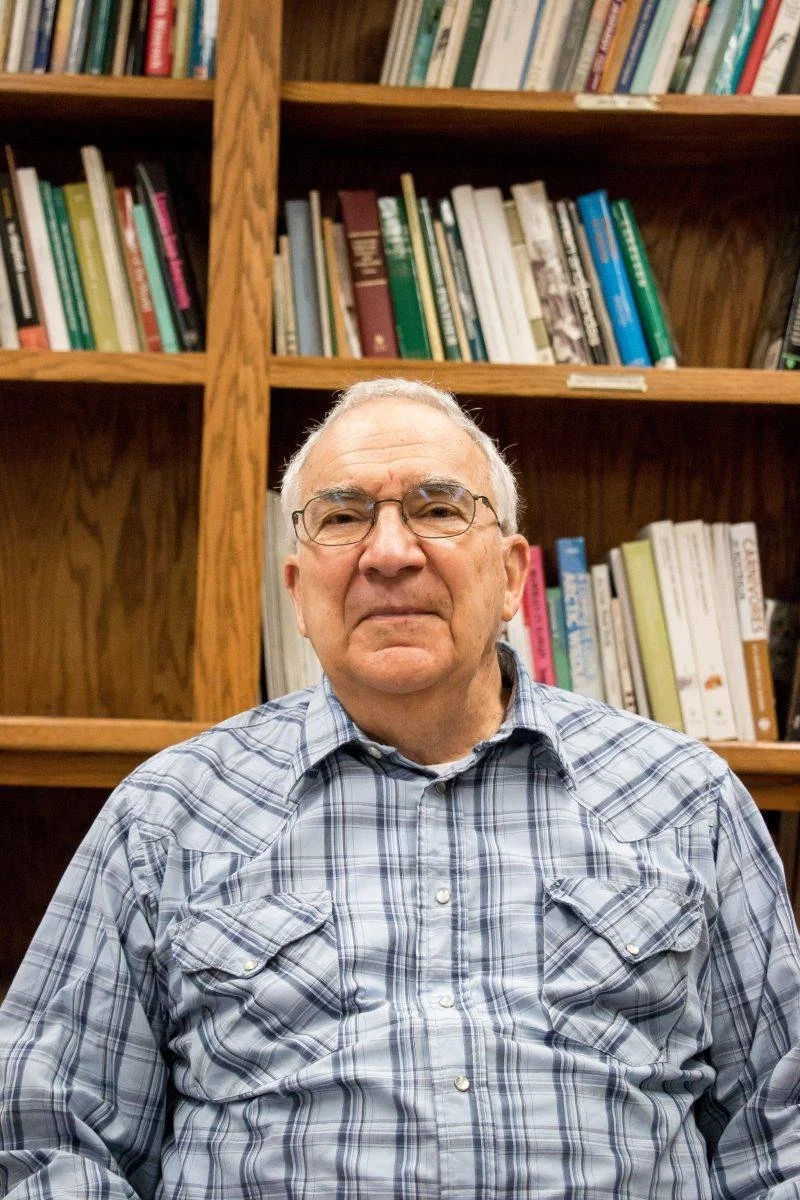
Photo Credit: Moses York
How do you experimentally test theories of island biogeography? Who were the Tallahassee Mafia? Why do some introduced species become invasive and reshape ecosystems?
On this episode, we bring you a live recorded conversation we had with Daniel (Dan) Simberloff at the Laurel Theater in Knoxville, Tennessee. Dan Simberloff is the Nancy Gore Hunger Chair of Excellence in Environmental Studies at the University of Tennessee, Knoxville. He is a member of the National Academy of Sciences and an author of the recently published book Ecological Explosions: The History of Biological Invasions and Invasion Science. Dan is a key founding figure of invasion biology, and in the book he details the history and evolution of the field. In our conversation with Dan, we discuss his early field experiments to test predictions of island biogeography theory, his thoughts on Robert MacArthur and models of community ecology, and his later research understanding why species become invasive and how they impact ecosystems.
Special thanks to Professor Lou Gross who recorded audio and video at the event, Professor Kimberley Sheldon who organised the event, and to the Jubilee Community Arts which owns and operates the Laurel Theater.
Cover art by Brianna Longo
-
Cameron Ghalambor 0:05
Hey, Marty, would you consider yourself a Florida man?
Marty Martin 0:09
Hmm, well, that depends on what kind of Florida man you mean. I do like living in Florida, but I hope no one associates me with the Florida man meme, the one that's so popular these days, and Netflix even had a TV show about it.
Cameron Ghalambor 0:23
Yeah, yep, that's why I was asking. On social media, there are all these crazy news stories about someone from Florida doing, usually something pretty crazy. I just saw a headline about a barefoot Florida man wrestling a 19 foot Burmese Python on the side of the road.
Marty Martin 0:40
Oh, yeah, that would be Jake Waleri from the Glades boys. They're famous in Florida for catching record breaking pythons. And it's just not the stereotype Florida man hunting pythons. There's a whole subculture of people here that go out every night to catch the snakes. There's one woman who's caught almost a thousand of them, all on her own, and the state pays people by the hour to do it, plus a bonus per foot of snake captured.
Cameron Ghalambor 1:02
One person catching a thousand wild pythons is mind blowing for me. I mean, in my lifetime, I've maybe only seen a hundred snakes in the wild. How many pythons live in Florida?
Marty Martin 1:13
It's estimated there could be up to a half million Burmese pythons alone in Florida. But it's really hard to estimate their numbers, because they're not easy to count.
Cameron Ghalambor 1:21
Of course, Burmese pythons are not native to Florida. These snakes were brought to Florida as part of the pet trade, and many are thought to have escaped from a big breeding facility that was destroyed by Hurricane Andrew in 1992.
Marty Martin 1:34
True. And lots of people buy cute baby snakes at the pet stores, and then when they grow up to be several meters long and get harder to take care of., many irresponsible owners just release them in the wild
Cameron Ghalambor 1:44
And putting Florida man jokes aside, what's no laughing matter is the ecological impact these snakes are having. In the absence of any natural predators to control their populations, pythons have, in turn, decimated wildlife in Everglades National Park. Raccoons, bobcats, white tailed deer and Marsh rabbits are essentially extinct from the south end of the park.
Marty Martin 2:08
All eaten by the pythons. In fact, there was a story recently of raccoons fitted with tracking devices so researchers could follow their movements. But the raccoons kept disappearing, and when the researchers followed the tracking device, it led them to the Python that had eaten the raccoon. So it's not an understatement to say the historic food web in the Everglades, and throughout parts of Florida, has been fundamentally altered by this top predator. So this is why the state is paying civilians to catch and remove the giant snakes.
Cameron Ghalambor 2:33
But there's lots of other invasive species in Florida. How much money is the state spending on this issue?
Marty Martin 2:39
Tens of millions to control the spread of invasives in just Florida alone. Beyond the pythons, there are also tegu lizards, green iguanas, lionfish disrupting coral reef communities, melaleuca trees, old world climbing ferns.
Cameron Ghalambor 2:52
Okay. Okay, stop. I get the picture.
Marty Martin 2:54
But I haven't even gotten to the snails.
Cameron Ghalambor 2:56
Snails? Which snails?
Marty Martin 2:57
The Giant African land snails. They literally eat the stucco off of houses. Sometimes whole neighborhoods have to be quarantined so wildlife officials can go in and exterminate them.
Cameron Ghalambor 3:07
Yikes. But beyond these sensational headlines, there are fundamental ecological and evolutionary questions about why some introduced species take off and become invasive, while others just persist at relatively low numbers.
Marty Martin 3:23
Exactly. And these are the questions the field of invasion biology tries to answer. Our guest today, Professor Dan Simberloff, basically built the contours of what we call invasion biology.
Cameron Ghalambor 3:34
Dan is the Gore Hunger Professor of Environmental Science at the University of Tennessee. He's a member of the National Academy of Sciences and elected fellow of the Ecological Society of America. And over his career, Dan has been recognized for numerous awards, including the Kemp Award for Distinguished Ecologists and the Ramon Margalef Prize in Ecology.
Marty Martin 3:55
Prior to relocating to the University of Tennessee, Dan spent almost 30 years at Florida State University. So one could say he's the original Florida man.
Cameron Ghalambor 4:04
We talk to Dan about his career from his early classic work testing island biogeography theory by experimentally defaunating small islands of insects and then quantifying their recolonization rates. And we also talked to Dan about his time at Florida State where he was part of the so called Florida mafia.
Marty Martin 4:22
Of course, we also talked to Dan about invasion biology, and specifically his new book Ecological Explosions, which provides an authoritative overview of the history and development of invasion biology as a discipline.
Cameron Ghalambor 4:35
And if this isn't enough to get your attention, this episode is particularly special because it was recorded in front of a live audience at the Laurel Theater in Knoxville, Tennessee.
Marty Martin 4:44
The Laurel Theater is owned and operated by Jubilee Community Arts, and if you're a music fan, particularly of bluegrass, you already know this venue where the biggest names come to play when they're in town. A big thank you to Jubilee Community Arts for hosting this event.
Cameron Ghalambor 4:58
We also want to thank. Professor Lou Gross, an emeritus distinguished professor of ecology and mathematics who also happens to be a talented sound engineer and took care of all of our audio needs.
Marty Martin 5:11
And a very big thanks as well to Professor Kimberly Sheldon, who did all the legwork and organizing to make this event happen.
Cameron Ghalambor 5:17
This live event was made possible by our subscribers. So we want to acknowledge and thank all the listeners who've pitched in a little bit every month to keep Big Biology going.
Marty Martin 5:27
And in that vein, one last thing before we begin our chat with Dan, we have some exciting news. Big biology is a top rising science publication on sub stack. Our subscriber numbers have been rising rapidly. So thank you so much for supporting the cause.
Cameron Ghalambor 5:42
On the downside, though, less than 5% of our subscriptions are now paid, but we need to change that to keep the episodes coming. Our producer Molly and interns like Brianna, Cass, and Caroline rely on your help to put their time into making the show.
Marty Martin 5:58
So if you can sacrifice the cost of a cup of coffee. You can help. Just go to big biology.substack.com, and subscribe for $5 a month, $50 annually, or whatever you can afford.
Cameron Ghalambor 6:09
And if you're able to splurge for your friends, family or trainees, we do offer group subscriptions too. Either way, single or group subscriptions, you get access to our full length episodes and behind the scenes extras from our guests.
Marty Martin 6:23
And as always, if you can't afford a subscription but want full access to the show and the extras, just send us an email and we'll give you access for free. We know most of our listeners are students, and we don't want anyone to miss out because they can't afford it.
Cameron Ghalambor 6:35
Finally, however you get a subscription, do us the favor of sharing your interest in Big Biology with friends or on social media. Send them a link to our Substack site, post your favorite episode on Instagram or Bluesky, or do the old fashioned thing and talk about us over the phone. Now, on to the show.
Marty Martin 6:54
I'm Marty Martin
Cameron Ghalambor 6:55
And I'm Cameron Ghalambor
Marty Martin 6:56
And this is Big Biology.
Cameron Ghalambor 7:08
Dan Simberloff, welcome to Big biology.
Dan Simberloff 7:11
Thank you. I'm known to my students and colleagues, actually, as an advocate of small biology. There's a bit of a disconnect, but thank you for inviting me anyway.
Marty Martin 7:21
We're in the wrong place.
Cameron Ghalambor 7:24
We'll go for medium biology in between. So yeah, so Marty and I are really excited to be here to talk to you. You know your research has been very influential in fields of biogeography and ecology in general, but also to us very personally, because of our own research interests. So so it's a real pleasure for us to do this here with you and in front of this live audience.
Marty Martin 7:50
Yeah. Thanks so much for doing this. Thanks to all of you for being here. Thanks to Kimberly for helping this to happen and Lou for helping with the sound. Same thing. I don't want to gush, and sort of start this with a kind of, oh my goodness. This is fantastic. But this is fantastic, Dan.
Dan Simberloff 8:06
Don't gush.
Marty Martin 8:06
Okay, I won't gush. So come on. I've worked on invasions a lot, and you know, your research to many of us that have you know, has been an inspiration. So we're going to spend some time, probably about half the time, tonight, talking about the new book, one of many Ecological Explosions. But we want to start in the past, and we want to go sort of back to the origins of Dan as a biologist. Was biology and ecology something you wanted to do from an early age, or was it something that came later in life?
Dan Simberloff 8:35
Well, from an early age, I was very interested in biology, I guess I collected insects, beginning at the age of three or four, and I even got a couple of my friends to help me, and we pinned beetles in cigar boxes. Did that for quite a while, but I wasn't thinking of it as a career, or much of anything, I guess, as a career, at the age of four.
Dan Simberloff 8:59
When I went to college, I became very interested in math. I'd been a good math student, but I went to not a good high school in an inner city, industrial, blue collar place. I knew not much math, although an older cousin had taught me some. And I got engaged in a special course. They had a two year course. It was just fantastic, learning everything I should have learned, plus more in two years. So I was taking graduate courses by my junior year, and it was all very exciting for a while.
Marty Martin 9:36
For a while
Dan Simberloff 9:37
And, you know, I still looked at insects and trees and things like that, but I certainly wasn't thinking about a career. And around the time that I began to think, maybe I don't want to be a mathematician. And I didn't owe it to humanity. At Harvard, I met many other students who were very good in math, and some were much better at it than I was. Was so I could have done it, but it seemed sort of sterile, these graduate courses I was taking. And at the same time, just for the heck of it, I was taking a non majors biology course taught by George Wald, the Nobel laureate, and three of three assistant professors, two of whom also eventually became very famous, and it was fantastic. We had labs, and the lectures were pitched at non majors, and it was just wonderful. I loved it. And I was sitting around, I guess it was the end of my junior, beginning my senior year, in my residents hall talking to some of my classmates. I don't know what to do, and I'm not sure I want to go to grad school in math. And one of them said, "Well, you've really been talking about natsci five now for over a year. Why don't you look into biology?" I said, "I haven't had any biology." Never forget he was a biology undergrad senior, and he said, "You can go into biology without knowing any biology."
Marty Martin 10:23
Ouch
Dan Simberloff 11:38
And in retrospect, I realized that was true.
Dan Simberloff 10:28
And so I went over to my first semester as a senior, I remember doing this. I went over and talked to the graduate secretary in the Bio Labs at Harvard of the department, and she said, Oh, why don't I have you talk to and she had me talk to Frank Carpenter, who was the entomologist, and paleoentomologist, primarily. And he said, "Oh, that's very interesting. Of course, you could go into biology." And he had me take his entomology course, which was really the only biology course I had before being a grad student. And it was wonderful. But he sent me to talk to he said, "You have talked to Ed Wilson. He's very interested in math. I had no idea who E.O. Wilson was.
Marty Martin 11:54
Yeah, who's this guy?
Dan Simberloff 11:54
I mean I didn't know who any of these people were. I knew who George Wald was. He made it very clear to us. So I went and talked to Ed and he was extremely encouraging. And he told me that he had been an undergrad at the University of Alabama. It had very little math. Didn't have any math a graduate student, first here at Tennessee, where he was for one year, and then at Harvard, didn't really have any math. And he'd become convinced, I think, partly because he had become friends with Robert MacArthur, but he become convinced math was really he actually told me he thought math was more important to ecology and evolution than chemistry, which I've always remembered. And so we began to talk about it some more, and we sort of made a deal. He was actually taking, at that time as a professor at Harvard, an undergraduate introductory calculus course with undergraduates. And his deal was that I would talk to him about math and help him with things he wanted to understand, and he would see to it that I learned all the biology I needed, and so I did it. And so that's sort of how I got into biology as a career.
Cameron Ghalambor 13:18
So tell us a little bit about E.O. Wilson, what was it like working with him? You know, at that at that point in in his career,
Dan Simberloff 13:27
At that point in his career, he was, throughout his whole career, he's been very interested in ants, obviously, ants were always a part of it. And he often used ants as an entree and other things. At that time in his career, he was very interested in biogeography. He and Robert MacArthur had a paper in press at that time, which came out later that year, that was a the first paper on the equilibrium theory of island biogeography. And they had chapters of the book that was a much larger effort, the one that came out in '67, I believe, Theory of Island Biography. So that was his main interest. He was definitely thinking about sociobiology at the time, we talked about it quite a bit. He was very interested in behavior. Stuart Altman had been an earlier student of his, and so, but his main focus at that time was biogeography. He was also extremely concerned with conservation issues, although it wasn't really part of what he was writing about at that time. He was a great advisor. I mean, we spent hours and hours together. He didn't have many grad students when I was there, he had only one other. He never had through his whole career, never had more than one or two, and we talked about a lot of different things. And he also came to my field site in Florida, and we had hours on boats in remote places, what were remote at that time in the Florida Keys. So he was extremely encouraging, and he would have been the perfect person for Big Biology, because almost all of his focal ideas were big, yeah, and he was interested in the details. And this became clear as I was doing my work, and I would talk about details, and he was always looking at, well, what general story can you? Could see that obviously and in all of it, and the biogeography in the social insects, and sociobiology
Marty Martin 15:37
In Consilience, I mean the unification of knowledge
Dan Simberloff 15:39
Yes the Consilience is about the biggest thing that you could've imagined
Marty Martin 15:42
Yeah you can't get much bigger than that
Dan Simberloff 15:44
So yeah you missed it back there
Marty Martin 15:47
So talk about your other colleagues in the cohort at Harvard that time. I'm interested what the culture was. That was a pretty amazing time to
Dan Simberloff 15:54
Well, remember this was really the Pleistocene. I was a grad student from '60 late '64 to '68 there. And so it's very early days in ecology, by the way, when you think about the history of ecology. And it was, it was very different from now in many other ways. There was exactly one woman in the faculty of the Biology Department, and I don't believe she got tenure, even though she became very prominent later and did great work. So there weren't many female grad students, but there were some. There was that it was the Department of Biology, not Ecology and Evolutionary Biology, and the ecology and evolution students were not a major part. Most of the grad students were in areas related to physiology, genetics, etc, etc. Those of us who were in ecology and evolution, got to know one another pretty well. We always ended up in the same seminars, etc, etc. So there was a fair amount of interaction. And the other thing, the other thing that was clear to me very early was they all knew a lot, much more than I did. It was really really forbidding how much, you know, some of them as undergraduates, had actually published papers. So it was an exciting time, but very, very different from now.
Cameron Ghalambor 17:24
So, so you mentioned EO Wilson being really interested in biogeography, so I started my academic career as in geography as well, and island biogeography was permeated my all my early thinking. And in fact, several years ago, I found a book, a copy of the Princeton monograph by MacArthur and Wilson that was signed by Robert MacArthur. And so I actually, I emailed, I put it in a in a letter, and sent it to EO Wilson. And I said, you know, would you mind signing this? And he sent me back this really nice letter with the signed, signed book. And he said that, you know, thank you for your interest, and that, to my knowledge, this is the only copy signed by both authors. So this is my most prized posession.
Dan Simberloff 18:16
Yeah I actually have one signed by Ed. But not by Robert. Robert was a visited me at my field site, actually. But I never got him to sign the book. That's sort of how I got into my dissertation work and then several other studies. It was actually through MacArthur and Wilson's book. So I read the paper, and one of the first things that Ed did when I became a student was he handed me what was really a draft of most of the book, and he wanted me to read it and think about it. And he especially wanted to ask me some questions about three chapters that Robert had written, cause he wasn't sure he understood them. He wanted to make sure he got that right, because they were largely mathematical, you know, you can remember the chapters, probably. Which I did, but he wanted me to read the whole whole book. And so I came back, you know, about a month and a half later, and he said, "What do you think?" And I said, "Well, you know, it's really interesting. And I hesitate to say this, but all of these interesting examples you cite are not really direct evidence of the main hypotheses you are proposing, namely, that there is ongoing extinction and immigration. Rather, they are patterns that could be produced by those processes, but you don't really present evidence of that. Does you present some evidence of ongoing immigration, like from a volcanic island, or what have you? And Ruth Patrick's work, the combination of slides by diatoms, but not ongoing extinction, etc. And I remember he said, "Well, why don't you test it? And I said, "Well, yeah, where?" He said, "Well, you know, find some small islands." He really did. And I did.
Marty Martin 18:19
And you found some small islands.
Dan Simberloff 19:05
Yeah well, I didn't find the islands I ended up working on. I found some small islands in the Gulf of Maine that I had visited as an undergraduate, just driving around. And I knew they had a lot of beetles, because I had seen that. And I went up and looked at them some more, and I determined they did actually have a lot of beetles. And they didn't have any high vegetation. They didn't have trees, they had shrubs. And I thought, well, you know, probably we could kill them all and start over. And so maybe this would be a site. But then when I went back in mid-October, after having visited them three times, I realized that it just wasn't feasible. You couldn't get to them. And apparently couldn't get to them for months, you know, so I couldn't watch colonization. And at that time, he said, "Well what about these little mangrove trees in the Florida Keys?" And he had never been to an island like the size of the stage, but he'd seen them out in the water. And he said, "I bet they have lots of insects." I said, "Sure, why not?" And so that's, that's sort of how I got into that.
Marty Martin 21:21
Wow. So it's, it's, it's another level to see the islands and then decide, sure, I'll go ahead and do this gigantic, incredibly difficult, audacious experiment. How did you get your head around? Well, this is potentially a good system to the making it happen?
Dan Simberloff 21:38
Well, we thought about it a lot.
Marty Martin 21:41
I'm sure
Dan Simberloff 21:41
Especially me because I was the one who was going to be doing it. So we went down there. At that time, Ed didn't fly while his daughter was growing up. He took a train. I flew down from Boston. This was great, you know, I'd go there all the time. He'd pay for the airfare. And other grad students hated us right through the winter, but this was the first time in June, I believe it was, I picked him up at Miami train station, and he knew an area not far from the Miami University of Miami Marine Lab. It's called the Rosensteil Institute. And so we're going to go out there and look at these. And this happened to be right at the time the Hurricane Alma was coming up. And fortunately, it went, it didn't go right through Miami. It went just west of Key West and right up the coast. But it was just when we were, it wasn't there yet, when we were there, and the wind was and everyone was leaving Elliott Key and other Keys. And the traffic was totally stopped, and we were going other direction. And we stopped at that marine institute. They told us to get out of there, you know, that was potentially dangerous. We kept going to the place, got out, you know, pieces of mangrove, flying back and forth. And we went to a tree that was separated by a few feet from others, started looking. It was clear there were lots of insects. And it was also clear this really was dangerous, but I do remember at one point a piece of some other kind of vegetation. We had an anolis lizard on it, which I thought was really incredible. Anyway, so we spent part of that day looking at the rest of the day getting out of there. But two days later, we went down to some sites in the Upper Keys that were accessible, that were real islands, and then a couple more in the Middle Keys, near Marathon. And we looked very carefully, and we determined that, yeah, there were lots of insects, and it seemed like we could probably find them all. We underestimated something really badly, but it didn't change. A lot of these insects live in hollow twigs that are hollowed out, primarily by two lepidopterans, and some of the ants live in them, but some other insects also. And we made a fast estimate for island about this side, it might have like, 400 hollow twigs, and we'd have to be sampling a certain number. And so the idea would be that we I would break them, look at what's inside them, glue them back with epoxy resin. There are about 8000 twigs of that sort, but that didn't really affect much. So we didn't know that at the time, but I decided this probably was feasible. Another point was we really had no idea how quickly they'd be recolonized, and the experiment wouldn't be worth much if it took four years or six years, 10 years, but I take the chance.
Dan Simberloff 24:49
So the next thing was, we had to figure out, well, could these really be fumigated? Remember, they're coming out of the water. There's no ground, so that has advantage, and meant that it was easier to find all the species that would be there, obviously, but you also wonder how to do it. So we got back to Boston, I started calling exterminators. And Ed did, also.
Marty Martin 25:11
You want to do what?
Dan Simberloff 25:11
Yeah well the first one I called said "I can't do that". Hung up right away. That's what happened with the first one Ed call, but then he the second one he called said, "that's wild". But he said, "I couldn't do that, but you ought to call Steve Sandridge at National Exterminators." And we did. And he was intrigued. He thought maybe we could do that. And so I flew back to Miami again a couple months later, and Sandridge had assembled a crew, and the first idea was to put these large, these aluminum, I guess they're aluminum stands that hold highway signs over the highway. And we'd have one kinda like this, and one like this, and they put the fumigation over that, and we could use methyl bromide, because it's not very soluble at all in water. And at that time, was legal to use methyl bromide. Now we couldn't do it. And so he did that, but it took forever to do it, and clearly, to heavily do this on eight or ten islands, far out in the water. We didn't, it was going to be an issue.
Dan Simberloff 26:26
So we're thinking about it and thinking about it. And this was before Christmas, and maybe a week later, Steve was driving around Miami for whatever reason, and he noticed, you know, they were putting up these Christmas lights that they do on top of high buildings, where they string up Christmas like, on what was called Christmas tree. And he noticed some guy at the top of a tower up there who was had just erected the tower, I guess, or was erecting the edge of it. And something clicked in his mind. And he got out of his car, took elevator to the top floor, went up to the roof and stopped. And guy was a steeple jack, and he asked him, could you do this on a, you know, and he described a mangrove. And he said "Oh I guess so, never heard of anything like it." And that actually did work and could be done pretty quickly. But then we rolled the tent down, under, over the guy wires. So the first time we did it, everything looked fine. We did it on a small island in the Upper Keys, and unfortunately, it killed a mangrove, as well as everything that was in it, because the temperature was too hot. Then we tried doing another eyelid at night, which was a little challenging, but not with long lines. And that works. And so that's so that's, that's how we got to where I could actually do Wow.
Cameron Ghalambor 27:52
And so maybe for context for the younger generation that might not be familiar, the product of this was this 1969 Ecology paper, which I think many people consider one of the, you know, most elegant experimental studies in ecology, because you, you, you defaunated these islands, and actually could experimentally test this equilibrium theory of island biogeography, which. I remember reading this and thinking like, wow, this is these are ideas that aren't abstract and just theoretical. They can actually be be tested. And so I think that's really interesting, because especially MacArthur's view of ecology was one of building these kind of general models, but not necessarily taking an experimental approach. And so were you kind of aware that, you know, you already had sort of questioned some of the assumptions, I guess, of the of the model, but
Dan Simberloff 28:54
Well sure I was, and actually my interaction with Robert as he was a committee member. You may remember another paper that's part of that series of three that was published in Ecology. The third one is a model, and it's a fairly straightforward, pretty simple model. And Robert's interest in the project was largely about that, plus the birds that he saw on the mangrove islands when he visited me.
Cameron Ghalambor 29:26
Eating your insects.
Dan Simberloff 29:27
Well or nesting. At least one was eating insects for sure. So yeah, that was his main interest, not the details of the. He was excited that later, at the end, when it looked like it was coming to some sort of equilibrium, especially, he recognized my point that they didn't really have, at that time, evidence of ongoing extinction, especially, and that I was getting data that really looked like it showed that.
Cameron Ghalambor 30:00
Yeah, and, you know, MacArthur's, you know, unfortunately, he passed away to at a relatively young age, but, but his influence on the field of ecology was, was really, you know, huge. And he trained whole generation of ecologists that think populated many of the big universities in the US through the 70s, 80s and onward. And your research, I think often, you know, seems like it. It frequently kind of challenged the sort of simplistic views of ecology that could be derived from a, from a, from a little model, you know, a mathematical model that it seemed like you you really embraced detailed kind of understanding of events, of particular systems and case studies that didn't necessarily always transfer across different communities, for example, or or different ecological conditions. Is that a is that sort of a fair assessment of how you?
Dan Simberloff 31:09
Yes, it didn't make me popular in certain circles. Robert was always fine with that, to be honest. Of course, he died in, roughly, 1974 I think. But, you know, his students were very prominent throughout some of them are just now going Emeritus, but, yeah, I guess I was sort of viewed as a troublemaker, because I didn't. With my own work. It's a shame that he actually, it's a shame that he died young anyway. But even aside from that, I published a paper in 1976 after I did some more work on the islands, and I gathered more data, and I also re-examined all my data, and my conclusion was that I'd sort of over interpreted my data in those papers you're talking about. And that it was true that you could look at which species were present and absent at different times, and it would look like there was a lot of coming and going, so immigration, extinction. And I said, really, for some species, these were really population phenomena, that is once a species was there, it would be there and build up a population, and it might then disappear. And some of them did. But for a number of others, I think they were treating the whole system as one area. There were strong flyers in many cases, and they might have used several different islands, and it could be that at a time when I was sentencing an island, they didn't happen to be there next time they would et cetera, et cetera. And I looked closely at my existing data and tried to figure out what fraction of the biota fit in that category, and I concluded that really, probably the model fit for a minority of these species, although it did fit for those. And I pointed out in the paper that generally would have to think really, really carefully about the biology of species involved before we apply the equilibrium theory of Island Biography, which every was doing just about every island system was. And I published that. It was a very high profile paper. I published it in Science, and a lot of his students didn't like it, and other people didn't either. But Robert had passed on. I always wondered what he would have thought of that. But in general, when I would point to these idiosyncrasies of my system, and what didn't fit, he was fine with it.
Marty Martin 33:46
So maybe, what was it? What was it like? I mean, just a little bit more about MacArthur. Because, you know, when we were talking in your office a few hours ago, we were all sort of lamenting that not very many people seem to know MacArthur. And that's quite surprising. I mean, so maybe, what are the things that you most remember about him as a person and about his contributions philosophical and sort of more tangible to ecology?
Dan Simberloff 34:12
I certainly didn't know him well. I wasn't one of his students, but I did interact with him quite a bit as a committee member a little bit after that, but he was, he was a very impressive person, and he was sort of, he dominated discussions without trying to dominate them. Everyone else would look at MacArthur, waiting to hear what he had to say. But the one thing I remember really about MacArthur that I think says it all about his view of the world, and also quite a bit about his influence. Is that one time when he came down with Dick Levins, another theorist. And they stayed with me, and we went to several of these islands. They were interested in what they look like with these species. And I started breaking open twigs, and we were looking and I broke up in one and an ant came boiling out that's since been renamed. But if I said, this is, this is nocturnal, it just comes out late and in dusk, and it's active for several hours at night. And they both looked at me like, wow, this is, this is really something. And they spent the rest of that day and much of the next day, when we were looking at other things, arguing about how that would fit in to their community matrix. How would you calculate a competition coefficient or interaction coefficient? They were all about competition matrices. And that was really it dominated. They made me show them other insects that I knew would be nocturnal, and that was, that was Robert.
Marty Martin 35:44
That's fantastic.
Cameron Ghalambor 35:57
So before you came to Tennessee, you were at Florida State for several years. And that time that you were at Florida State, I think, is referred to by many people as a time when there was this, the Tallahassee mafia that existed. And so I think you and your colleagues, Don Strong, Fran James, I guess, would have been part of that, and many of your students, Ed Connor, in particular. And I remember as a graduate student those debates between the Tallahassee school and the MacArthurians, I think we referred to the other side. We're very prominent. And you know, we were reading these papers back and forth about, and at the time, a lot of us were interested in communities and what structured communities and there was a lot of arguments about, you know, the sort of ecological processes, of course, but, but it also seemed like there was a lot of debate about just the sort of philosophy of science and how, how we should approach questions in ecology. And I think your perspective was what I would maybe perhaps refer to as a Popperian, like derived a lot from, from Karl Popper's kind of influence. And you really emphasized the need for null models, and also alternative hypotheses. And testing hypotheses not to prove them right, but to actually be able to reject those hypotheses with the evidence. And so I'm also curious, you know what? What was it like? What were, what was the atmosphere at Tallahassee at that time? I mean, was the mafia meeting on a regular basis?
Dan Simberloff 37:44
We were actually.
Cameron Ghalambor 37:45
Watching the godfather.
Dan Simberloff 37:49
I think the term was coined by a science writer for Science actually, and then it took off. But for one thing, we had a lot of very good grad students. I had wonderful grad students and so did Don Strong and Fran and Larry Abele had. So there were many good grad students. We had no room for them. So, you know, to be crammed into there'd be, you know, six grad students almost in a closet. So they were together all the time, and we talked a lot about this issue of falsifiability. I discovered Popper right around the time I entered grad school. I happened to have read one of his two major books, and I thought, wow, this is really very interesting. He's writing about physics primarily, but I could see his point, especially about, could you possibly falsify a statement, and if you can't, what's the point of making it. I read his other major book, and I started to read more broadly, like Imre Lakatos was sort of another prominent philosopher at the time who took it a bit further, I would say, and tried to make it practical. And I pointed this out to students, and they became interested. Some of them, we actually had a philosophy of science reading group where many of the graduate students and some undergrads that would be working in our labs would come and we'd all read something and then discuss it. And so I guess this inculcated in them the idea about being mafioso, because that was my main gripe, that sort of started me off, is that MacArthur proposed these quite elegant theories, and he proposed no way, you couldn't really falsify them. There were no data you conceive of that were at a level. His the models were at such a high level that there were no real data that you could conceive of that would test it, and you could also always fix parameters so that the model. But that's what a lot of people were doing, you know? And so. So that's sort of how the mafioso came to be. And the grad students, many of them, took right up on that.
Cameron Ghalambor 40:08
They were the hit men.
Dan Simberloff 40:09
So that's sort of how this began. It was quite exciting.
Marty Martin 40:14
So we want to come back to this in a minute, but in the context of invasions, maybe only a little bit The Godfather two will save it so. But let's turn to the book ecological explosions, and the topic that's defined your research for you know, at least the last 25, 30 years, was there a particular event, maybe on those islands in the middle of the night that inspired you to start working on invasions and invasive species?
Dan Simberloff 40:40
There was one, but maybe I should say there were two. It sort of began as I was someone who knew almost no biology except what Ed was telling me, and had taken MacArthur's in the multi course, but I was doing a lot of reading, and in those mangrove islands, I would go to fringing mangrove swamps and the islands themselves, before we fumigated them, collected huge numbers of insects, and amazingly, Ed was close enough to systeminists all over the world who could identify any weird taxon that I found. I don't know if he had identified ants for them, or if he was held in such high regard already. And so, you know, I'd send them off, and they'd write back and tell me what they were. And several times they said this first time this species been found the United States. Oh, and of course, some of them were, obviously, probably had been there. They were Antillean species, but some of them were not from anywhere near the Florida Keys. Some of the ants, for example, these are pantropical ant species that come from the old world. And so I thought that was pretty interesting. I think that much of the time.
Dan Simberloff 41:56
The other event at around that time that sort of planted a seed was, I spent a lot of time in Ed's library area for one reason or another, and I noticed this book by Charles Elton called "Invasion by animals and plants”. And I was sitting there, "Oh, that sounds pretty interesting." And Ed said, "Oh yeah." He said, "That's a great book. Take it." And so I did. I borrowed it and read it. "Oh, wow. This is really interesting." This was 1958 when he wrote the book. It was based on a series of radio broadcasts that he did just before that BBC. And he sort of laid out almost what later, much later, became modern invasion science or invasion biology. Not until the 80s. it was lots of interesting examples, and it was just fascinating reading. So I had that in mind. And, you know, pretty soon, by the mid 70s, I was thinking a lot about all these problems with MacArthur and Macarthurians, his proselytes. You know, these theories that were elegant but couldn't test. And I thought, Well, wait a minute. What about introduced species? You know, like limiting similarity would be of one of MacArthur's most prominent theories, or the theory of island biogeography. If these were valid, you should be able to look at introduced species and what happened after they're introduced and did another species disappear, or did some species invade and another one failed, and the one that failed was too similar, morphologically, you know the Hutchinsonian idea.
Dan Simberloff 43:47
And so I dredged the literature at that time, and I published an obscure paper. I don't know if anyone's ever cited it, in 1981 saying, you know, I've looked at 700 invasions that were well described and what happened after them, and they don't really match you up to any of these projections. So that was sort of in my mind and continues to be in my mind throughout the 80s. And then what happened was another consequence of having been a grad student at Harvard at that time, another grad student who was a grad student of Ernst Myers was Bob Jenkins. And Bob Jenkins was this, you know, tough guy. I think he was a football player at Rutgers as an undergrad, and it was really forbidding. So he was sure he was right also. But he eventually became the vice president for science of the Nature Conservancy, and he is the one that sort of turned the conservancy to what they called a science based organization. And he worked hard to do it. And as part of where working hard to do it. He needed some scientists on the board. The board was at that time was mostly conservation-oriented, local people and heirs and heiresses and bankers and a lot of very wealthy hunters. Was there also interested in nature, and at that time, there were really only three scientists on the board, and only two of those were ecologists. And he engineered my becoming a board member of the Nature Conservancy. So on board member nature so we would meet six times a year, actually. And at almost every meeting we would have a presentation by one or more land stewards of the different preserves all around the country, and they would come and describe what they were doing and their problems. And it became immediately apparent to me that almost everyone was talking about introduced species, usually introduced plants. And that was a big problem. They didn't know what to do with Phragmites, or they didn't know what to do with kudzu, etc, etc, or reed canary grass was another one they were always raising hell about. And every single one of them, almost every one, that was what they were talking about. And also, you know, so the rest of the meeting would all be about, you know, big purchases and bank lines of credit to provide more land, and how are we going to fund this and that? And, you know, we'd be there, and these land stewards would come and talk to me, because I was interested in what they were doing. And so that was really the crystallizing moment, because I'd always been very interested in conservation. And, and that sort of made it click that, wow, this is really a very big conservation issue, and that's when I began very strongly. And I was on the board for 10 and was on the board for 11 years. One year was a sabbatical. So I had years and years of talking to land stewards who were working on trying to manage different kinds of invasions.
Cameron Ghalambor 46:58
So So, so the book is, is an amazing bit of scholarship and
Dan Simberloff 47:03
And a door stop.
Cameron Ghalambor 47:05
It's, it's, it's big and, and, and I think, more than any book that I've read in recently the, I mean, you really dwell and and dig deep into the origins of of the field of of invasion biology, but, but also the the people and what individuals contributed, what and and what were the limits of what they have, they found, and who came afterwards and built on their work, and it's, there's there's as big as the book is, it could have been even bigger.
Dan Simberloff 47:46
Yes the press understood that, believe me.
Cameron Ghalambor 47:52
And so it was fascinating to also just read some of the stories of the different people. And even though I thought I knew a lot of the origins. I learned so much about the people who sort of laid down the foundation for what became the field much later. And I'm curious if there was somebody that you felt made a really important contribution that is largely, sort of underappreciated and unknown, because there are a lot of people who but is there somebody in particular that you think, that you know deserves increased attention?
Dan Simberloff 48:33
Well, to begin with, Elton, you know, he wrote the book. But you know, people were not reading that until invasion biology took off in the 1980s then everyone went back and read Elton's book, and now he's very well appreciated. We did a second edition of his book, and there was a book about Elton's, all his students, et cetera, et cetera. So there's that. But in other there was an early paper that actually did have some influence pretty quickly, but I don't think people remember it's Tom Zaret and Bob Paine's paper in Science in the early 1970s about the introduction of a fish into Lake Gatun in Panama and how that totally changed the food web, and changing the food web had all these follow on influences. And lots of people read it. I was one of them, and it was before the era of modern invasion biology, but I think it got other people thinking about this, and certainly, once the field got started and other people began to think about trophic structures and how invasions can affect them, they then look back at that. But if you ask people nowadays, do they know Zaret and Paine? I don't think many of them would, unless they took my course or read the book. And they did one other paper like that. Actually that was even less noticed, and I don't think anyone would know about unless they read my book, and that is, they published in JAMA Journal of the American Medical Association, a short thing about biological invasions. Not only their work on that introduction, but generally stuff about invasions and their impacts and how there's an understudied area. Why, how they did it, or why they put it there I don't know. I've never seen it cited anywhere. But it's really great. So is it?
Marty Martin 50:36
Is it medic? I mean, I've never heard of this before. I missed this part of the book. Is this because they saw they thought there was applicability of invasions to some facet of medicine. There's a group now.
Dan Simberloff 50:45
I asked Bob Paine this question. He said, yean I thought other people should know it. And why not? Maybe, maybe many, probably physicians did glance at it. It was a pretty short paper, but it's probably very well done and but no
Marty Martin 51:03
Interesting. Well, there's an interest now in cancer biology about invasions and sort of thinking about tumors. We maybe talk about that later, but, I mean, it now resonates. But it was interesting to hear that a while ago. It was it was suggested.
Dan Simberloff 51:16
Well, the interest from the oncology standpoint is sort of at a different aspect, like of what invasion means and responses to invasions, rather than sort of big picture stuff like trophic structure and some other things they talk about in the JAMA paper. But, but for sure, if they published it now, I'm sure lots of physicians would read it.
Marty Martin 51:40
Interesting. Okay, so we talked about the relatively obscure, and you started with the not nearly obscure, Elton What was it about his term "Ecological Explosion" out of all the titles you could have given the book, Why did you choose that one?
Dan Simberloff 51:57
First off, you have to know I'm really miserable at titles. I've never been good at titles. And at Florida State, I always used to go to Don Strong to ask for titles. And at Tennessee for a while, Nate Sanders was my colleague, was my postdoc for a while, and he was a colleague, and he's good at titles, so I would ask him for titles. And one of my best known papers Invasional Meltdown. I didn't pick that up. I asked Peter Kareiva, who has happened to be at NCEAS at the same time, we've done this work, what? Invasional meltdown? So, you know, I'm no good at titles at all, but you know Elton's term, and then he described what he meant by explosions, which was basically that the effects of the invasion ripple beyond the very immediate, obvious impact of, say, you know, some species that's now being eaten, that wasn't eaten because of something, but that there were these sort of, you know, these waves of explosions. And he used the term ecological explosions. And he wasn't around to complain. He died in 91 so I took it, but I did cite him. Okay,
Marty Martin 53:08
That's fair.
Cameron Ghalambor 53:18
Okay, so let's, let's turn, let's turn to some of the hypotheses that have been proposed for what results in a successful ecological invasion or potentially a meltdown. And so you review a lot of the kind of hypotheses that have been put forward, but two hypotheses, I think, in particular, the amount of propagule pressure and the idea of enemy release as two hypotheses to explain why some species populations become successful invaders in certain habitats. So can you talk a little bit about what the evidence is, sort of currently that sort of supports those ideas, or those hypotheses?
Dan Simberloff 54:07
I could talk for a long time. I guess the propagule pressure one is, is the easier one. It's sort of odd, as I point out in the book, that there wasn't much thought about that for a good while, but in the biocontrol literature and a couple other places, some people had noticed that, well, you know, if you want the invasions, introducing species, if you wanted to survive as a population and thrive and continue, you better have some. You can't just introduce two and expect it to work. Actually, once in a while you can, but thinking about it, probabilistically, you know. And a couple of papers in the biocontrol literature, very explicit about that. And also in the medical literature there, there are examples where a certain number of some pathogen have to be present before,
Marty Martin 55:06
Before yes,
Dan Simberloff 55:07
Before it's an issue. And quorum sensing would be another sort of thing of that sort. But, you know, so once, once I began thinking about that, I gather all the information from the literature I could and published an annual review. And many other people have now looked much more seriously at very specific cases about why there's this oddity of a number of prominent invaders, actually, that we know as major plagues somewhere else, where they'd actually been introduced before it didn't survive at all. And then next time didn't survive, and then the third time took off. And so a number of people, looking very, very carefully at the data and how many were introduced, etc, have concluded that the number of individuals has a lot to do with it. So it doesn't explain everything. None of these explain everything, but it's a very important factor.
Dan Simberloff 56:09
The enemy release hypothesis became enormously popular, and sometimes it's probably, for sure, sometimes it is a correct explanation. And of course, it's really sort of the foundation of the whole idea of classical biological control, right? It's that you've left your natural enemies behind, so if we reintroduce them, we'll re establish. The weakness in the general assertion is that it assumes that what's controlling the population in its native range is a set of natural enemies, and also that we can figure out which ones they are and take the right ones. And that was actually pointed out by at least two people in the biocontrol literature who became prominent and do biocontrol, pretty early on, but largely ignored, I think, and to some extent, it's still ignored. But now that we have a field that's what, 40 years old, and there's more and more evidence on invasions, it's clear that some of them took off because they did lose some critical natural enemy. Sometimes you find that out just as you learn about meltdown, because later a natural energy is either deliberately produced, as in, biocontrol, gets there some other way, and population plummets. And other times it's pretty clear has nothing to do with that whatsoever. So I think that's the short answer. I could give a lecture, full lecture, but you don't want that.
Marty Martin 57:40
Yeah part two later
Cameron Ghalambor 57:42
I think that's a good summary. We may come back to the idea of biological control later/
Marty Martin 57:48
Yeah I think. So the book is ecological but, but you know, you have quite a lot of evolutionary biology in there. There's a lot of biology in general in the book, spanning the gamut. But I want to talk about evolution specifically, and especially the genetic paradox. So do you want to say what that is? I think it's resonant with the idea of propagule pressure. But what is the genetic paradox, and is there any sort of trends by which the average population resolves it?
Dan Simberloff 58:15
Well the genetic yeah. The genetic paradox actually goes back to conservation biology, right, which sort of also took off roughly the same time, a bit earlier modern conservation biology, and very early on, especially the prominent paper by Shaffer, we learned about the minimum viable population size. And if you have less than that, the population is doomed to extinction, right? And so here we have all these invasions. And it always been assumed that they started with very few individuals, and would therefore be genetically depauperate, because they started with few individuals. And of course, one of the driving forces of the minimum viable population sizes is inbreeding depression as well as drift, and the genetic poverty prevents the species from overcoming that. And so here we have this paradox, because we have lots and lots of invasions, and often assumed, and in a few cases, actually known to be started with a few individuals, and yet, there they are, and they're all over. And it really wasn't resolved very well until the era of molecular genetics, because that allowed a lot more work on these introduced populations, and it turned out that many of them are the result of more than one introduction, or introductions from more than one place at different times, etc, etc. I think the key paper was the one by Colby et al. On the Cuban anole. And it wasn't the very first but it was just beautiful. So here we have this and all taking over Florida, driving our lovely native green anole up into trees, driving it out, totally, spreading rapidly, eventually crossing the interstate. How did it do it? And what Colby showed using mitochondrial DNA was that actually there were many, many introductions into Florida. And if you go to Cuba in any one place, they're almost all one haplotype, or a very group of mitochondrial haplotypes that are very, very similar, and they're different from one another, and Florida had a whole bunch of them in most places. And so at a stroke, you know, it sort of resolved the paradox. And in many other instances, that kind of work has sort of resolved the paradox.
Dan Simberloff 1:00:49
In other instances, it's just that, you know, some small fraction of them that really did start with just a few individuals and not much genetic variation managed to survive anyway. There's, you know, they could have, by the nature of their breeding, they sort of eliminated, or they didn't happen to have the genes that would lead to inbreeding depression, that kind of thing. But largely, it was the advent of molecular genetics showing these multiple introductions that resolved it.
Cameron Ghalambor 1:01:21
So I want to talk now a little bit about invasions, both from the perspective of the invader, the properties of the invader and the traits it might have and then. But also the ecological context of the environment that it's invading. And this is sort of a personal interest of mine, so it's a little bit of a sort of selfish perspective. But I really want to get your opinion on this, because it's sort of the way I think about it, and I want to see if it resonates with you. So I work on Trinidadian guppies, and actually on the podcast, a few episodes ago, we had David Reznick on. And David and in addition to people like John Endler, have done these experimental introductions of guppies from environments where they live with predators into environments where they're they're fewer of these predators, so in some ways, enemy release. And those invasions, those experimental introductions, are always successful. But if they go in the opposite direction, if they take the guppies that don't live with a lot of predators, and they introduce them into the high predation environment, those introductions always fail and and so it suggests that the low predation environments may be kind of more benign and ecologically easier to invade because the the predators are absent, but at the same time, there's this very complex interaction between the the organism and the environment. And so like I'm very interested in plasticity, and we know that the guppies can rapidly evolve, but we also know that when they move into these new environments, a lot of their traits are very plastic, and sometimes that plasticity is adaptive and it helps them kind of with establishment, and sometimes it's not helpful, the plasticity is kind of maladaptive. And so it seems that the what determines the success of the invasion, at least in the case of the guppy, is is a complex interaction between the guppies traits, their plasticity, their capacity to rapidly evolve, and the ecological context and and I'm curious, are guppies unique in that way or or is that A is that maybe potentially a more general explanation for what determines whether something's a successful invader or not?
Dan Simberloff 1:03:47
Boy, am I glad I cited your plasticity work in my book. I think it's probably much more general, actually. The general idea that you suggested is that the plasticity allows them to persist, if it's the right kind of plasticity in right direction, and eventually the genetics will catch up, et cetera, et cetera. And I suspect that that probably happens quite often, but there aren't many cases that have such intensive both experimental work and study the genetics, as you know, as Reznick, for example, with the guppy and the rivulus. But I have to say that, you know, there's lots of reasons for failed eradications or for failed invasions, and for cases where there's a failure here and not here, a failure at this time, not other times. And I suspect that much of it, much of many of those cases, probably aren't explained by plasticity, or how much plasticity. Rather, you know, fairly subtle interactions with other species or with some environmental change, physically, physical environment that we, we don't know. I mean, I think failed invasions, especially these context dependent situations where one in the same species behaves very differently in different places, are a very important current area of research. Obviously, genetics is part of it, but I think a lot of it is just basically ecological also,
Cameron Ghalambor 1:05:32
Yeah. Well yeah.
Dan Simberloff 1:05:32
I don't know if that really answers your well, but I think you were on to something with the basic plasticity.
Cameron Ghalambor 1:05:39
Yeah and I guess it's, it's, I mean, the plasticity's part of it, but I still think it's, yeah, this the complexity of the interactions between the properties of the of the invader and the properties of the environment that they're invading and and it seemed like in the book you, you, you sort of kind of talk about, like, with examples of the hypotheses where some people will emphasize, you know, are these particular kinds of communities or ecosystems more invadable? And then there are other sets of hypotheses where the focus is on the organism, like, what kind of traits does the organism have? Are these traits helpful?
Dan Simberloff 1:06:19
Well, but that's exactly how the field has developed. For a long time, there were paper after paper about something like the ideal weed, or what makes a perfect invader independently of the environment. Other people like Elton were talking about, if there are more species, it's going to resist invasion. And clearly it's a complex interaction between both, even if there are examples that you can point to where a specific set of traits makes it successful here, but not here for example. So yeah, but I mean, it's the book is a history of the field so. Those are very important hypotheses. And to some extent, I think people are still thinking of them. I think these. I think a lot of the current explosion, interesting trait-based phenomena, generally in ecology, traces back to this idea of the perfect invader, and why it's perfect.
Marty Martin 1:07:23
So it's my turn to ask a somewhat indulgent question. So you mentioned that there has been sort of a lack of emphasis so far in the field on behavior and physiology. I mean, I think, I think that's fair. It is an area that I work in, along with plasticity, talking about complexity. Cam, and I just came from a chat with David Westin about plasticity in plasticity. We don't need to go there, but so I guess the question isn't so much about. Well, I would like to hear about why you think behavior and physiology haven't been as intensively studied as other levels of organization in invasion. But I'm actually most interested in whether you think that if we rolled the clock back again. You told us there was the chance that MacArthur may have gone to work with Kendy, who was a physiologist, if the field of ecology may have taken a different form, and specifically whether invasion biology might look different had we done behavior in physiology first, as opposed to starting from a community ecology perspective.
Dan Simberloff 1:08:27
With respect to MacArthur, I think no matter whether he had worked with Kendy and had focused on physiology or not, he eventually would have come to the same sort of overview at the community, or even higher level. With respect to physiology, I think what's happened is that whole organism physiology, which is largely what we'd probably be looking at, has itself sort of fallen out of favor in the wake of the molecular genetic revolution. And, you know, we don't have physiologists in many departments, you know, and people don't say, I want to be an animal physiology. Maybe you did, but
Marty Martin 1:09:12
No, even I didn't.
Dan Simberloff 1:09:14
You just don't, don't see it. There probably aren't many, many jobs. And yet, that is the level at which I think we could probably fruitfully find lots of interesting, relevant information about different invasions and why they're doing what they're doing, and why they're not doing what they're doing.
Dan Simberloff 1:09:35
Behavior, I sort of suspect that it just has to do partly with the field of ethology, which sort of is the antecedent of modern Behavioral Ecology, wasn't really focused on that kind of question. It was all about individuals and their behavior with other conspecifics, for the most part, or in a very, very small environments. And it wasn't until the advent of general idea of Behavioral Ecology that sort of has taken over much of the field, that there would have been that kind of interest. And pretty quickly after that, there were people who said, "Hey, we should start doing this, and this would be a really fertile area for us to explore." But, but it is happening, and it's happening more and more, and I think it's very likely to be one of the real growth areas of the field for a good while.
Marty Martin 1:10:32
Okay, if you can let NSF know, I would, I would appreciate this.
Dan Simberloff 1:10:36
NSF isn't funding anything anymore so.
Marty Martin 1:10:42
Touche
Dan Simberloff 1:10:42
And they're certainly not going to be funding that
Cameron Ghalambor 1:10:42
So kind of building off of Marty's question, but also kind of going back to sort of the philosophy of science, I'm kind of curious to get your thoughts on what you see is sort of the what might be holding the field back. So, you know, you mentioned behavior and physiology sort of being lacking but also, I'm curious, you know, your thoughts on whether we may eventually get to a point where we have some general rules or predictive models of under what kinds of conditions we might see successful invasions and and whether we could strive towards sort of some, some generality across many different kinds of systems. Because, because, I think this also harkens back to a little bit about our conversation earlier, with thinking about like MacArthur and models. But I also think about several years ago, John Lawton had a paper, you know, questioning whether there are, are there any general rules in ecology, you know, and
Dan Simberloff 1:11:46
You saw my response to that, I hope.
Cameron Ghalambor 1:11:48
So it's a little bit of a bit, you know, loaded question there. But yeah, yes, Could you, could you kind of give your thoughts on that in the context of what you think might be holding back at invasion biology, you know, towards some sort of goal like that?
Dan Simberloff 1:12:05
Yeah well, not only John Lawton's paper, but Bob Ricklefs said almost the same thing. Marty
Cameron Ghalambor 1:12:12
And I were just talking about that.
Marty Martin 1:12:14
For an hour. Yeah.
Cameron Ghalambor 1:12:15
He was very surprised by that.
Marty Martin 1:12:16
I was.
Dan Simberloff 1:12:17
Yeah. He sort of said it's just not a fruitful level of organization to be looking for rules, or really to be studying almost. Yeah, I think that there are a couple things holding it back now. Still, the legacy of MacArthur probably is one right away, looking for very general statements probably easier to get published if you can convince someone that it's right. But I there's, there's two other factors that I think are really they came around at a bad time for the most effective development of invasion science, and I think they affect ecology generally in this way. One of them is big data, okay. So sort of the era of big data really exploded at about the same time as there was this great growth in interested invasions and invasion stuff. And so an awful lot of people who are very bright and like the idea of dealing with big data, one of them sitting right here, actually could dredge, you know, big data and ask questions about that, the whole National Center for Ecological Analysis and Synthesis. Remember the whole idea the NSF had was, we're not going to do any empirical work. We're going to take existing data and analyze it and analyze and analyze. And as big data really became available and methods for dredging it, you know, became better and better and better. There was more and more attempt to do that. And the field, unfortunately, is still not mature enough. There aren't the great majority of introduced species. We don't know anything about. We don't know what they're doing. We know they're there. We often say, "Oh, they're not doing anything." But we really haven't studied them. We don't know, because many impacts are very subtle, even some very consequential ones, we don't realize until much later that they are. And so, as I said, my response to Lawton, which was before Bob Ricklefs wrote his paper, that that's not the way ecology, and certainly that's not the way invasion science works because there are just too many interacting factors, and the context is very complex, and the best we can do is to build up a long catalog of well studied cases and then look for trends in those, and we're not going to have the Laws of Thermodynamics that explain everything, even though invasions always adhere to the laws of thermodynamics, it doesn't tell us anything.
Dan Simberloff 1:15:09
Yeah, so I think that is a persistent problem, and it was exacerbated by two things. One is the pandemic. And so what do we do when the pandemic came around? We told our students, and we ourselves said, "Uh oh, we can't really do the work we were doing, because we might die from Covid. And yet, there are all these data out there, you know, and maybe we should start looking at those and doing that kind of work. The second thing that I think sort of leads us in that direction is the advent of working groups, and NCEAS was a big part of that, but not the only part. And so we now have the phenomenon, and we've all participated in them, I certainly have. Where you know, a bunch of bright people who know a lot about some invasions, get together, they have three days, and they're supposed to come up with something. You know, the take home is always supposed to be a paper, you know. But there's not, once in a while, there's some kind of synthesis that does lead to a sort of a novel idea or a new way of looking at it, but usually it's just arm waving. It might summarize things pretty well, but it's not really advancing the field too much. And I think what we really need is more direct but sophisticated empirical work on particular invasions, what they're doing, what they're not doing. And we have a lot of tools, increasing tools to do that. So there's some real technology involved. And it might be tagged almost as natural history, which is sort of a dirty word, but it's definitely souped up natural history at this point. And I think for the field to advance to where we could make, if not general rules, much, much better predictions about what's going to happen next invasion, we we have to do much more of that and have a much bigger catalog of understanding particular invasions, boots
Cameron Ghalambor 1:17:18
On the ground
Dan Simberloff 1:17:20
Or in the water?
Cameron Ghalambor 1:17:22
Fins in the water?
Marty Martin 1:17:23
Yeah, you said earlier, you're not very good at titles, and I could totally see souped up natural history as a fantastic paper.
Dan Simberloff 1:17:31
Well it's pretty hackneyed
Dan Simberloff 1:17:32
Well I'm not really witty either.
Dan Simberloff 1:17:32
I'm sure if I contacted either Don strong or Peter Kareivo they'd come up with a better title for the same thing.
Marty Martin 1:17:40
Yeah. So we have loads and loads more questions, but we really appreciate your time, as we appreciate the audience. And in fact, because this is live, if it's okay, I think we should open the floor for questions and give you guys the chance to ask Dan a few things. So is there anybody that would like to ask a question?
Dan Simberloff 1:17:59
Do I have to answer every question?
Marty Martin 1:18:00
You have to, we're gonna leave you stay here.
Dan Simberloff 1:18:02
Okay, I see. Ok.
Audience Member 1 1:18:04
Wonderful. This is so great to hear all this. My question for you is, you're talking about, you know, we need more of these experiments. What do you think might be missing from the experiments that aren't going on that could really lead to some big discoveries and answering questions about invasion.
Dan Simberloff 1:18:27
I didn't imply that, you know, all the empirical work that would help us a lot would have to be experimental, although often that's a great way to do it. You're asking me, what is missing from existing experiments. I don't know. You know, most graduate students now take courses in experimental design, or we have access to people that are expert in experimental design, so I still review manuscripts where there was something wrong with the experimental design and there wasn't an adequate set of controls, or there's something like pseudoreplication, and sometimes it's too bad, because a lot of effort had been put into gathering data that aren't as definitive in what they imply as they might have been. Beyond that, I don't know if there's some specific answer you're looking for. But those I think, I think that there's not, there are many good experiments, and I think it's become less of an issue as experimental design is more widely understood, and people have been criticized for not designing experiments. Well, but, but there's still a problem of that sort. I can tell you I read manuscripts that I handling or reviewing that have some problems of that sort.
Audience Member 1 1:19:47
I was trying to give a shortcut to some masters or PhD students out there,
Dan Simberloff 1:19:51
Yeah go into some other field. Become entrepreneurs.
Cameron Ghalambor 1:19:52
But then, Dan I follow up on that? Because, you know, we talked about biological control, and you can think of these biological control trials as experiments. I mean, these are purpose planned introductions, usually of a, often an insect, for example, to get rid of a like, let's say, a pest herb, weed, or something like that. But they're obviously done in a very applied kind of context.
Dan Simberloff 1:20:33
Well, they almost can't be done in the context that would be needed. The problem with a lot of these biocontrol introductions is many of them, they can establish in the laboratory that the biocontrol agent will attack and kill the target, and sometimes they can even do that in large enough lab settings that with just those two species present, it can actually drive the target extinct, but in nature, they can introduce it and have no real population impact. In retrospect, sometimes we can figure out why that is, and sometimes we can, but I'm sure there's an answer always. And this would even be true with introduced biocontrol agents that survive and may survive in some number but they're not affecting the target species. So how would you do it? It is almost impossible to do the experiment at the scale that would be needed. I think we could probably do a better job of thinking about these possible issues and maybe a much broader range of potential non-target pray or hosts and but short of that, we still to do the experiment at the scale that would be needed really solve the problem. It just doesn't seem to be possible.
Cameron Ghalambor 1:22:00
I was just thinking, you know, back to NSF, like, if I wrote a proposal saying, like, you know, I want to go grab a beetle from Asia and introduce it into Tennessee and then see if it's going to be successful. You know, I'm never going to get funded to do that. But,
Dan Simberloff 1:22:15
Oh yes, you will. I mean, it happens all the time. We have a species here of a beetle, Sasajiscymnus tsugae from Asia. You know, they found in the lab at Virginia Tech that it actually does eat Hemlock Wooly Adelgid, and they introduced it, and it's there.
Cameron Ghalambor 1:22:34
But, I guess what I'm saying is that, you know, to to not, not to think about it in the context of a of the applied side of using it as a biological control agent, but under the under more of like a proper experimental design,
Dan Simberloff 1:22:51
Like an NSF grant?
Cameron Ghalambor 1:22:53
Yeah exactly to kind of look at the complex interactions and learn more about the ecology, rather than whether this is going to be a successful biocontrol agent or not. Like that mindset just it seems like there's a disconnect there between, like,
Dan Simberloff 1:23:07
Your question is, you're suggesting you couldn't get funded. I think maybe if the NSF is funded again, and does really fund ecology? I think a very well framed proposal that tried to go further, not introducing it into the field, but looking at many other possible interactions, different ways, probably could get funded. I don't know that for sure. It's not going to happen now.
Cameron Ghalambor 1:23:32
Right, Well, there's huge risks also.
Marty Martin 1:23:37
Yeah there's that. Any other questions?
Lou Gross 1:23:39
Dan, it's Lou, I can't resist. So a number of years ago, Brian Beckett, Stu Kaufman and I wrote a paper about a topic that Stu thought up, called Computational Irreducibility. The idea being that there are certain things in computation. So for example, in certain kinds of rules for cellular automata that you can't really tell what's going to happen until you actually perform the computation. So there's no theory that's going to be able to guide you. And we posited that invasions were computationally irreducible, that you really can't come up with rules, and I think most of what you've said sort of goes along with that idea. Are we full of it?
Dan Simberloff 1:24:41
No, no. I think it's perfectly acceptable and often enlightening to do other things, like various kinds of simulations, for example, even very computationally intensive work, but it's still. Not the same, and I think there's still going to be misfires, even if that turns out to be the best thing we can do, we try, really in good faith, to do it as best we can.
Marty Martin 1:25:15
Maybe one more question? Well, then in that case, we want to give you the sort of wide open floor in the sense the last question we ask all guests on the show is, is there anything we didn't prompt you about ecology, its history, history of invasions, current invasion biology? Anything else do you want to say that we didn't give you the chance to>
Dan Simberloff 1:25:36
I guess I'm a little surprised that you didn't address something I talk about a few places in the book, and it's much in the news, and that has to do with both eDNA and citizen science and iPhones and et cetera, et cetera, all these ways to do a much better job of finding invasions quickly. And could that really have an effect on all these problems? Could we finally do something about them? And had you asked it, I would have said that, combined with some some more serious effort in in rapid response approaches which they do have than at least two other nations, but we don't that, I think those advances could be very useful, and it could, if not, transform the entire management part of the to a much better situation than we have now, but it would take resources in the response part, not just the detection part.
Marty Martin 1:26:33
Yeah. Okay, good. Thank you so much for doing this, Dan. We really appreciate it.
Dan Simberloff 1:26:39
Thank you. Thanks
Marty Martin 1:27:00
Thanks for listening to the episode. If you like what you hear, let us know via Bluesky, Twitter, Facebook, Instagram, LinkedIn, or leave a review wherever you get your podcast. And if you don't like something, we'd love to know that too. All feedback is good feedback.
Cameron Ghalambor 1:27:11
Thanks to Steve Lane, who manages the website, and Molly Magid for producing the episode.
Marty Martin 1:27:16
Thanks to Caroline Merriman and Cass Biles for help with social media. Brianna Longo produces our awesome cover images, and Clayton Glasgow, who blogs about topics covered in the main show, check out his work on our Substack page.
Cameron Ghalambor 1:27:27
Thanks also to the College of Public Health at the University of South Florida, our Substack and Patreon subscribers and the National Science Foundation for support. Music on the episode is from poddington, bear and Teren Costello.