Ep 148: The Voracious Ctenophore and the Silent Sea (with Brad Gemmell)
How is climate change affecting the movements of small predators in the sea? How do diatoms affect ocean carbon cycling? How do Cassiopea jellyfish act like ecosystem engineers?
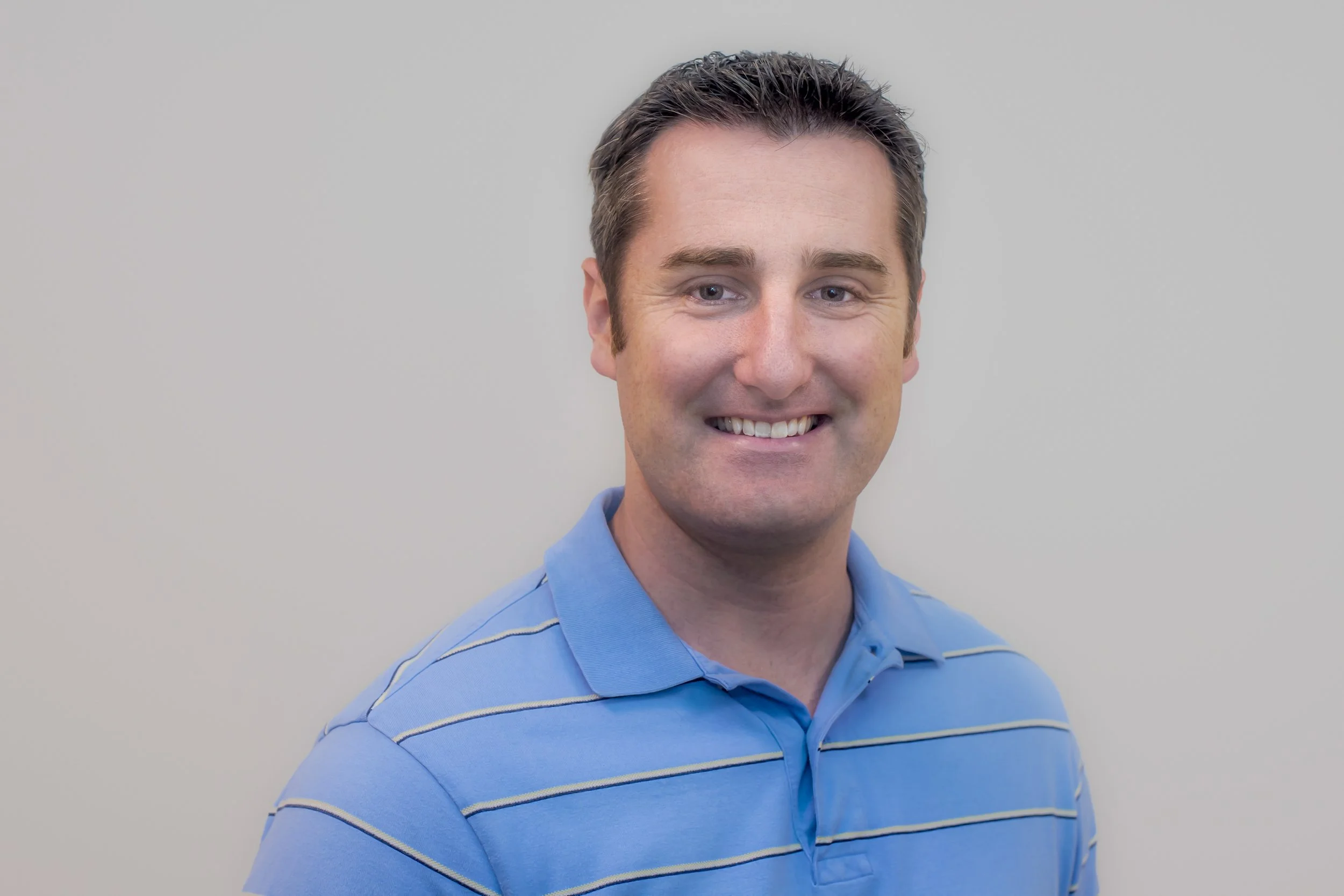
On this episode, we bring you a live conversation from the recent University of South Florida Climate Teach-In where Marty interviewed his colleague, Associate Professor from the Department of Integrative Biology, Brad Gemmell. Brad’s research focuses on the ecophysiology of marine organisms, particularly microscopic invertebrates. Brad and Marty discuss how climate change is affecting their behavior, and how these changes are shaping our ecosystems.
Cover art by Brianna Longo
-
Caroline Merriman 0:06
Hey, Marty!
Marty Martin 0:07
Hi, Caroline. It's been a while since we heard your voice on the show, welcome back. Last time you were here was to introduce our Covid Conversations episode.
Caroline Merriman 0:15
That's right, and I'm here this time to introduce another recent live recording event at USF.
Marty Martin 0:20
Yes, as part of the USF Climate Teach-In I got to interview my colleague, Brad Gemmell, in front of a live audience a few weeks back.
Caroline Merriman 0:20
And I got to be in the audience. Listeners will hear me ask Brad a question about ecosystem engineers at the end of the episode. But I didn't get to ask him a sillier "Would You Rather" question that relates to his research?
Marty Martin 0:39
Oh, yeah. What's the question?
Caroline Merriman 0:40
It's would you rather swim in a pool full of syrup or a pool full of Jell-O
Marty Martin 0:45
Oh, that's a great one. For me, I think I'd say jell O, because who could eat enough syrup to escape a pool anyway? But you said that this question relates to Brad's research, how so?
Caroline Merriman 0:56
Well Brad studies animal fluid interactions in the marine environment. So basically how creatures, typically small ones, move through ocean water.
Marty Martin 1:05
Right. A lot of Brad's research focuses on microscopic animals and how they find food in the oceanic water column.
Caroline Merriman 1:11
Exactly, and this is where the syrup comes in. Humans and other large animals glide easily through water. When we push off the wall or the floor of a swimming pool. Movement through water is easy because we have high inertia. The viscosity of water isn't strong enough to impede our motion much.
Marty Martin 1:27
But not so for tiny animals, right? For them, the viscosity of the water has a much greater impact on movement.
Caroline Merriman 1:33
Kind of like they're swimming through syrup.
Marty Martin 1:35
Yes! Brad also talks about how climate change is causing the water temperature to change, which is also changing how species move through that syrup.
Caroline Merriman 1:43
But before we get to our chat with Brad, we have some exciting news. Big Biology is a top rising science publication on Substack. We're so glad that listeners are finding us and subscribing
Marty Martin 1:53
Right now, though, only about 5% of our subscriptions are paid, and we want to change that.
Caroline Merriman 1:58
And the good news is that a monthly subscription costs about the same as a cup of coffee. Those funds help support our producer Molly and interns like Brianna, Cass and me.
Marty Martin 2:07
But if you're willing to splurge for your friends, your family or your trainees, we do offer several subscription tiers on Substack, including group subscriptions. When you subscribe, for yourself or a group, you get access to our full length episodes and behind the scenes extras from our guests.
Caroline Merriman 2:23
But if you can't afford a Substack subscription, just send us an email and we will give you access for free. We know that most of our listeners are students, and we don't want anyone to miss out because they can't afford it.
Marty Martin 2:34
And finally, however you get a subscription, do us the favor and share your interest in big biology with a friend on social media. Now on to the show.
Caroline Merriman 2:41
I'm Caroline Merriman
Marty Martin 2:43
And I'm Marty Martin,
Caroline Merriman 2:44
And this is Big Biology.
Marty Martin 2:58
Brad, thank you very much for joining me today on Big Biology.
Brad Gemmell 3:01
Thanks for having me.
Marty Martin 3:01
So before we get started, let's give the listening audience some context. Here. We're here in the Judy Genshaft Honors College on the campus of USF for the Climate Teach-In that's been going on for several years now, organized by Andrew Hargrove, fostered also by Dean Adams and a whole horde of people across the college that really make this happen. Like Andrew said, I've been teaching in the college, so there's lots of things that have been happening this week, and it's really great to be part of this event.
Marty Martin 3:28
So let's jump into things. I'm really excited to talk to you today about the kind of research you've done. I think we've known each other for quite some time, but most of the time when we get together, we don't talk too much science, so it's good to get to do that. Let me channel my excitement to talk about your research into a question, so when you think about the ocean through the lens of climate change, what's your overarching story that kind of ties your research program together?
Brad Gemmell 3:52
Yeah. So, for me, I'm really interested in how the ocean water controls so much about life in the ocean itself, so especially at these really small spatial scales. So most of the biomass in the ocean is actually really small, and it operates at a completely different scale of physics than we're used to, right? We can go in a swimming pool. If you push off the wall, you can glide for a good distance underwater. Most of the life in the ocean, if they stop propelling, if they were to push on a wall, they would basically come to a stop immediately. And so understanding how the physical fluid environment impacts really important life processes in the ocean: feeding, reproduction, propulsion from point A to point B. And then the climate side of that is that all of this because it's all physics, if you change the temperature of that water, right, one of the biggest things that changes the density and the physics of the water is temperature. And so if you start changing the temperature, you start changing those physics. And then you potentially start altering some of these important interactions.
Marty Martin 5:03
Gotcha. Okay, and we're going to get into one of my favorite topics, Reynolds numbers and such, which is, I think, subtly what you were alluding to. Save that for a minute. Let's talk about your origin story first. So how did you come to be sitting in this chair right now today? Where did you get your degrees? What was your inspiration in Biology? Why do you do what you do?
Brad Gemmell 5:22
So I was born and raised up in the Pacific Northwest, actually, in Western Canada, on Vancouver Island. So I grew up as a kid going to beaches. If anyone's ever been to that part of the world, big tidal range, you get really amazing tide pools and lots of really cool creatures there. So the ocean and life in the ocean has always sort of fascinated me. It was always, you know, for most of my life, kind of just a, you know, an interest and a fascination. And then once I got into college, I started taking some really interesting Biology courses and learning a lot more in detail about life in the ocean.
Brad Gemmell 5:58
I still thought as an undergrad, I was going to go into sports medicine. That was kind of the plan. I was going to go into sports medicine. And it was actually my family doctor that sort of sent me in a different direction. So I was talking, you know, in college, and I was there just for like, a routine physical or something, and he's asking how school's going and things like that. And I was like, oh, you know, I'm thinking going into sports medicine. Okay, that's interesting. You know? He's like, so he actually was a team doctor for a couple of the local sports teams, and then had a family practice. And he's like, let me tell you about what my days like most days. And he sort of describes it. And I'm like, that doesn't sound as kind of glamorous, or as exciting as I thought. And, and it was really interesting, he said, because he was a sort of older guy, "You know, because he was an older guy, and he was like, when, when I was in school, these sort of career options weren't really a thing in biology".
Brad Gemmell 6:45
And so that got me really thinking about, you know, exploring marine biology, and started taking some really cool field courses that were offered. And it turns out that towards the end of my undergraduate degree, I took this course up in a place called the Bamfield Marine Science Center, which is based on sort of field-based courses. And the guy who taught it was an expert in, one of the world's leading experts in marine zooplankton, the animal plankton, and is from the University of Texas. And so that's how I met him, and ended up applying for grad school. And I ended up going from the Pacific Northwest to South Texas, which was a culture shock in many different ways. And from there, did my graduate work, ended up doing a postdoc up in Woodshole in Massachusetts, had a brief stint back in Texas, and then to USF as a faculty member.
Marty Martin 7:36
Okay, so I think that, I mean, it's great hearing that because my background, I'm not going to go through my origin story, but there's a lot of sort of haphazard. Some of the things that you know you go to this course, you meet one of the world's experts on animal plankton, and now that's what you do. But, you know, you thought you were going to be a sports medical doctor. Was there much deliberation? I mean, when you sort of had that inspirational moment was it a plan thereafter? Because I know, for me, I always had these sort of like, well, this looks really cool, and then you sort of just deeply invest in what it is and what you thought you wanted to do, well, maybe not, but where you are becomes what you really like. And I know talking to students, that people tend to have a different perspective on how that works. How did that go for you?
Brad Gemmell 8:19
Yeah, I mean, it was really the decision to go into sort of academia, into into a faculty member, really didn't happen until grad school, when I was pretty deep into into grad school and just, you know, being able to, you know, develop and use these new tools to answer these really cool, interesting questions. And it just became kind of obvious that, you know, I didn't want to end there, right? I wanted to keep going and keep addressing and asking these questions, and be able to kind of do it on my own terms, right? It's one of the nice things that we have as faculty members, is that we can choose which questions, you know, within reason, to pursue. And that was just really attractive and exciting to me.
Marty Martin 9:02
Yeah, the sort of, make your own Choose Your Own Adventure, make your own destiny, kind of thing.
Marty Martin 9:07
Let's jump into the things that inspire us so much. Let's talk about your research. So I think I want to start broad. We're here at a Teach-In, we want to try to put your work in the context of climate change. What do we want listeners to know about the future ocean, or maybe even the current ocean as it warms? What are going to be the important characteristics to recognize as we start to get into the details of your work, and you can talk about Reynolds numbers now, if you want to.
Brad Gemmell 9:42
Yeah I'll start with the fact that the places on our planet where we're currently seeing the most dramatic changes, the most dramatic warming, are in the ocean. The ocean is absorbing a good fraction of the CO2 that's being produced and that's having profound impacts already that we're capable of measuring. When we talk about the small scale, again, most life in the ocean, most biomass in the ocean, is pretty small, most of its microscopic and you alluded to Reynolds numbers. So for those that don't know, the Reynolds number is just, quite simply, the ratio of inertial forces to viscous forces. So how important is inertia, that ability to like push off a wall underwater and glide, versus viscosity. And most life in the ocean experiences water very differently than we do. So we are, as humans, a large Reynolds number organism, right? Our Reynolds numbers in the hundreds of 1000s to millions, depending on how fast you can swim. But that is, so what that means is that the inertial forces are hundreds of thousands or millions of times more important or greater than the viscous forces.
Brad Gemmell 10:57
For really small stuff, it's kind of flipped so, so for sort of the what I try and tell people is to envision what it's like to be a low Reynolds number swimmer is to jump in a pool filled with honey or corn syrup and try and go underwater and push off that wall, right? You're going to come to a stop pretty darn quickly. And that's what life is like for these small things. And what's amazing about changing temperature of the ocean is that a lot of life in the ocean, even things like bluefin tuna, right? They start off life as a tiny, almost microscopic, larvae. And so they start off life in kind of this lower Reynolds number, more viscous fluid regime, and then they have to transition into this more inertial regime as a juvenile or an adult. And if you start to change the temperature of the water, you change the physics, you actually change where those where that Reynolds number, where the viscous forces switch to the to the inertial forces. And that can have profound impacts that we still don't really understand.
Marty Martin 12:01
So before I dig into the, you know, the various different studies you've done. We keep talking about temperature, and when people think climate change, it's what they think. But in the oceans, the climate is affecting them in many, many different ways, with one of the conspicuous ones being acidification. Are there other dimensions of change that are also apt to affect Reynolds numbers?
Brad Gemmell 12:21
Yes, so, as you mentioned, acidification, so if the ocean's absorbing a lot of CO2, CO2 comes into the ocean that forms carbonic acid, that changes the pH, it makes it more acidic. That has some pretty profound impacts on anything that's making a skeleton or a shell out of calcium carbonate, right? So that that has, that's another kind of important and well-known fact that we're dealing with, with, with these changing oceans. But also, when you start to, going back to temperature, it's not just the raw temperature change. The ocean is kind of like a layer cake. The surface of the ocean in most places in the tropics and subtropics, the surface water is quite warm. But even if you go to the equator, if you go down a hundred meters, that water is the temperature your refrigerator, and it's that way all the way to the bottom. And so you get these sharp changes in temperature from the surface to the depths. And if you warm those surface waters further, you get that that that change, that we call that a thermocline, right? That thermocline gets sharper and that can form a stronger boundary to motion and things like nutrient upwelling and things all sorts of really important large scale impacts in the ocean.
Marty Martin 13:33
Yeah. I mean, I think this is a point that I want to make sure that we continue to come back to. I know that when I think climate change, immediately I go to temperature, but there's this multi-dimensionality of effects that's happening. And has big things as you say immediately, you know, when we put our mind in the okay, there's lots of stuff, we're still going to think about the things with reference to big things like us. But we want to remember that diatoms and jellyfish and the organisms we'll talk about, life's a very different experience. So let's talk about the specific research that you've done. And I want to start with a paper that was in Current Biology last year, led by Thomas Irvine. The paper's core finding blew me away to say the least, you and he and colleagues found that oceanic ctenophores, you got to tell us what a ctenophore is, are ingesting 32 to 50 prey per hour. Now everybody in the audience is going, so what? What difference does that make? Because we have no context for it, right? But that means that they're the most impactful planktonic predator in the ocean. So tell us again, what a ctenophore is. But then, why is that surprising, why is that finding surprising, and why didn't we already know about it? Because, as you know, this is an abundant organism.
Brad Gemmell 14:45
Yeah. So let's, let's go back to what a ctenophore is. So we're talking about. So jellyfish is kind of a synonymous term for gelatinous things in the ocean. When a marine biologist referring to jellyfish, we're referring to like cnidarian animals, so things with stinging cells is basically jellyfish, right? But there are lots of other types of gelatinous animals and gelatinous plankton there. There are things like salps, which are actually urochordates. They're one of our closest plankton relatives that are not related at all to jellyfish, other than the fact they're gelatinous and relatively transparent. Another really important group are the ctenophores, commonly known, you may have known more commonly as comb jellies. They're the things you'll see if you go to a public aquarium, they're the things that have those sort of rainbow colors on their ctene rows. They're pretty amazing animals. They're actually the largest animals that propel themselves and swim using cilia. So most things that use cilia are
Marty Martin 15:38
Paramecium tiny stuff, yeah right.
Brad Gemmell 15:39
single-celled, microscopic, little protists, right? These are large metazoan animals that sort of fuse their cilia together, and we call these comb rows, and they make this very hypnotic, sort of meta chronal swimming. And that's what you'll sort of see the when the light reflects off, they associate this rainbowy thing. So if you see that in, you know the Florida aquarium, or any public aquarium, a lot of them have displays now they can, we can culture them pretty easily. At least this one species is coastal species we can find around here. So that's what ctenophores are remind me of what the next part of the question was?
Marty Martin 16:11
Well they eat voraciously. I mean, they're little lions of the marine system.
Brad Gemmell 16:15
Yes. And so they have this ability to do basically what they're doing. There's, there's two ways that ctenophores feed. They can sort of drape down these two tentacles that have these sticky coloblast cells on them, and they can sort of sit and wait. We call those ambush predators. They'll sort of sit there, deploy, basically a sticky net, and wait for prey to encounter them. And then there are we call the lobate ctenophores. And these guys are constantly swimming. They have these big, fleshy, gelatinous lobes that go out in front of them, and they're basically hoovering up the ocean constantly. So they're swimming, and one of their superpowers is that they have the ability to move through the water, and they create almost no physical disturbance around them. So their prey these little things, little crustaceans called copepods, which are actually one of the most abundant animal groups on the planet. The way they detect predators, they don't have image forming eyes, so they have these antennae, which are detecting minute signals in the water. So you know, a small fish swims up to them and tries to eat them. That fish is going to create this big bow wave of disturbance in the water, and it's going to alert that copepod there, and the copepod can swim very quickly away. Ctenophores basically have found a way to circumvent that escape response in these highly abundant prey items that they're targeting, and so they can produce almost no fluid disturbance. And they themselves are incredibly sensitive. So these copepods, on average, are about a millimeter in size. Their swimming appendages, the things that they swim with, are about a tenth of a millimeter in size. And you can imagine how tiny of a disturbance that creates in the water. The ctenophores, once a copepod is kind of within, within the capture zone of these ctenophores, they can sense the tiny movements of their swimming legs and their mouth parts when they're feeding, and they will just close in on it and just seal it off, and there's no escape for the copepods. And they're doing this day and night 24/7 and just constantly eating and growing. And so they're capturing, yeah, you know, 35 to 50 animals per hour in these warm, tropical, subtropical waters, they're actually digesting their prey in about 30 minutes. So what you're seeing in their gut, and you'll see them underwater, I mean, they're transparent animals, but usually the thing you'll see, one of the ways to see them is you'll actually see their guts are filled with all of these prey items. And if you're what you're seeing is a snapshot, all those things were eaten within the last 20 or 30 minutes, and they're constantly full.
Brad Gemmell 17:02
Yeah. Well, so and so, something charismatic, as we started with, conspicuous, voracious, iconic, like I can come up with a hundred different adjectives every marine biologist and her brother would seem to want to study this. Why did you have to come up with this novel scuba technique to make all these descriptions that no one had done before?
Brad Gemmell 18:56
Yeah, well, so let's start with the conspicuous nature of this, because for the longest time, the way that humans have sampled the plankton world is by basically dragging these coarse mesh Nitex kind of nets through the water and and then, you know, everything collects down, what you call the cot end, and you collect that, and then sort of count what's in there. And so the problem with that is these animals being gelatinous, and mostly water based, are incredibly delicate, so they get destroyed in these nets, and the only thing you kind of end up with is maybe a little bit of gelatinous goo, unrecognizable goo. And of course, for hundreds of years, we had no ability to look at genomic DNA and stuff like that, and so it was always just discarded. So we really underappreciated and underestimated how many gelatinous plankton there are, and just how abundant they are in most of the world's oceans. It was only after, you know, a handful of divers started going out there again. Most people, when you go scuba diving, you're not gonna, we've talked about this earlier, most people want to go into a nice, shallow, clear coral reef or something like that, right? Very few, very few people are like, "Hey, take me out into 7000 feet of water and just drop me in there and let me look around." But that's where you really need to go to be able to see these things.
Brad Gemmell 20:28
So once you're in the water, they are conspicuous. But for most of human history and studying the ocean, we've really missed these things in the way we've been sampling, and it was really only in the last several decades with the advent of these towed camera systems. So these systems, you can kind of tow behind ships, and they take really nice line scan cameras, good images, even of transparent things. And the first time I saw these cameras being used was actually at a conference, and it was, it was, it was amazing, because the author of the study was presenting the paper was kind of like, "Oh yeah we deployed that. We developed this camera, and we deployed it, and, you know, we deployed it here, and we found, we just happened to find there was, there was a big jellyfish bloom here, and then we deployed it over here in the Mediterranean, and found a big jellyfish bloom. We deployed in the Atlantic. There was a jellyfish bloom there too." And it was afterwards our colleagues kind of talked to him. It's like him. It's like, that's actually what the ocean is like.
Marty Martin 21:24
That's not a bloom. It's just everywhere.
Brad Gemmell 21:25
Yeah it's not a bloom. Yeah they're all over the place. And so based on their abundance and their incredible feeding efficiencies, they are, we predict, kind of the most impactful predators on small zooplankton in the ocean.
Marty Martin 21:43
Wow. All right, I want to give everybody the chance, though, to appreciate the Indiana Jones nature, marine version, of what you do. Because we've talked about this over beers, and I would really have to have beers to talk about this, because where you go to do this is terrifying for me. So, so talk a little bit about the 7000 feet of water. Expand on that, because I think you sold us short on some of the parts of that story.
Brad Gemmell 22:06
Yeah. So in order to study these guys, these are oceanic animals. You don't find them in shallow coastal zones. So in order to study them...and I'll also preface this with the reason we have to go to them to do this is several fold. One, as I mentioned already, they're incredibly delicate. So they don't survive capture very well or for very long they and they don't, being an open ocean animal, that's very delicate, they do not do well in captivity. We can do some things if we collect them, so we'll collect them with jars underwater, so we don't touch them. We sort of just collect them in the water that they're in, and we can work with them for several hours after we get them back for some species. Some species are just really long and delicate, so they're not even tractable to work with in a laboratory, so we can't culture them. They're incredibly delicate. They don't live long in captivity, and so in order to study them, we kind of have to go to them. So that's why we're going into these environments in the first place.
Brad Gemmell 23:08
To go to them, obviously, they don't live near shore, so we have to go into deeper oceanic waters. And we've identified a handful of sites. We've sort of narrowed down, kind of a few different field sites around the world where we can access these pretty quickly. One of them in Florida is actually, if you guys don't know, a unique geography of Florida. So the Riviera Beach, Palm Beach area of Florida is actually the most easterly part of Florida, and so it kind of sticks out. And the Gulf Stream current, the strongest, fastest ocean current in the world, actually essentially clips the continental US only at that one point. Once it gets beyond that, it sort of deflects north and kind of moves offshore. And so just off that coast, we can access with relatively small boats in a short period of time, within about an hour of shore, we can jump in and access these open ocean animals. Another site we use is the coast of Kona, Hawaii, same thing, middle of the Pacific Ocean. It's the big island's the youngest geologically, so it drops off very steep, so we can access deep ocean water very close to shore. And that makes it easier for us.
Brad Gemmell 24:13
But we do have to go into this deep water, and it is a little disconcerting. The first time you jump in. You jump in, if it is a daytime you get in and you get down about 50 or 60 feet, and you look around and it is just blue in every direction you look. And it can be a little disorienting. I remember one of the the first times I was doing this in grad school, we were doing it in the in the Gulf off the coast of Texas, and one of the other students I was doing it with was trying to point something out to me, and I looked over and he was completely upside down, because there's no visual reference. And so sometimes it's kind of easy to get kind of all vertigo, and get a little bit mixed around and and you have to actually conjure, one of the things they tell you is, if you get a little bit of disorientation, just watch your bubbles. Blow some bubbles, the bubbles will point up, right? They'll, they'll tell you the direction you're supposed to be going. He was upside down, the bubbles were going past his feet, had to kind of turn him around and he was fine after that.
Brad Gemmell 25:07
But, yeah, but in order to assess the feeding rates. So one of the other amazing things in the ocean is the largest biomass migration on our planet happens twice a day, every day in the oceans. So this thing called diel vertical migration, right? So during the daytime, a lot of these small organisms and animals will actually descend into deeper, darker depths in the daytime to avoid visual predators, and then they'll come up at night, where most of the phytoplankton and food is to feed. And they do this every day throughout their whole lives. And so in order to understand these ctenophores and how they're feeding, we need to understand what's happening in the daytime and nighttime. So we also have to do so we do this blue water dives, and we also do this thing called black water diving, which is going in at night. And that ramps things up a little bit more, because, you know, it the first time you do, you know, takes a little bit of convincing yourself to jump off the back of a ship in 7000 feet of water in the pitch black.
Marty Martin 26:06
Yeah in a stream where, you know, if you somehow disconnect from the boat, you're just gone in the darkness.
Brad Gemmell 26:13
Right. Yeah, so we we drift dive, boat follows us, and we use a buoy that's got a big light on the top, so the captain can follow the buoy, and then there's a down line, and we put different colored glow sticks on there, so we have a visual reference there, so you can look across and be like, Okay, I'm at 20 feet, I'm at 40 feet, I'm at 60 feet, and we just kind of you stick there. And the Gulf Stream is pretty amazing, because that current is really moving, but when you're in it, everything's moving with you. So your frame of reference is, if you're just in a stagnant aquarium drifting around, and then you come up and the captain tells you, "hey, you guys just drifted six and a half miles in an hour." And we're like "Oh, it felt like we'd gone nowhere." He's like, "Yeah, I was, like, chasing you guys down because, like, the boat was down. So but yeah, and we see, you know, at night time, of course, you go in the open water, and we were there with our cameras. There's electronics. We're making a bunch of noise. And one thing I learned early on doing this is that sharks have really good hearing. So it's not unusual that we attract some big pelagics when we're down there as well. They're not our target organisms, but we sometimes get visits from some of the bigger pelagics
Marty Martin 26:14
Well you know what you've just done, you've attracted lots and lots of undergraduate research interest. Nobody's gonna be terrified to float in the middle of the ocean with sharks in pitch black darkness. Sounds like a vacation to me. All right. Before we turn to another study, let's go back to the climate change dimension. How are you thinking about ctenophores and their feeding in the context of ocean change?
Brad Gemmell 26:43
Yeah so again, this whole interaction is happening at a relatively low Reynolds number, right? So what that means is that any change in fluid density, if you're changing the density of the water, you're potentially changing how these signals are being perceived and generated by prey and predator, which can potentially impact the interaction the success rate there. Also because these ctenophores are they're not endothermic, they're ectothermic, so their digestion rates are very closely tied to external water temperatures. So if the water temperature warms up, digestion rate speeds up, their metabolic rate speeds up, how that changes things? Does that? You know, it's still kind of a an unknown question. I mean, if they can, if they can speed up their metabolism and capture more prey, they can potentially grow quicker, changes their reproductive output. If they're not capturing, if they're capturing the same amount of prey, but their metabolic rates speeding up, then that could potentially slow growth rates, population growth. And so we don't have a great handle on that yet.
Marty Martin 26:43
Right, right, and ecologically, I mean, maybe this is the work to come in the future, and we can get back together and talk about this. But because they're eating these copepods, I mean, whatever is happening to them is going to percolate throughout the rest of the marine web. When you're talking about something that's so voracious, its behavior has implications for lots of other things.
Brad Gemmell 27:20
Yeah, there's a coastal ctenophore. It's very common. So the one you'll see in public aquariums we talked about, it's a genus called mnemiopsis. You can find them here in Florida. They're in Tampa Bay. They're all kind of throughout the East Coast, into the Gulf, but they bloom every summer to really high densities up around in the northeast, around like Massachusetts, Cape Cod area. And I did a postdoc up there, and I remember trying to collect copepods for something. I don't actually remember exactly what the project was, but I was trying was trying to collect copepods in the summer, and it was almost impossible to find copepods. Winter and spring you can walk up and down the dock and have millions of copepods in a couple minutes. In the summertime, it was almost impossible. So they, I mean, they crop down and they have. Massive trophic impacts when they get abundant.
Marty Martin 30:10
Okay, so off of ctenophores, and let's switch to a completely different form of life, the diatoms. This is an older study from 2016 and I think this one's really cool, because it really gets into the biophysics and some not nearly intuitive kinds of things for big critters like us. And it involves their sinking. In fact, it involves their sinking behavior. Now, when you explain to everybody who doesn't know what a diatom is, to add the word behavior to something like that, that alone might be bizarre, but what does sinking matter? Why does that matter for these organisms?
Brad Gemmell 30:44
So, yeah. So let's switch gears a little bit. So diatoms are single celled marine protists that are photosynthetic. They are members of the phytoplankton community. In a lot of places in the ocean, they are the dominant type of phytoplankton in the ocean. And what's kind of unique about them is other types of phytoplankton, things like dinoflagellates, they're motile, they have flagella, or some will have cilia, some photosynthetic bacteria are motile. Diatoms are a relatively large and they'll be important in a minute compared to other types of phytoplankton, and they have no external ability to swim or move. They don't have cilia, they don't have flagella. They essentially have cell walls. They basically make a glass house for themselves. They make silica dioxide frustules. So it's just a sort of their you can think of it as sort of the cell wall, almost exoskeleton-type structure that they have. So sinking is really important for these guys.
Brad Gemmell 31:46
So number one, because they have this cell wall of relatively heavy silica dioxide, they are negatively buoyant in sea water, right? So that means they're going to sink. And humans have been interested in these for some time because they are so abundant in the ocean, they can be the dominant type of phytoplankton, and they tend to sink. So they actually are a major exporter of carbon from the surface waters into the deep sea. So globally, they export massive quantities of carbon as they sink. And the question that I'll often get asked is, well why would they do that, right? Why would you sink if you're a photosynthetic organism, right? All the light is up at the surface, where the sun is.
Brad Gemmell 32:30
That would seem to be a problem.
Brad Gemmell 32:31
Why? Why do you sink into the depths and die? And the answer that gets back to their inability to have any locomotion, right? So all they can do, let me step back one step. Because for a tiny thing in the ocean, you get plenty of sunlight. So for to undergo photosynthesis and to make photosynthate And to make, you know, carbon-based sugars and things like that, you need three major things, right? You know, you're planting your garden, right? Or you have potted plants, you're a gardener, or something like that. You need light, you need water and you need nutrients, right? Well, if you're in the surface waters of the ocean, light and water are taken care of already, right? So the only thing you need to worry about, really, is nutrients. And that is actually a really big problem in the ocean, because there's lots of different types of phytoplankton, and their small size means they have a really large surface area relative to their cell volume. And so they can take up nutrients pretty easily through diffusion. And so what determines how much phytoplankton there is in the ocean really determines how much nutrients there are. And you can be in a really rich environment, like with lots of nutrients in it, but when you measure the nutrients in the water, you'll almost always measure almost nothing, because the phytoplankton are so good at taking that up and incorporating it. And so phytoplankton have to move to they can enhance their nutrient flux, how much nutrients they get by movement, right? So if you envision just a cell sitting there taking up nutrients through diffusion, you have this gradient, right? Like at the absolute cell surface, there's no nutrients, they've taken it all up, right? And then, and then you have this diffusion gradient to whatever the ambient is in the water. And so we call that diffusion-limited uptake, right? And we know that diffusion is a pretty slow process. So cells can kind of cheat. They can kind of speed things up. If they swim, if they move, they can actually change that sort of boundary layer around them, they can thin it out, and they can, they can kind of reduce that diffusion-limited boundary layer. So the only way diatoms can do that, the only way they can move is by sinking right so they sink and then they get a better nutrient flux, and they can grow. And that's really what started that whole study.
Brad Gemmell 34:56
What's unusual about this is that, okay, we've known that diatoms sink for a long time, right? It's actually been incorporated into into carbon export models and climate models and things like that, for a long time, the rates of sinking in these diatoms. And this was, this was one of these, like classic accidental discoveries in science, because I had a colleague who was a phytoplankton ecologist come to me and say, "Hey, Brad, I've got this mixed assemblers. We just did a net tow. So we collected a bunch of phytoplankton. Do you think, with your imaging and your camera systems, you know, is it good enough to, like, can we distinguish species or general taxonomic groups out of this mixed assemblage?" And I was like, "probably, let's bring me a sample, and we'll put it in there."And we bring it in. It was a sample of mostly diatoms, and we put it in there, we put it under the camera, and I had to check because it looked like the screen was sort of glitching and freezing. And I checked to make sure everything was running fine. I asked my colleague, I was like, do these diatoms normally sink in this really weird pattern. They would basically stop and be totally neutrally buoyant, and then just drop like a stone for a second or two and then stop again almost instantly. And the whole population was doing this. And I asked him, "I was like is this normal?" I looked over at him, and it literally was like the jaw on the floor moment. He was like, "What are they doing? I've never seen this before in my life." And that was sort of the the what spun the study up and got us to ask these questions.
Brad Gemmell 36:28
So it turns out they have this ability, doing this unsteady sinking, they take advantage of, obviously, they know nothing about physics, but they're taking advantage of it. By sinking really quickly they shed that boundary layer that we just talked about. But when they stop, it turns out that, because diatoms are larger than most phytoplankton, when you do the calculations, it actually takes about thirty seconds to fully re-establish that diffusion, limited boundary layer. So in the period of time they're stopped, the physics of nutrient uptake is still as if they're moving.
Marty Martin 37:03
It's their advantage, right, yeah.
Brad Gemmell 37:04
Yeah. So as long as they do another drop in, another quick sink again, within about 30 seconds, it's like they're moving continuously. And it's a huge advantage, because they get the physics advantage of moving continuously, but they're only moving about half to a third of the total distance, which keeps them closer to the surface longer, where the light is. And so
Marty Martin 37:29
That's just fantastic. Can you, can you speak to so one of the qualifiers in the abstract of this paper is that you say that this is a metabolically active phenomenon. So to me, that means it is a behavior, right? It's not, and, you know, this start, stop, kind of thing. It is not a passive process. It's something that the big ones, especially, maybe exclusively, do.
Brad Gemmell 37:52
Yeah, we had a hard time convincing traditional phytoplankton ecologists when we start talking about diatom behavior, they're like, diatom, what?
Marty Martin 37:59
Scuse me
Brad Gemmell 37:59
Yeah, so, but yeah. So the we did some, you know, after the initial discovery, we wanted to figure out what they were doing is this passive. How are they doing this? And we use some pretty elegant, simple experiments. So we would, you could take these, these diatoms, and you could expose them to things like actin inhibitors and other physiological inhibitors, and then you put them and film them again, and they just sink like stones. And then you rinse them again with filtered sea water and put them in and they're doing this unsteady sink so that showed us that this is indeed an active, metabolically active, true behavior now. And we had done, I have done a bunch of subsequent studies looking at the fact, it's really cool. they actually turn this behavior off at night. So during the daylight hours, when you've got sunlight and your chloroplasts are active and you're making ATP and generating these things, once the sun goes down, why would you, why bother? Why bother doing this unsteady sinking, because you know you can only take up so many nutrients, right? You kind of fill the gas tank up, and once that's full, they just kind of sit there in this really neutrally buoyant state, until the light comes back on again. And then they're generating photosynthate, then they need the nutrients, things like the nitrogen and the phosphorus, to start making more complex organic molecules and stuff like that.
Marty Martin 39:16
Okay, so I wasn't going to ask you this, but diatoms have always been one of my favorite living things, because they're so weird. You keep mentioning that, relative to a lot of the other plankton, they're big, but everything that we're talking about is that that's not so bright, evolutionarily. Why should they be big? Does it have anything to do with their weirdo reproductive strategy? Because, you know, maybe you, say something about how part of the reproductive process of a diatom and how bizarre it is relative to most life we know.
Brad Gemmell 39:46
Yeah, diatoms are weird for a lot of different reasons. Because they make this silica dioxide frustule, they basically make it in two halves. So when you think of a diatom, it's very much like a Petri dish. It fits together as a Petri dish. And so the majority of a diatoms life, it's, it's reproducing asexually. So it's just cell division, right? Binary cell division. But in order to do that, the petri dish, those halves, once it's made that silica dioxide frustule, it's kind of locked into place. So in order to do that, it separates, and it makes a new valve on the inside of that one. So every time they divide, they get smaller, and they reach a state where they can't get any smaller, and that triggers sexual reproduction. And then you they explode, and then they get really large again. So they have a really weird reproduction strategy that obviously affects nutrient uptake and sinking, and all that stuff plays into it. And, yeah, they're just really, really bizarre.
Marty Martin 40:46
So has there ever been sort of a developed theory about there was an accident of history, and they became big because of this sort of silica encasement, and now they can't go back from it, and they had the secondarily evolved, the weirdo sinking kind of behavior, or?
Brad Gemmell 41:02
The most convincing hypothesis I've seen as to why diatoms get so much bigger than other types of phytoplankton, and why they have this silica dioxide. Like why make a big, heavy glass house, right? If you're trying to stay near the surface. It's anti grazing pressure. So phytoplankton are grazed down by the zooplankton, right? The animal plankton, mostly things like copepods, are really abundant. And so I've seen some pretty amazing videos from one of the who's actually on my on my PhD community, who sort of pioneered this really high speed, high resolution imaging of marine organism behavior, and had these things as copepods with a mixed assemblage of different types of phytoplankton. And they would grab these big diatoms and try and manipulate them. And you could see the thing trying to, try to shove this diatom in its mouth, and it just couldn't, eventually, just kind of tossed it to the side. And diatoms will also, some of them will form chains, so individual cells will be connected by that silica dioxide frustule, and they'll form these chains. Some of them will have spines on them, and we think that's mostly due to anti-grazing pressure being putting yourself out of the realm of these small copepod grazers. So being big is an advantage, because the bigger you are, the less things are available to eat you. But if you're a phytoplankton, being big is a disadvantage, because your surface area to volume ratio becomes a problem, right? It becomes a lot harder to uptake nutrients to satisfy your cell volume if you keep getting bigger. And so diatoms ecological solution appears to be get big so you're not being grazed upon as much, right? You're out of the grazing pressure for a lot of potential predators. But then do this unsteady sinking to sort of tweak the physics back.
Marty Martin 42:53
To compensate for your glass house, yeah. Okay, all right, cool. Circling back to the climate change dimension, so you mentioned that you know these are one of the biggest living things, biomass wise, in the oceans, and they're playing a big role in cycles of carbon. What's the thought in the future about their fate?
Brad Gemmell 43:13
Yeah, so there's been a few different models that have gone sort of in some, a little bit different directions. The most prevailing one is that primary productivity in areas where nutrients aren't extremely limited can increase if you're increasing CO2, right? So just like you thought, you know, with terrestrial force and things, there's growth rates can increase as long as there's enough nutrients, nitrogen and phosphorus to support that. The flip side of that is, if we're getting more stratification, if we're getting a stronger boundary between the surface waters and the deep, nutrient rich waters, it makes it harder in a lot of places, for nutrients to get to the surface. So in areas where nutrients are already exhausted or potentially exhausted, having more CO2 in the water is not going to increase your primary productivity.
Brad Gemmell 44:07
Diatoms aren't in the same boat as some other types of marine plankton that have calcareous shells and input there, so they don't seem to be impacted by the acidification nature of it, so they seem to be pretty robust in terms of their growth at different pHs. But a lot of it comes down to, and it's a really hard thing to predict, right? Like, what areas of the ocean are going to get more stratified? Some areas may have more mixing, if you have, you know, atmospheric warming and more turbulent environments, stronger storms and things like that, you can, you can actually get more mixing, which could potentially generate more nutrients. And these things aren't going to be balanced equally across the globe. It's going to be, it's going to be pretty local. So it's really hard, I think, to draw a general conclusion of what sort of is going to happen in terms of diatoms, phytoplankton on a global scale. I think it's going to be pretty regional. Areas where nutrient input and mixing is reduced, you're probably going to see less diatoms, less phytoplankton. Areas where atmospheric and ocean conditions enhance mixing and storm activity and things like that, you could potentially see an increase.
Marty Martin 45:24
Yeah, okay, complexity, complex outcomes, hard to predict. That's a typical kind of thing with these, yeah.
Brad Gemmell 45:30
That's aways is, yeah, it's, it's, and it's never an answer like people usually want to hear
Marty Martin 45:35
Nobody wants to hear that but, but it's the truth. It's the way that it goes.
Marty Martin 45:44
Alright, let's, let's turn again to another gelatinous critter, but a different one than the ctenophores. And this based on a paper that a PhD student from your group, David Durieux, published in 2021 and again, one of these just mind blowing. I can't believe this kind of finding, involving an organism that many of you might have seen before, Cassiopeia, the upside down jellyfish, really, really common kind of organism in mangrove ecosystems, but its role as what you call an ecosystem engineer, again, mind blowing. So tell us about that study and that result,
Brad Gemmell 46:22
Yeah, if anyone I mean, these are animals that are native to Florida, typically South Florida, really common around the Florida Keys. You ever seen one of the upside down jellyfish? They're named that way. So they're actually a benthic jellyfish. They can get up and swim if they want to, but they spend most of their life upside down on the bottom. So they actually have symbiotic zooxanthellae a lot like a lot of corals do. So they have these symbiotic algae in their tissues. And so they basically sit upside down in really brightly lit, shallow, tropical protected systems, and they sit there and they and they pump so they get a lot of their, you know, carbon and sugars and things like that, from their symbionts, but they still have to obtain nitrogen, phosphorus, so they still are capturing things like plankton.
Brad Gemmell 47:11
This study really started. It was spurred by a couple of my colleagues, Kakani Katija, who's at MBARI, the Monterey Bay Aquarium Research Institute now, she's an engineer. And an engineer John Dabiti, who's at Caltech. They published, when I was a graduate student, they published a really interesting paper, basically showing that jellyfish, when they're really abundant, are swimming and disturbing the water, and they often undergo these vertical migrations that we talked about. And as they do so, in areas where they're really abundant, they're potentially capable of actually mixing parts of the ocean biogenically, it's called biogenic mixing. The story, the paper had, you know, a lot of attention on it, and has managed a lot of potential controversy about whether this is happening or not, because, you know, these animals aren't always really this concentrated in nature. So you know, how important is it in the open ocean? And it sort of was left as an open-ended question.
Brad Gemmell 48:11
And then when I moved to Florida, one of the first field work that we did was down at the Keys Marine Lab, down in the Middle Keys. And as soon as you get there, and we didn't have to get in the water, I mean, the whole boat ramp, which is filled the whole bottom, was carpeted with these upside down jellyfish. And it got me thinking, and you watch them, they're all just sitting there pulsing on the bottom. And here's a thing I was like, I wonder how these things mixing? You know, are they? What are these things doing in their in their ecosystem? And it turns out, the because they're abundant all the time, like you swim over, and again, it looks like the whole bottom can be carpeted. I mean, I think David found that you can have over a hundred individuals per square meter on the bottom.
Marty Martin 48:58
Yeah, that's literally a carpet
Brad Gemmell 48:59
A literal carpet of these things. And so that generated the question, okay, what are these things doing? And this, so happens, again, one of the things that one my group has pioneered is taking these really cutting-edge state of the art laboratory tools, such as particle image velocimetry, which is laser-based systems. So we shine a laser, we add particles to the water, and we filmed that with a high resolution high speed camera. And we can track the motion of the fluid using these things. And so we built a couple of in situ based systems. We'd actually take it underwater in the natural environment, and we put it over these jellyfish, and they were just mixing like crazy, these shallow systems. And when we quantified it out they were turning over the entire water column where they lived in these in these mangrove ecosystems, they would turn over the entire water column every 10 to 15 minutes. So they're just mixing the entire environment. And not only that, they sit on the bottom. And one of the things that David found when he got into this a little deeper. Is they on the bottom, and they actually create a suction pump. So they're actually ventilating the bottom itself. So they're bringing water into, into the into the pool water, which is normally anyone that's gone out into sort of these muddy areas around Tampa Bay, right? You walk in there is that muddy, that black, sort of sulfur, kind of rotten egg smell, right? That's because those sediments go anoxic very quickly, the jellyfish are actually aerating those sediments and keeping them, keeping them oxygen, you know, at a high level oxygen. And so that's where they've sort of, we sort of turn these, these ecosystem engineers, because they're, they're....
Marty Martin 50:34
I mean, it's remarkable because it's every 15 minutes, turning over the water column. And you know, to your point about other jellyfish in other regions of the ocean, it would be hard to maybe detect that, and it would be hard to accept that. That's a profound effect. But these mangrove systems are never very deep, and they really don't turn over otherwise, and yet, they're one of the more productive parts of the world. So this is like that little extra piece that makes sense of what otherwise may be surprising.
Brad Gemmell 50:59
Yeah, yeah. What's amazing about these systems is because they're in the mangroves, you get very little wind driven mixing. The mangroves are very good at sheltering. That's one of the main reasons why they're good to have round for hurricane protection, right? They buffer against the wind and the wave action and protect coastlines. So there's very little wind action. And in these shallow kind of mud flat systems, most of the tidal flow goes in and out of these shallow, we'll call tidal creeks. So very little exchange actually happens out on these shallow flats, which are about a meter or so deep. So it turns out that, yeah, the jellyfish are responsible for up to about 90% of the mixing...
Marty Martin 51:38
That's just crazy
Brad Gemmell 51:39
in those systems. And they're yeah, they're another animal that's totally amazing and odd in a number of different ways. They're the only jellyfish, and cnidarian that we know of that can release nematocysts from their body and have them active in the water column so they can actually sting you without you actually touching them. So you have to be very careful working in these systems. And it was, it was really ironic, because David Durieux, who my student, who did his dissertation on this work, was the most sensitive member of our lab to the stings, and so we had to be very careful when we're out there, not to stir up a kick up the bottom, because they have the ability to weaponize the entire water column.
Marty Martin 52:22
Oh, my God.
Brad Gemmell 52:22
If they're disturbed.
Marty Martin 52:23
Well, you talk about commitment to your dissertation research, that's impressive.
Brad Gemmell 52:25
He was very committed. Yes, he had a lot of Yeah, I often wondered about, you know, we make these purchases for our lab. We had to, when he was working with them in the labs, we brought them into the tank so we could rear them. They're quite easy to keep in captivity because they have photosynthetic symbionts, just give them a lot of light and keep the water quality up. We had to order those gloves for David. Those ones you use to, like, do medical checkups on, like, livestock and cows and stuff like that, with a really long shoulder length gloves so he could work in the tanks without getting stung. So that was probably an interesting line item on one of my projects.
Brad Gemmell 52:57
But, yeah, they're an amazing, amazing animal. So they'll ask me, like, Why? Why is this abundant? Why doesn't anything come around eat them? And you'll occasionally see some with, like, you know, kind of bit in the park, like sea turtles will come in and eat them. There's parrot fish that that come in and eat them, but they'll only go for the ones, kind of on the edge of the population, because I think once they get in there and they start disturbing the water, I mean, yeah, they'll just release the whole
Marty Martin 53:19
Yeah terrible place to be.
Brad Gemmell 53:20
Yeah. I mean, it's impressive, but also a little scary at the same time that they can basically turn normal, nice sea water into just a burning bath.
Marty Martin 53:29
It's nasty, again, recruiting for research help. This is another pleasant experience.
Brad Gemmell 53:37
Yeah so if any students want to come in and swim around in weaponized water, come on down.
Marty Martin 53:38
So, you know, one of the, one of the coolest things in biology to me is this sort of idea that organisms that aren't humans, that don't have sophisticated cognition, as we, I guess we do, can do these engineering types of feats. And people know about effects of beavers and their dams and elephants changing the, you know, savannas all over Africa. But what other kinds of examples do we have of things without backbones, much less brains as engineers? Is Cassiopea an example?And are there other things that you are looking to investigate along those lines?
Brad Gemmell 54:12
Yeah, well, so the first part, what other types of animals without kind of a central nervous system are engineers? The classic example are corals, coral reefs.
Marty Martin 54:24
Sure, yeah.
Brad Gemmell 54:24
They're the classic ones, right? Corals grow and form these calcium carbonate skeletons that build upon each other and create entire ecosystems. To a lesser known extent, around here, oyster reefs kind of the same thing. So oysters can grow those oyster shells, they'll keep growing on top of each other and form these large oyster reefs. So those are some of the classic kind of marine examples without sort of a central nervous system.
Brad Gemmell 54:44
One of the interesting things about Cassiopeia and these upside down jellyfish is that they are a well known marine invader. So they've been transported around their juvenile stage. So they have a classic kind of jellyfish life cycle. So they have a polyp phase, a little colony of polyps, and then some of those polyps will bud off, we call ephyra on the juvenile jellyfish. And those juveniles are quite active swimmers. And if those get taken up in ballast water or transported due to, you know, aquarium trades and things like that, then they can they've been introduced into a lot of different places. In addition to that, you have this expansion, this well documented expansion of Cassiopeia, both North and South, as oceans warm. You see, you know, an expansion of their of their populations, but also anthropogenic creations, like, you know, we love to make all these concrete canals and embayments, and we put shallow bays and things like that to protect ships and docks and things like that from wave action. Those are perfect environments for Cassiopeia. They don't do well in really exposed areas with lots of current and wave action. They prefer these really quiescent zones. And it turns out humans are building a lot of those quiescent zones.
Marty Martin 56:05
Good for the Cassiopeia. So what's the future? I mean, turning back to the climate change just briefly, what is the future for Cassiopeia and the jellies? Or, I guess let's talk about the broader future biodiversity in the oceans. Are we going to see a world dominated by gelatinous, small things, or again, is it too hard to predict?
Brad Gemmell 56:23
So there's it reminds me of thinking about this study out of Japan, where there's sort of this building anecdotal evidence that humans are creating an ocean that is more favorable to gelatinous things and jellyfish than before. The team in Japan was really focused on fishing and the competition of jellyfish with fin fish fisheries, right? Because, if you know, humans are far more likely to want to eat a real fish rather than a gelatinous ball of goo. And what they've seen over the last several decades is in areas that have been heavily overfished, particularly fishing for the smaller planktivorous fish. So fish, first of all, are actually really good predators. So they're visual predators, so they can actually find and detect individual prey that jellyfish can't do that, right? Jellyfish have to rely on swimming through the water and encountering prey that way. So when zooplankton prey, those populations, get reduced or depressed, that favors fish, right? Because fish are better able to kind of pick off low density prey items and target the higher value, the larger ones, right? If you over fish them, right? Now, you've relieved that predation pressure on these zooplankton, the zooplankton increase. Now if you're relying on encounter rate predators, right? That tends to favor jellyfish. And so there are some studies. The one I'm thinking of out of Japan is probably the one that's that's most cited, that sort of suggests that human overfishing pressures can shift. You get this alternate stable states where you could get to a range where jellyfish are dominant. Also, you know, we know there's, again, range expansion. There's a good number of species in the tropics and temperate regions that will expand further north and south, and they're also one of these species, or the groups of animals that are not really impacted by ocean acidification. They don't have calcareous shells or skeletons that they're worrying about trying to build and find an energy gradient for.
Marty Martin 57:17
Right and I mean, you're the expert, so correct me if I'm wrong. But one of the remarkable things that came to mind when I was reading your work is that these organisms are much more water than a lot of other marine life, meaning that the amount of carbon that it takes to build and run a jellyfish, especially because so many of them are so efficient, it's a much easier lifestyle to maintain than a lot of the things that comprise the oceans now.
Brad Gemmell 59:05
Yeah, so, because jellyfish are more water based than something like a fish, if you assume that, you know, if both a small fish and a jellyfish capture 50 copepods in order to increase in size, that fish is going to maybe increase a little bit in size, right, but it's, it's not nearly as water based, but a jellyfish, right, can increase its biovolume much more greatly with the same amount of food and gelatinous plankton rely on, again, these encounter rates, right? So the more biovolume they have, the more likely they are to encounter prey and keep growing. So, yeah, they have their strategy is pretty amazing, and that they have this ability to get large quickly with relatively low cost.
Marty Martin 59:52
Right. With low cost. Yeah, I mean, I learned thinking about that. I'd never thought about that before. But why isn't more of the world comprised of these very low cost phenotypes, it seems that most things should be jelly fish, or at least more things should be jelly-like.
Brad Gemmell 59:58
Well, things in the open ocean. I mean, when you're the amount of time I've spent there, gelatinous things are by far the most numerically dominant macroscopic animals that we encounter.
Marty Martin 1:00:19
Okay, okay, all right. So few more questions. Zoom out. Think about the future, both in terms of climate change effects and where your research program might be going. So a recurring theme in your work is that you know you're focusing on these little things, their implication, their Reynolds, numbers, and what that means for them. But it's more it's really that you're, what I saw, and what I was fascinated by is that you're asking questions about individual traits and how biophysical processes on the individual scale, right? Maybe it's a, you know, mangrove, or maybe it's the entire ocean and carbon cycles. Are there processes that you've yet to consider or individual traits of organisms that are on the horizon, without stealing the thunder of your upcoming grant proposals and that kind of thing. What's next that warrants investigation.
Brad Gemmell 1:01:12
What's next? So one of the things that's, I think, really important and really fascinating that I alluded to at the beginning was the fact that most life in the ocean, even the big stuff, starts out really small, and it has to transition from this viscous dominated, physical fluid regime into an inertially dominated regime, the one that we're familiar with, and relating it to climate and the changes we're seeing in the ocean, it doesn't take a lot of temperature change to, especially when you get these things that are sort of right close to equal balance between inertial and viscous forces, which are actually surprising, surprisingly a lot of of life in the ocean lives at this sort of scale. If you're something that's evolved to be just in that viscous regime, and then you change the temperature, you're sort of pulling that organism into a more inertial fluid regime, something that it may not be well adapted to do something. It may take more energy to swim from point A to point B. It may not capture food as efficiently, and we don't have a good handle on how these major taxonomic groups of organisms, you know, fish, crustaceans, cephalopods, how they're going to be able to deal with that.
Marty Martin 1:02:36
Hmm. What is that stage, that size of transition? Were you talking about a gram, milligram, something in between?
Brad Gemmell 1:02:42
You're generally talking about stuff that's between half a millimeter to a couple millimeters in size.
Marty Martin 1:02:50
So that's a lot of stuff.
Brad Gemmell 1:02:53
It's a lot of stuff. I mean, a lot of fish species, especially the fish species that humans commercially rely upon and commercially fish, a lot of them start off as really small larvae, and then have to transition through and and that's also the life history stage where mortality is already, we know, it's already the highest, right? Mortality is already the highest at these early life history stages. So if the balance shifts one way or another, and makes those life history stages even a little bit more vulnerable. A little bit of vulnerability or a little bit of change or increase in mortality can have massive ripple effects throughout the population, and population growth and the amount of biomass we can sustainably extract from that population, etc.
Marty Martin 1:03:41
Yeah, okay. Well, it's been fantastic. I really enjoyed it, learning more about the research and getting to talk about all of these critters. Being a scientist that works on the land this lots, lots of lessons for me. I do want to give you the chance to hit anything that we haven't covered, whether it's you know, stuff that your lab's up to now, or things that you're thinking about anything else that you wanted to say?
Brad Gemmell 1:04:02
Yeah, I'll just mention so I do a lot of so in studying this interaction between organisms and the physical fluid environment, we've focused a lot on the the biology and ecology, which makes sense, but there's some really interesting applications to bio-inspired design and bio-engineering that we do a lot of. So a lot of these things that we work with have very unique modes of propulsion, and it turns out that they're very efficient modes of propulsion. So we've had several projects funded by The Navy. The Office of Naval Research is quite interested in alternative propulsion systems. So we're doing some really cool, cutting edge stuff with a new field called bio-hybrid robotics as well. So it turns out that because jellyfish are such simple animals with a simple body plan and a very simple nervous system, it's pretty easy to hijack their nervous system and to make them do what. You want them to do, and swim where you want them to swim,
Marty Martin 1:05:02
Remote control jellyfish.
Brad Gemmell 1:05:03
And they also have amazing powers of regeneration. And they also have no, there's no they have no pain receptors also. So it's, it's in terms of bio-hybrid experimentation. They're a good platform to work with. We can put these little sensors. We can embed these little sensors in them and it's basically just uses a watch battery, and it sends these pulses off, and each those pulses, every time it makes a pulse, the jellyfish will contract. So we can make them kind of swim where we want to swim. So in terms of low cost, long duration ocean sampling, they're a really cool platform to work with, because we can put little sensors, and we can put little payloads on them, and we're not changing anything about the jellyfish. So they're cheap swimming. So as they're swimming, they're still capturing prey themselves and feeding themselves. And so they're basically like a little self-powered robot, which is pretty amazing. And then we can take the sensors out, and within 24 hours, because they're gelatinous and water based, they're fully healed and swimming around and and they're just back to normal being a jellyfish.
Marty Martin 1:06:03
Yeah? Okay, that sounds very, very sci-fi, but believable.
Brad Gemmell 1:06:06
Very Frankenstein-ey
Marty Martin 1:06:08
Yeah? Excellent. Brad again. Thank you so much. We Really appreciate it. Thank you guys....
Brad Gemmell 1:06:13
Thank you for having me
Marty Martin 1:06:12
listening and, yeah, great. All right, thank you. Questions from the audience.?
Audience Member 1 1:06:22
I think that was not boring. My mouth was agape multiple times during the talk. Going back to the ctenophores in the beginning, you mentioned you have to go to them to study them. What are some of the methods you guys use to study these guys? You mentioned something with a jar?
Brad Gemmell 1:06:42
So if we want to, if we want to collect them, to do any sort of work, again, we can kind of work with them for a short period of time, once we finish up, you know, once we collect them, we got, you know, a few hour a window to work with them when they're pretty healthy, and we sort of perfect it. So one of the things that we found is that the best places to go, collect and work with them don't actually have universities and marine labs and laboratory support there. So we've kind of been perfecting this thing we call Airbnb science. So we'll basically scout out and our criteria for a good place to stay is if it's got a lot of like, good granite countertop space, so to work with them, stable countertops. And so we've, we've kind of developed a lot of these systems into these really highly portable systems. So we can, we can do all these laser based imaging systems. We can travel. It all fits into like a pelican case, and we can just ship it off. But the things we can't do in the lab, we've got to go do in the field with them. And so I spent, I was very unfortunate because my sabbatical, my first sabbatical here, coincided with Covid, so all the travel plans got sort of down. But it worked out because we were able to develop and put a lot of time into developing these in situ based systems, so diver-operated systems, so we go down there. And it turns out, with the with the right optics and the right laser systems, we can actually use the natural particles in seawater as flow tracers. So we can actually go down, and we can actually use these laser based systems underwater and have these things swim naturally through the ocean and quantify all these things. So yeah, it was, it was pretty fun to do that.
Speaker 1 1:08:19
Like Kirsten, I really enjoyed your talk. So my question is about the Cassiopeia. So the way that you were explaining it, it sounded like a kind of keystone species in its role of aerating the environment. So knowing that its invader in the absence of Cassiopeia, who's performing that role of filtering and aerating?
Brad Gemmell 1:08:46
Yeah, so that's a really good question, and one that given the fact that they tend to be expanding kind of their range, and we're actually in a really interesting part of the world right now, so you can find, if you go down to Sarasota, you can find lots of Cassiopeia all throughout the mangroves. If you go to like Spring Hill, Hudson, Tarpon Springs, you won't find any. So we're in this really interesting transition zone, and you'll occasionally find them up into Tampa Bay, and they tend to occupy the same sort of protected habitats that oysters do, and oysters do a really different thing. So oysters are filtering the water, right? They're filtering all sorts of phytoplankton out of the water, and then they're depositing all these pseudo feces. So they're depositing a whole bunch of organic material on the bottom. And Cassiopeia, if they come into those environments, are going to be doing something totally different, right? They're also filtering, but they're not filtering the phytoplankton. They're eating the zooplankton instead, right, the copepods, so that might change the density of phytoplankton the area, and also they're basically a pump on the bottom, shooting water upwards, so they get a potentially resuspending and re mineralizing a lot of this material. So the oysters are doing a very different thing than the Cassiopeia. And that's a question that is actually been talked about. We're trying to, one day, we'll write a grant proposal to do that, to actually understand what's going to happen when Cassiopeia end up in habitats where they haven't been normally, and how that's going to change the whole system.
Audience Member 3 1:10:22
I might have just missed when you said this, but you're talking about the diatoms and how they keep sinking. Do they ever go back up, or do they just, like, sink and die?
Brad Gemmell 1:10:31
That's a really good question. So yeah, why do they just keep on sinking? So in most places in the ocean, especially in the open ocean, there's waves, right? There's waves, and there's turbulence, and there's mixing, so the cells might be sinking for a little while, and then the hope of the diatom is that it gets kind of evected back up with some turbulence. And that can happen a bunch of times, and it obviously happens enough times in nature that they can go through several division cycles before eventually they might fall below that and sink out. So that's a really good question, the question of positive buoyancy. Some of the largest diatoms have actually been shown at nighttime. So they'll sink during the daytime, do this unsteady sinking. And then at night, they'll actually go positively buoyant and then rise back to the surface and then repeat the process again. So yeah, really, really good question. But we do know that diatoms, in general, a decent fraction of them end up sinking out eventually, whether that's just because they reach the natural end of their life cycle, they can't do the positive buoyancy anymore and they senesce out, or they just end up getting kind of, you know, mixing works both ways, right? You get mixed up towards the surface, but you could always get mixed down into the depths. And if that happens, it's unlikely, though, they'll come back up.
Caroline Merriman 1:11:43
So in the case of like, ecosystem engineers, like Cassiopeia, or you mentioned like beavers earlier, but I'm specifically thinking in like, terms of Cassiopeia, because of like, the mangrove habitats have been just so razed and are so at risk right now. Are, and maybe this isn't a something that can, you know, have a broad pattern, but our ecosystem engineers, are they like more at risk to habitat loss because they have these really specific interactions with the habitats they're in? Or does that allow them to like, be more exploitive of new environments? Just curious, are they more at risk?
Brad Gemmell 1:12:13
Yeah it's a good question. I'll speak in terms of the Cassiopeia. They are definitely restricted to sort of calm, shallow areas, which naturally is mangrove ecosystems. They've actually increased in population a lot in the Florida Keys, because if you look at a Google maps of the Florida Keys, there's canals and little protected embayments everywhere, and they thrive in those in those sort of human-made canal systems that are also shallow and lit and protected. But in areas, in natural areas, if you have declines in mangrove systems, you're going to potentially expose those habitats to more current wind and wave action, and that would certainly be detrimental to their populations.
Marty Martin 1:13:04
All right. Well, Brad again, thanks very much.
Brad Gemmell 1:13:07
Thank you everyone. Appreciate it.
Marty Martin 1:13:25
Thanks for listening to this episode. If you like what you hear, let us know via Bluesky, Twitter, Facebook, Instagram, LinkedIn, or leave a review wherever you get your podcasts, and if you don't like something, we'd love to know that too. All feedback is good feedback.
Caroline Merriman 1:13:37
Thanks to Steve Lane, who manages the website, and Molly Magid for producing the episode.
Marty Martin 1:13:42
Thank you, Caroline Merriman, and Cass Biles for help with social media. Brianna Longo, who produces our awesome cover images, and Clayton Glasgow, who blogs about topics covered in the main show. Check out his work on our Substack page.
Caroline Merriman 1:13:54
And thanks to the College of Public Health at the University of South Florida, our sub stack and Patreon subscribers and the National Science Foundation for support.
Marty Martin 1:14:02
Music on the episode is from Podington Bear and Tieren Costello.