Ep 145: Evolution at the speed of life (with David Reznick)
What are eco‑evolutionary dynamics and how can we study them in the wild? Why do some fish evolve placentas?
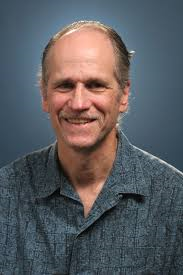
In this episode, we talk with David Reznick, Distinguished Professor of Biology at the University of California, Riverside. David has spent much of his career studying Trinidadian guppies to understand adaptation in the wild. In our conversation, we discuss this work with David and in particular how his research provided evidence for rapid life history evolution. We also talk with him about his recent research into placental evolution in live-bearing fish.
Cover art by Brianna Longo
-
Cameron Ghalambor 0:06
Hey, Marty, you ready to play some biology trivia?
Marty Martin 0:09
But of course, ask away.
Cameron Ghalambor 0:11
Alright, so here's your first question. How many researchers would you guess study the fruit fly, Drosophila melanogaster?
Marty Martin 0:19
Oh, I know that's a big number, I would guess. I don't know, 6000?
Cameron Ghalambor 0:23
Well, not too bad. According to Google, it's over 10,000 researchers, spread out over 3000 labs worldwide that study the fruit fly. All right, let's do another one. How many researchers do you think study the worm Caenorhabditis elegans, or C. elegans, as it's often referred to.
Marty Martin 0:40
Oh man, probably fewer, maybe 2000.
Cameron Ghalambor 0:45
Okay, not bad. Good estimate, maybe around 4000 researchers, with about 1600 registered "worm labs" around the world. Okay, one last one. How many researchers do you think study mice?
Marty Martin 1:00
Oh man, mice dominate biomedical research, and there's a lot of infrastructure that's needed to house them and care for them, and all sorts of repositories funded by governments, huh? This one's tricky. I'm gonna say 50,000.
Cameron Ghalambor 1:16
All right, well, I'll confess it was hard to find a definitive answer to this question, but the estimate is probably closer to 100,000 researchers worldwide. And we also know that there's over 192 million rodents, so that would be mice and rats combined, that are studied each year.
Marty Martin 1:36
Oh, that's a lot of rodents. Okay, this is fun, but where are you going? What's your point? Are you trying to poke me and get me talking about why I don't like model organisms again?
Marty Martin 1:46
Okay, sort of. You and Art already discussed some of your concerns about both the term model organism, but also some of the drawbacks for biology of working on only a few number of lab organisms back in episode 87 with Sabina Leonelli and Rachel Ankeny.
Marty Martin 2:04
Yeah and maybe if anybody wants to hear me whinge on that topic, they can go and listen to that episode.
Cameron Ghalambor 2:09
Fair enough. And why I bring up model organisms in the first place isn't really to get you to complain about them. It's more to contrast lab organisms to what people might call a "field model organism". I mean, take your research for example. You're part of an international group of researchers who study the house sparrow across a diverse set of ecological conditions. How many researchers do you think study natural populations of house sparrows?
Marty Martin 2:34
Okay, I think I should know this answer. It's definitely a smaller number than mice. I don't know, I'm gonna say 400. And I think the point that I want to raise here is that, you know, whatever the number is, we really need these kinds of systems to gain a better understanding of ecology, evolution and other aspects of biology in the messy and complex natural habitat where organisms exist. Model organisms are definitely great for certain purposes, but only things like house sparrows are going to be suitable for other questions.
Cameron Ghalambor 3:03
Totally agree, and fortunately, there are many such systems. For example, we talked with Peter and Rosemary Grant and Trevor Price about their influential work on adaptive evolution and speciation in Darwin's finches. And today's guest is David Reznick, a distinguished professor of biology at the University of California Riverside who's also made major contributions to our understanding of adaptation in the wild. David's name is synonymous with the Trinidadian guppy, a small freshwater fish that has made an outsized splash in our understanding of life history evolution.
Marty Martin 3:40
Oh, groan. Art would be so proud of that terrible dad joke. But anyway, life history traits that David has studied are those traits related to how organisms grow, when they sexually mature, how they invest in reproduction, and how long they live.
Cameron Ghalambor 3:54
The combination of traits a population has is referred to as its overall life history strategy. And a fundamental question in biology is to understand how and why different life histories evolve.
Marty Martin 4:05
For example, why do some albatrosses delay maturity until they are 10 years old, lay only one egg every other year, and then live to be 70 years old? But most songbirds become sexually mature after just a year, can lay dozens of eggs in that year, and only live a few years.
Cameron Ghalambor 4:23
David's research has been critical in providing empirical evidence for the role of age specific mortality in driving life history evolution using the Trinidadian guppy system.
Marty Martin 4:35
What's great about the guppy system is that populations along the same river drainage are separated into areas where they experience either high or low rates of mortality because of getting eaten by predators in the communities.
Cameron Ghalambor 4:47
Yeah so in large lowland rivers, little guppies are part of diverse fish communities, and essentially, guppies are food for really big fish. This results in a really high mortality rate from predators and select for a fast life history where guppies mature to small size and a young age, have lots of babies, but don't live for very long.
Marty Martin 5:09
But as you move upstream into the Northern Range mountains of Trinidad, barrier waterfalls prevent the big predatory fish from moving up, resulting in only guppies and slightly larger killifish from occupying small tributary streams. Mortality there due to predation is much lower, and guppies have evolved a slow life history where they mature later, have fewer, larger offspring and live longer than the lowland counterparts.
Cameron Ghalambor 5:33
This pattern is repeated along river drainages all across the Northern Range mountains of Trinidad. And genetic analyzes have shown each river drainage represents an independent evolutionary origin of these life history differences
Marty Martin 5:48
Over the years, David has treated these river drainages as replicate test tubes in nature. He has moved guppies among streams and shown that these life history traits can rapidly evolve.
Cameron Ghalambor 5:58
These results have been highlighted in biology textbooks and are really well known. But over the last decade or so, the story about guppy life histories has itself started to evolve as new results challenged old narratives and other processes like density dependence, in addition to mortality, were incorporated.
Marty Martin 6:16
We talked with David about how he became a biologist, how he came to study guppies in the first place, and why he has recently become interested in eco-evolutionary dynamics in his system.
Cameron Ghalambor 6:25
We also talk with David about a second arm of his research focus, which is on the evolution of placentation in the Poecilia family, which includes guppies.
Marty Martin 6:35
I'm Marty Martin
Cameron Ghalambor 6:36
And I'm Cameron Ghalambor
Marty Martin 6:37
And this is Big Biology.
Cameron Ghalambor 6:50
David Reznick, welcome to Big Biology.
David Reznick 6:53
Thank you for having me. It's an honor to be here, Cameron.
Cameron Ghalambor 6:55
Yeah, well, so to begin for full disclosure to our audience, I have a little bit more of a personal connection to our conversation today, because you were my postdoc mentor and advisor, and we continue to collaborate, so I'll try not to share embarrassing stories about you if you don't have any embarrassing stories about me.
David Reznick 7:15
Okay, agreed.
Marty Martin 7:17
So, David, I may not have the same connection as Cam, but your research has been really influential for the things that my lab does, as well as a whole generation of evolutionary ecologists. And when we get conversation started, what we like to do is some origin stories. So when did you decide to become a biologist? Was it something you wanted to do from an early age or something that you came to later in life?
David Reznick 7:39
I think since I was old enough to know how to walk-
Marty Martin 7:42
Wow
David Reznick 7:43
-I interested in biology, you know, because I lived I grew up for the up until the age of seven, I lived on the shore of the Long Island Sound, and times were different then, but certainly by the age of five, I could walk out the door and wander on my own. I don't see five-year-olds wandering around these days. But my favorite thing to do is to go down to the beach and look for, you know, the big treasures, where the sheddings of horseshoe crabs and other kinds of animals. And I was the kind of kid who, you know, we had an outbreak of some kind of worm in the in the sound there, and I collected a jar full of them and left them on the back porch where, no doubt, they died and smelled very badly. And there were elves in those days who would clean up after you. And so really, in many ways, you know, there were wrinkles between the beginning and the end, but in many ways, what I do now for a living is an extension of what I did as a hobby, beginning at a very early age.
Cameron Ghalambor 8:38
So, David, you did your undergrad at Washington University in St Louis and then you went on to do a PhD at Penn. Bob Ricklefs was your PhD advisor. So let's, let's talk a little bit about your time at Penn and sort of the state of the field during that time. So, you know, I imagine this is like the late 70s, maybe early 80s.
David Reznick 9:05
No, it was in 1974 I'm older than you think, Cameron.
Cameron Ghalambor 9:08
Well but you're so young at heart. Okay, so, but, but, you know, kind of leading up to the early 80s. You know, Steve Stern had published a few review papers on life history evolution. Charlesworth had his age-structured evolution, age-structured populations, I think came out maybe late 70s, early 80s.
David Reznick 9:29
1990
Cameron Ghalambor 9:31
Yeah and so the field of there was a sort of the beginnings of a real kind of growing field of life history evolution. So I'm curious, like, at the time, as you were interested in in life histories, like, could you anticipate that this was, like, the beginning of a of a field of research that was going to really explode, or was it not so obvious in the moment that was it just something that you had a personal interest in?
David Reznick 10:04
I think part of it, part of it was the Ricklefs' influence, because the bird work was sort of on the leading edge of the empirical side of life history evolution. And so I was reading Bob's papers, and I found it very compelling. And then I was reading Don Tinkle's papers, and then a paper that people don't cite anymore was Gadgil and Bossert, which really had a lot of the critical elements. All the other people who you mentioned, those publications came out after I finished my thesis work, and so they weren't what got me going. You know, I read them after as I was publishing my thesis work, you know, but it was after the fact. It was reading Ricklef's and the empirical stuff. I'm much more of an empiricist to art than a theoretician. And then it was just a couple of theoretical papers. The Gadgil and Bossert paper was a key one. The other ones in the early 70s are Schaefer papers that were very difficult. And there was
Cameron Ghalambor 10:58
Hirschfield and Hirschfield and Tinkle, I think, have that PNAS paper
David Reznick 11:03
That came out later, that was late, later, later, 70s, but, but there's Michoud and Law, you know, those were the ones that, you know. But really it was Gadgil and Bossert and empirical work by Don Tinkle and Bob Ricklefs and the papers that I tracked down for Bob Ricklefs' citations like Lack that, that got me going. And then it also was becoming people were publishing. There's a lot of empirical work Bianca was publishing then. And so, you know, one of the things I did, Ricklefs, had a one semester that he taught a course on historical developments of big ideas in ecology. And the thing one of my take home messages from that was that by doing a detailed literature review, by asking this is my question, when did it begin? And what have people done?And how has it moved forward? And can I use the progress made to date to define the vacancies where future work can have the biggest impact? You know and so it's all those things, and then that, like the Stern synthesis, actually came later, you know, like I said, I was pretty much done with my or was I done- I was far along, the die was, was certainly cast by the time those papers came out, they had a big influence on me, because he did such a terrific job of pulling together everything you know and summarizing everything you know. So I did read those papers was influenced by them.
Marty Martin 12:33
Yeah, Ricklefs has had such a huge influence on me as well, and many, many other people. I want to, I gotta say, I want to talk about guppies, but let's give you, let's give you an opportunity to transition to guppies by mentioning someone else that I think has had a huge influence on you in this particular space, John Endler. Did he influence your move into guppies? How did that work?
David Reznick 12:56
Absolutely. I mean, I can remember the day and the time, the place where I was. So I mean, what happened is, I initially was working on mosquito fish, and I had a pretty good research program. I was making good progress. I'd done something on the genetics of offspring size that I called grandfather effects, and was doing work to look at cost of reproduction. They were turning out to be hard to breed in the lab. And the reason I was beginning to discover was because they're seasonal, and you have to give them seasonal cues, which is a hard, you know, and I was just working that way through, and I was in a critical phase. This was the beginning of my fourth year of graduate school, and I could see that I could get a thesis together, but it was going to fall short of what I wanted. And at some point, somebody told me about a talk that was being given at the Academy of Natural Sciences by some guy on guppies. And he said he thought he knew that literature. He thought it wasn't really going to be anything original. You know, it was just that there are a couple of guppy papers. And I don't know why I didn't usually go. I had to bike ride through Powellton village, which is kind of a tough neighborhood, and everything. But I went and I sat down and listened to Endler talk. And Endler was talking about the interplay between predation and female preference in shaping the evolution of life histories. He was talking about this repeated pattern of different rivers of high predation and low predation localities and the evolution of male coloration. And I'm sitting there and thinking, if male coloration evolved that way, it was because those localities differed in age specific mortality risk, because you couldn't be a brightly colored male when the predators were there, but you could be when the predators were absent, which means that you could be mature and safe.
David Reznick 14:42
And so I went out to dinner with him, and I said, this fits into life history evolution. I can tell you, I can predict for you what the differences in life histories of these fish are going to be, and I want this to be my dissertation project, and would you support it? And he said, "Yeah, that sounds good."
Marty Martin 14:57
Wow.
David Reznick 14:58
So then I went back to school, and I pretended I was a second year student getting ready for my oral qualifying exam. And the idea is to write a paper, a qualifying exam paper, and hand it out to my committee and ask them for an unusual thing, to let me, as a fourth year student, change my dissertation topic. One of the members of my committee was a population geneticist named John Gillespie, who was a hardcore theoretician. I think he never had a high opinion of me because I wasn't theoretically inclined. I mean, I remember him walking into the room. He was the first one to come into the room. Also, I think he wanted to fail me at my oral qualifying exam. That's a different story. In fact, I'm pretty sure he did. But yeah he was the first one to walk into the room, and he put the paper on the table and pointed his finger at it, and he said, This is really good. You know, I figure, oh, if John Gillespie likes this, I mean, I'm in good shape.
David Reznick 15:53
And so in March of my fourth year as a graduate student, I began a new dissertation project, and I met John Endler in Trinidad. He actually, I handed him the paper when I got there, he didn't realize that I had a fully designed project. He thought I was just coming to run around and become familiar with the system. And then that night, he got out the topo sheets, and the areas that he was recommending that I visit went over two different topo sheets. So I remember him aligning them and tracing them. And I thought I still had that map that he gave me, but I don't, somewhere along the line I lost it. And then I was there for 20 days. In 20 days, I collected about 15 different localities, I dissected, I looked at size specific fecundity, I measured diameter of the OVA. And so I had by the time I came back on the plane, I knew the size of which females began to reproduce. I knew what their fecundity was, size specific. At that point, there weren't computers. I had a Hewlett Packard, you know, handheld thing that Warren Ewens had loaned to me, and I done calculations like analyzes of covariance to show that their fecundity was higher and their babies appeared to be smaller. And I remember walking into Ricklefs' office and saying, "So, what did you find?" And I, you know, here it is. But the other thing was that I brought back live guppies. And, you know, I mean, if I had done it now the way I did it, then they would have all died. I couldn't have made it work. And yet, somehow things were different then. And even though I didn't have a good background on how to keep fish, I just was lucky. All the females survived, and I brought back only females, because they store sperm. And so I isolated all the females and began getting the litters and creating numbered pedigrees. And then I worked from March 1978 until August 1980 with almost no, like, three days off. You know, Christmas, New Year's. Every day I had to be there to get these things to work. But, but it was really a fantastic time because it went so well. Part of it was because they're so much easier the mosquito fish and the mosquito fish had kind of hardened me to, you know, how to do things right and keep the fish healthy. So John was really my surrogate advisor.
Cameron Ghalambor 18:21
So one paper, I think that, you know, I remember reading, I guess as an undergrad, and I know was, was one of the, the, probably one of your, one of your most impactful papers was the 1990 Nature paper where, you know, you had, you had previously shown that there were these life history differences between high and low predation sites, but then you experimentally moved guppies from a high to a low predation environment and and actually documented the the rapid evolution of the of the life history. So can you give a little background of like, how, how that study started, and what was the motivation for experimentally moving fish from one environment to the other?
David Reznick 19:13
That actually, that was piggybacked on John Endler. John Endler, one of those localities was John Endler's introduction made in 1976 and I think by 1978, certainly by 1980, he had shown the evolution of male coloration. He hadn't done the background lab work. You know, you know that I'd done, but, but, yeah, it was John that did it. And also it was part of a conversation with Dan Janzen. You know, Dan Janzen was, and Dan Janzen is famous for doing these bold experiments. And I was showing him my results and showing him the break at the waterfall on the Aripo River between high and low predation, and how they were different immediately above and below that break. And Janzen said, "Well, why don't you, you know, you could take predators and you could put them over, you know." And so. So I just began to expand on the theme that John had established and also Janzen's suggestion was that I could both increase and decrease mortality risk depending on which stream I worked in. And, in a sense, treat streams as their giant test tubes. This also the thing I mentioned earlier is it capitalizes on what I was looking for and what had been missing from the literature on life history evolution, which is I had replication. I had natural replication because the same community succession was present in different rivers. We now know that they represent independent origins of adaptation to the alternative environments. And I had an animal that I could work on in the layup, so I could look at the genetics of the differences among populations.
Marty Martin 20:44
It's such an impressive system. I've been working on house sparrows for a long time, and I'm incredibly jealous of the things that you can do, from the replication to the, you know, amenability, amenability to the common garden studies and things. I've tried to do that with house sparrows, and I'll never do that again. Probably also won't do that with guppies, but
David Reznick 21:01
That's what I faced when I was thinking about side blotched lizards. I mean, now you actually could do that, because I have the technology for breeding reptiles in captivity. The thing that I envied the reptile people for, and that I didn't think I could do, was mark release recapture, and to be able to know who's who and follow them through time. And so that became sort of the next leap for me in the 1980s when I was looking for, you know, what the next generation of research would be. In about 1980 I laid out a research plan on my first paper that shaped what I've done for the rest of my career. But, but the one thing that was missing was being able to mark and recognize individuals, and so that was one of the things I began working on in the mid 1980s after I got my job.
Marty Martin 21:45
So David I think one of the things that I really want to talk about, I mean, there's many things that we could cover, but I think it was 2019 you and Cam and many others wrote this paper in AmNat on what became, you know, an example of eco evolutionary dynamics. But before you say anything about that, can you maybe just introduce the listeners to, you know, the kind of results of those transplant experiments, to sort of what happened to the life histories? What were the expectations? What's your interpretation of how it happens? I think that stuff is important to understand to get to those 2019 results.
David Reznick 22:20
Okay, there are actually many state steps, so I won't give them all, abstract them.
Marty Martin 22:23
Okay, nutshell.
David Reznick 22:26
So the idea was that we knew that guppies evolve, and I thought it was because of differences in age-specific mortality that adults have a higher risk of mortality and high predation localities than they do in low predation localities. When I learned how to do people always would bug me and say, Well, what about the birds? What about the insects? What about other things? And how do you know that the fish really is the whole answer? And that's where I began to pursue individual mark recapture, because then you can measure mortality rates. So my reaction was to hell with all this. So I'm going to measure mortality rate and find out, not worry about insects and birds and other things. I'm going to look at what's happening with guppies. And I found that the guppies from the high predation localities do, in fact, have higher mortality rates, but not in the way that they would need to to explain the evolution of the life history, and that was because the increase in mortality risk was equally distributed across all size classes. And to get to fit in with gab Gadgil and Bossert, you had to have a higher, a selectively higher risk in adults and not juveniles. And in the Gadgil and Bossert model, if you change mortality rate equally across all size classes, they don't evolve. And I remember when I first got that result, I was, like, it was two nights before I was going to go present these results at an evolution conference, and I couldn't sleep. I mean, I was walking around the streets, you know, in the middle of the night, trying to think, how do I get out of this? And, you know, the answer was, I already know they evolve, you know. I mean, I went in there and said, "Here's an odd result, but I know they evolve, you know, and they do have higher mortality rates." You know, that became a, you know, that's when the Charlesworth book was out. And I was looking at the Charlesworth and the idea for various reasons, I was looking at models that assumed density, independent mortality. That's what Gadgil and Bossert was. And those are easy models, because the best life history is the one with the fastest rate of population growth and density dependent is, you know, that's hard, you know, because there are different combinations of things, but there are this and other things were pointing at density dependence being important. And so I had, you know, the question was, how do you tell the difference? Because the end product looks the same. You can't do selection and see how they evolve, and in that way, distinguish between the alternative hypotheses. And so it really was a long path to figure out how to get to that end.
David Reznick 24:52
And so the whole point for the 2019 paper was to, you know, before that, I had only looked at guppies four years after the introduction. And I thought four years was kind of bold. I didn't think things could happen that fast, you know, it was like too late, you know. And so the burning question was, what's going on during those first four years? And so we started a new series of experiments that was built on it had many different components, and you can ask about those later. But it was designed to distinguish between two different hypotheses. The first hypothesis was that guppies evolve because of the change in mortality risk associated with the change in predators. The second was that guppies evolve because when you take predators out of the picture, at that point I had shown that the population goes up and that they experience density regulation. And the distinction between those two are, this is something that Joe Travis and I worked out sitting down in the living room of my house in 2005, I think, or something. You know, was that the timing of the change, the timing of the evolution could distinguish between the tube, because if it's predation, the most intense selection on guppies is the day you introduce them into the new environment, because that's when their phenotype is most distant from the optimal phenotype. If it's the indirect effect being mediated through density and resources, then selection may actually work in the opposite direction. They're now in a resource abundant environment, because there are no guppies there. They can, you know, have great, you know, reproductive success. And it isn't until density regulation sets in that you're going to see them begin to evolve. And so that was the alternative.
David Reznick 26:38
And the interesting thing is that Cameron's lab did the experiments, and they had long since forgotten what the alternative hypotheses were. It was like a perfect double blind. They were just every year generating the data. And I remember Cameron saying, you know, we have these results, and they're really pretty weird. We don't know what to make of them. And he sent them to me, and it was like, Cameron, go back and look at the proposal. We have a figure in there what they'll look like. And you just discriminated between the alternative hypotheses. you know, whether or not that's eco-evo dynamics. You know, it's a different a different discussion. But it definitely said, and it turns out that I laid out those alternative hypotheses in my first paper in 1982. I hadn't really figured out all the wrinkles behind them, but I recognized that those were alternatives. And somebody once rejected the paper. The 2019 paper got rejected all over the place before we got it published. But one of the rejections was, "Hey, you said all this in 1982". I wrote back and said I thought proving it is different from saying, yeah, yeah,
Marty Martin 27:41
That's not science, the first one. Can you, can you define maybe, what eco evolutionary dynamics are broadly, because I think it's going to be useful to map it back. That's a complicated study design, and it is very elegant to juxtapose those two, those two outcomes. But I think to sort of define it and make it easier to track back to what that is.
David Reznick 28:01
Well I have to first say that there are multiple definitions out there.
Marty Martin 28:05
Of course, it's biology.
David Reznick 28:07
And I do not accept most of them. In fact, some of them, I think, really have set the field back, because eco-evo dynamics is now a different name for evolutionary ecology, the way most people are using the term. But eco-evo dynamics. I mean, we define it. There's a paper that Ron Bassar was lead author on in ecology letters in 2021 and that's where we sort of lay out our vision. And the vision is the same as the one that was in the Ellner, Hairston, Yoshida Fussmann collection of papers in the early 2000s because theirs is the most elegant sort of theory and empirical work that does it. But the elements of eco-evo dynamics are very strong selection, coupled with having the genetic variation to sustain contemporary evolution on the same time scale of ecological change, and to also have a continuous interaction between ecology and evolution.
David Reznick 29:04
You know, and in the context of our paper, density dependence can be attained in different ways. But the density dependence that we were seeing, and that we proved was happening, was that guppies when they get there in the absence of predators, become very abundant, and they change the structure of their ecosystem, and they impose selection on themselves. And they're evolving as they change, but also as they're evolving, they're changing their ability to utilize resources and changing further the nature of the ecosystem. Now we haven't, you know, we've only proven really the first step, that guppies adapt to their impact on their environment. You know, that's what the 2019 paper work, you know, does. And you know, criticism, which is a valid one, is that we haven't shown the continual interplay. You know that eco-evo dynamics, if you look at it in the Ellner, Yoshida, Hairston thing, generates cycles. Yes, and because of the cycles and the inbuilt frequency dependent selection, it'll go on forever. But I don't think that's a necessary feature of eco-evo dynamics, because if you go back to the Pimentel papers of 1963, I think they show genuine eco-evo dynamics in a host parasite interaction, but it goes to a stable state. And the signature of dynamics is that the stable state that you see that the ecological interaction is fundamentally different from what it would be had evolution not happened. And so the idea is strong selection, rapid evolution. The alternative, I mean, the genetic variation to do it, is you go extinct, right? And then change in evolution and ecology on the same time frame, but also showing a real interaction, that one is changing the other, that there's a duality to it, and that really, that's what Pimentel was arguing for. And it's interesting that it lay dormant. It's almost like, you know, Mendel laying dormant for 35 years, and because it didn't really get picked up again until, until Ellner and Hairston and that research program got going. I think it's still an open story whether or not this is a prevalent feature, but that's what was new. It isn't brand new. I mean, people say, "Oh, it's not new, because Pimentel did it." But the point is that it isn't. Both of those were lab studies. And so the big challenge that we were trying to meet, you know, with the research program that began in 2007 was to say, can we bring this into a complex natural community and show it in action, in nature, you know? So that's what we were trying to do.
Cameron Ghalambor 31:41
Yeah, so, so David, a couple of years ago, we had Eric Svensson on the podcast. And we were talking about a paper that he had sort of in a slightly different context, but he he invoked this idea of reciprocal causation, where cause and effect between ecology and evolution aren't sort of linear and unidirectional, but bi-directional and eco-evolutionary dynamics being sort of an example of that coevolutionary dynamics, frequency and density dependent selection. And that this was sort of a view that was kind of emerging, and was general, and really encompassed a lot of the different kinds of phenomenon that probably occurs in nature, but at the same time is kind of difficult to demonstrate. And so, you know, do you think that these kinds of feedbacks and dynamics are common but hard to document, or maybe only occur under certain sets of, you know, special conditions and maybe aren't necessarily that common in nature?
David Reznick 33:01
I know I think they're, I think they're, they're common. They don't all qualify, you know, the eco-evo dynamics, as I defined it, is sort of a narrow idea. And so, so, for example, oxygen in the atmosphere is a biotic thing, you know, and organisms did that. And oxygen is a universal poison, because it oxidizes and breaks down macro-molecules, and so they impose selection on themselves. And this is, this is global. I mean, this is a huge story, right? But it's not eco-eco dynamics. It wouldn't be, at least not, you know, it is, in some grand way, a an interaction between ecology and evolution, and it's an impact of organisms on their environment. But I think that sort of thing happens. It is common.
David Reznick 33:44
One paper for me is Estes et al, the Science paper on the consequences of trophic downgrading, and they had these beautiful pictures of all these before and after ecosystems before an apex predator was eliminated, and after the apex predator was eliminated, and you could see again that there were dynamic changes in the population dynamics of other organisms that changed the structure of the ecosystem. And so and this also gets to Darwin's fundamental principle of evolution. He was saying that the thing that causes evolution to happen primarily is biotic interactions. See, he blows off physiological ecologists really have, have no, no discipline in Darwin's theory.
Marty Martin 34:31
Alright now.
David Reznick 34:31
I love to say that to my colleagues, just to keep it square. But the point is that that it's when you talk about biotic interaction shaping evolution and being the main factor in evolution, in Chapter Three of the Struggle for Existence, it's all about the the, you know, the different interactions between organisms, and how the ultimate consequence of that is also the structure of the ecosystem. He has this one beautiful thing of you know, if you go to, you know, the old sites that were inhabited by Native Americans, that have since been abandoned, and they now have a forest that is just like the surrounding forest. He's imagining all of the things that had to have changed, you know, in the complex set of you know, he's imagining what we'd call succession now, you know, that had to happen in order to return to the state that they're in now, you know? So, yeah, I think that's a prevalent feature of, you know, how communities come to be what they are.
Marty Martin 35:28
So one of the things about Cam and I talked about this offline before we joined you, David, and one of the weird things about this, and I think it might be just my bias, but I'd like to hear what you say. I've been working in infectious disease ecology almost since I became a scientist, and so when I first heard of the word eco-evolutionary dynamics, I was like, Well, why is that a thing? Because if you think about infectious disease like you say, even for Darwin, it's these biotic interactions, and that's a special set of biotic interactions in the sense that it wasn't something that attracted the attention of a lot of ecologists. Until recently, and then plenty of people worked on, you know, plant predator interactions, these kinds of things, which there's a lot of transfer of ideas across those fields. But is there a reason? I mean, I think it was the case that this was a kind of controversial idea, and some of it had to do with rapidity of evolution, right? That it wasn't really supposed to happen so fast. But I wonder if the general listener hearing this sort of thinks it's strange that evolutionary biologist or ecologist could ever be skeptical that there isn't this kind of dynamic, because, in a way, these are processes that how else, I mean, they must be entwined, right?
David Reznick 36:39
Yeah, you're right on the one hand, but, but that, by itself, falls short. When you ask me what, what I call eco-evo dynamics, it falls short of meeting that criteria. So the you know, the way Pimentel nailed it, in his 1963 papers and in 1968 summarized it, was that when you have he's looking at the interaction between blow flies and wasp parasites. And then he's got this great metal population structure in it, which is what and lends stability. But then he has two graphs. One is the interaction and what happens when the blow fly cannot evolve. And then he has a second graph that shows what happens when the blow fly can evolve. And the point that makes it eco-evo dynamics is that the nature of the population structure is fundamentally different. When you add evolution to the picture, you get stability that you never get if you don't have evolution. And so the point is that there's a fundamental ecological consequence of the evolution of resistance to the parasitoid wasp and Meghan Duffy's work on the yeast and bacteria that infect micro-crustacea sort of has that same quality. And so you're right, you know, it's just adaptation, right? There's no big that's that's nothing new, that the thing that's new is when you can see at the same time that the adaptations occurring, that there's a fundamental change in ecological dynamics. You know some measurable and repeatedly measurable feature of the ecosystem is different now because of evolution, but these also were sort of a rapid adjustment. Now this would not, I think that the Ellner, Hairston, you know that they might not, they might be skeptical of that, because in theirs, you can see the interaction in the cycles, whereas here we're talking about a short movement to a new, stable state. And I would argue that cycling, you know, being able to see that continuous dynamic isn't a necessary feature of it.
Marty Martin 38:48
Yeah, that's interesting because, I mean, the stable state, I get you, but if you're getting a sort of consistent cycling, that's not a stable state, but that is a kind of ecological, I mean, it's a meaningful, functional ecological consequence, right?
David Reznick 39:03
Oh, it's an absolute, well, it's also, I mean, it's a demonstrable interaction between ecology and evolution. I don't know, you know, if you talk about the nature of the genetic diversity among the different strains of algae, and you know, the trade off between resistant to rotifer predation versus being a good competitor. You know, those are the elements that make it cycle.
Cameron Ghalambor 39:24
Yeah so that, that example you just gave David, that's, that's the Yoshida et al paper, I think that you're referring to, is that, right?
David Reznick 39:32
Yeah, it actually is a series of papers. But the, you know, the landmark paper is Yoshisa et al 2003 I think, in Nature.
Cameron Ghalambor 39:38
So, so those, you know those are, I know those papers are, they're very elegant, and they benefit because they, they're, they're lab studies. So they can actually, you know, manipulate the genetic variation within the population. But besides the guppies, what other systems in nature do you think are other examples, but sort of, you know, meet the gold standard of demonstrating this type of eco-evolutionary dynamic like, what other what other cases would you point listeners to check out?
David Reznick 40:15
Boy. This is where I mentioned our exchange that I, sort of, I seeded leadership to Ron Bassar a while ago, and I started a new research program. Well, not new, but, you know, I shifted to looking at the evolution of placentas and the peace leads. And so, you know, the short answer is, I'm not aware of any, but the longer answer is that I don't think my command to the literature is that great. I haven't kept up with it. I think the best, the best ones I know of are Meghan Duffy's work, I think, and that's a natural ecosystem. There's a compelling, this isn't a real system, but the Hairston, you know, that group, did a review of predator prey oscillations. Some of them were lab, but some of them were in nature and showed that you sometimes could see the change in the structure, you know that that was suggestive of a similar interaction happening. So they didn't, you know, that people haven't actually shown that it's happening, but at least as a lure that says that you there are other places where you could see it. Let me think of what else.
Cameron Ghalambor 41:21
Well, I'm glad, I'm glad that, you know, don't have lots of examples that you can, just like, quickly name off, because, you know, I was looking through the literature myself, and you know, if you put, if you Google, put eco-evolutionary dynamics into Google Scholar or Web of Science you get, you know, thousands and thousands of papers. But I think, as you said, like most of them aren't really talking about this type of dynamic. They're, they're really just evolutionary ecology type papers. And I don't think there are a lot of examples out there.
David Reznick 41:58
No, I sense that there isn't even that much of an interest to tell you the truth. You know, I went through a space where I was getting lots of seminar invitations to talk about this work, and they've evaporated. And, you know, so, yeah, and you know, when you add in all the details that I did, or all the details of like the rotifer algae system, it's, it's demanding, and it seems improbable. And you know, it is, it is a, you know, it's something that it's a challenge to prove it. But the fact is that to prove it in guppies, you know, if you look at all the different steps I've been working on them for over 40 years, and many of these steps that led me to this end point were, were actually contingent, you know, that that it wasn't something I could just jump into, you know, and so it would require knowing a system really well to be able to pick apart what the real cause and effect that underlies what you're seeing is. You know, one colleague, I just had an exchange about this with, with other collaborators, with Joe Travis and Ron Bassar and Tim Coulson. And Coulson, he says he thinks it's a very rare phenomenon. You know, his intuition is that you know the kinds of things that we were seeing, you know, the natural history equivalent of the rotifor algae. Thing is not, not commonly seen. I I would argue that people just haven't tried to look, you know, I would say, if you look at the Estes example, you know, of all those photographs of what happens with and without the presence of apex predators, what they haven't done is to say what happened to all the other organisms when you get those dramatic changes in, say, the Yellowstone ecosystem, when wolves were gone, that imposes strong selection on many of the organisms that are in that ecosystem and and they're going to change, you know. And then when wolves came back, originally, people said, "Oh, you just turned the clock back." And other people came in and said, "No, you didn't. You know, things are different." And my prediction would be, No, you didn't, because if things evolved, you know, everything is moving forward. Evolution doesn't reverse itself and and in fact, there could be many eco-evo components for, you know, to what went on there, and nobody's ever tried to find them. You know, nobody's even begun to look at the plants or the insects or the birds, you know the I would say, look at the elk, because the elk certainly sustained. But with elk you're talking about now, you have to worry about migration, and could you get local adaptation on that fine a scale?
Marty Martin 44:35
I'm also not doing common garden studies with elk
Cameron Ghalambor 44:40
Well, and their generation time is a little bit slower than.
Marty Martin 44:44
Yeah, that's a challenge.
David Reznick 44:46
On the other hand, you could ask, you really could look at, you know, in the same way that they do on so a sheep and other things. You could do mark recapture, and you could look at reproductive dynamics. You could do offspring size of birth. You could look at other thing and see if there are any changes that are happening. And so the truth is that the signature of strong ecological change on a short timescale that would have profound effects on the evolution of the organisms that are in those environments is abundant. It's out there, and and so the number of potential study systems where you could look for eco-evo dynamics are out there. It's just a question of doing it.
Marty Martin 45:29
Yeah. And one more general guppy question, when they get really dense and they do sort of influence, you know, they have the potential to influence their evolution, how are they doing it? What are they changing?
David Reznick 45:39
Oh, well, their whole life history changes. They delay maturity. They invest less in reproduction. You know, and the interesting thing is, when you bring them into a common environment, it's sort of like the high predation guppies are better at everything, you know, that was one of the mysteries that kind of drove this whole process. They're better at assimilating and generating biomass than low predation guppies. The low predation guppies, it's similar. I compare them to work that Ken Spitze did on on a daphnia species, except that we know more about what's going on. The low predation guppies are behaviorally different. They're aggressive, whereas high predation guppies aggregate, and their aggression is over food resources. They have a slower basal metabolic rate. They appear to have, there's preliminary work that says that they're well, we know that they consume food differently. They're like a vacuum cleaner, whereas adult high predation guppies are picking high quality invertebrate prey. There's a change in skull morphology that's associated with those differences in how they forage. And it looks like their digestive metabolism might be different- I say might, some of these things aren't proven. But they it looks like they're more efficient at processing low quality diets because they're they're vacuuming up to try this and whatever invertebrates come in with it, whereas the high predation guppies, the adults at least start, are targeting high quality invertebrate prey. All these changes were driven by how they changed their community, because they were abundant, you know, so they they did it to themselves, and we know that because we've done those experiments to see, you know, that we've done it both in artificial streams and natural streams. The natural stream work is lagging behind the artificial stream work. But, you know, I can point you to papers that show that this is happening.
David Reznick 47:27
And this also creates the potential for an eco-evo feedback, the way that I've talked about it, because the the original guppies that get in there, we've shown in our experiments, four weeks is enough for them to change the structure of the ecosystem, but it takes about two years for them to hit the carrying capacity of the environment and really impose the density dependent selection on themselves. But you don't see the skull changing then, and I don't think you see the digestive metabolism changing. And we probably don't see the basal metabolic rate changing, you know. And so it is, it's sort of a later. But what we do see is that, you know, the impact on the ecosystem does evolve, because we measured the impact, if you have a fully adapted low predation guppy versus a high predation guppy. And so the you know, the you know, they continue the their in their ability to change the structure of the ecosystem is going along with their adaptation to that ecosystem as well. You know so we've documented we haven't pulled it together. I actually just submitted a paper to a special issue of Functional Ecology. I haven't submitted it yet. I'll finish it today. Where, where we try to pull all those things together, because the theme is trade offs, and so we're talking about the trade offs in life histories, but all the other things, if you want to understand the trade offs, you have to take these other things into account. Because the dilemma is, if you put guppies in, you know, high and low predation guppies in a common environment, the high predation guppy is a flat out better guppy, and the low predation phenotype should never evolve, but it does predictably.
Cameron Ghalambor 49:11
David, you hinted that you know a lot of a lot of your research recently has really kind of shifted focus, but you've had a long standing interest in live-bearing fish guppies being being one of the sort of most famous of these cases and and your interests have been in, I guess I would, I would say, kind of a shift from a micro-evolutionary focus on these rapid evolutionary changes in life history to more of a macro-evolutionary focus on the evolution of of complex traits, and in particular, this, this shift in what I guess we would call placentation, or the the evolution of a of a placenta in in these in these fish. So can you kind of first give us a little 30,000 foot overview of, like what are the main sort of reproductive strategies that live bearers use? And I'm, I'm thinking about, like, lecithotrophy and matrotrophy. And these terms that are probably not very familiar to most of our listeners.
David Reznick 50:19
Okay, so, so the way all of the Poeciliads work is it, you know, like in mammal reproduction, the female produces eggs, and then they ovulate. And ovulation is a bursting of the follicle, which is the maternal tissue that surrounds the egg and provisions the egg. And so in mammalian reproduction, the follicle ruptures, and then the egg by itself, goes down the fallopian tube to be fertilized. In the Poeciliads, the follicle never ruptures. It remains a permanent structure around the egg and then the developing embryo throughout, throughout development, and you don't get a bursting of the follicle until birth. Most of the Poeciliads, about 80% of them, have a follicle that will fully provision the egg before it's fertilized. And one way we know that, I mean I discovered this just because I was doing statistics on guppy reproductive allocation, is that the dry mass of the egg and then the dry mass of the embryo, when the follicles removed declines through development, they lose about 35 to 40% of their dry mass during development, which is about the same dry mass that a bird egg loses during development, and it represents just the cost of catabolism and metabolism.
Cameron Ghalambor 51:35
So they yoke up that egg, so there's lipids and other things that the embryo feeds off of as it grows.
David Reznick 51:45
Yeah and really, what they are, what they you know, we we have other experiments that we've done that show that all they did was to evolve the ability to retain the egg that they normally would shed to the external environment, but that the properties of the egg that's retained are very much the same as the properties of eggs that you know, the members of the same order, closely related egg layers would would would shed and adhere to some environmental surface, or something like that, to develop outside of the mother, so they retain them inside the mother instead of being outside the mother.
David Reznick 52:16
Now, what happens in some of them is, about 20% of the species, is that, instead of fully provisioning the egg before it's fertilized, they barely provision the egg. They vary in how much they provision it, but at the extreme, only a little bit of resources go into the egg before fertilization. Then the egg is fertilized, then the embryo begins to develop, and the follicle retains that ability to provision the developing offspring. You know, I describe it with two different types of heterochrony. One type is what you'd call neoteny. Neoteny is the retention of an early life stage feature into a later life stage, and so the follicle is neotenic, in the sense that the ancestor had a follicle that did all its provisioning before the egg is fertilized, and the descendant has a follicle that only does some of it before it's fertilized, and then keeps on doing it after development is initiated. And then the other type of development that describes it is what we call hypermorphosis, which is that the follicle of the ones that provision after fertilization, develop to become a much more elaborate organ than you see in the ones that fully provision eggs before they're fertilized. So it's much thicker. In some of them, it's got a dense microvilli on the inner surface. It's vascularized. You can see a circulatory network going through it. And so the key the you know, the interesting thing is it means that while this is happening, the paternal genome is active, whereas, in the other case, the paternal genome is not active. You know, everything happens before the paternal genome comes online, and so having the simultaneous activity of the paternal genome while the maternal genome is provisioning the embryo creates a venue for sexual conflict, and that's the sort of thing that I'm interested in studying right now.
Marty Martin 54:02
So can you, okay, I want to just zoom out. We did 30,000 let's do 35 or 40,000 because fish and placenta are not words that you usually hear in the same sentence. Can you can you be? I mean, where exactly, I think I know, but where exactly does the concept placenta fit into the particular story?
David Reznick 54:23
So there's a generic definition of placenta that's attributed to, I think the name is Turner, who's book published in 1937. And the idea is that a placenta is in and I've gone to say that I think it's the definition is incorrect.
Marty Martin 54:38
Ok
David Reznick 54:39
I'll deal with that later. But just that, the placenta is an intimate integration of maternal and embryonic tissue for the present that's adapted to maintain the embryo, the viability of the embryo and the metabolism of the embryo. The reason I say that's too general is that the follicle of non-placental Poeciliades is maintaining that embryo. It's active, you know, I can. I'm now looking at gene expression and follicles of placental and non-placental species. And if you look at the like a pregnant guppy, the developing babies are like bricks in a wall, and they're metabolically very active, you know, and that's a hard thing to sustain. And so nobody's ever looked at what the placenta is doing and why they're in the placenta. But it's got to be doing something that has to do with gas exchange and getting rid of nutrients and stuff like that, you know. And so by that argument, by that definition, all Poeciliads are placental. It's just that we don't know what the non, that cease provisioning before the egg is fertilized, what they're doing and how they're placental. But my reaction is that that just tells you this is the wrong definition of placenta, because what you also have to add is that the placenta involves the, not just the integration of maternal and embryonic tissue, but also the transfer of nutrients and sustenance of growth during development, right?
Marty Martin 56:04
No. I mean, I like the functional definition. There was a debate about 10 to 15 years ago that invertebrates don't have adaptive immunity. And the adaptive immunity, there's two flavors, there's B and T cells and antibodies and things that they make, which is what vertebrates and sort of chordates do. And then there's adaptive immunity, in the functional sense of specific protection the second time you're exposed. And lots of invertebrates can do that, and therefore I would call that adaptive but a lot of the immunologists really push back hard, because, you know, cockroaches don't have immunoglobulins. They can't have adaptive immunity. I don't really think it works that way.
David Reznick 56:42
Well, that's an interesting thing, because the word adaptation, if you do adaptation by natural selection, then the vertebrates have the adaptation in that they have the mechanism to generate the somatic mutations that give you genetic variation for selection to act upon, and in the second response, you get a refined response, you know. So there is evolution. It's not it's you know. And I don't know what the mechanism is in the invertebrates. So you could argue that
Marty Martin 57:10
I haven't tracked exactly what the mechanism is either, but the specificity such that exposure to exactly the same thing, you're better protected the second time. The details by which that happens is not clear, but the outcome is this the same kind of thing that happens in Chordate.
David Reznick 57:25
Yeah, and that is adaptive there, whether or not there's a genetic selection going on, it's a different story. Anyway, so there might be a meaningful distinction between the two. I mean, you're a mammal, you should protect your identity better than you're doing right now.
Cameron Ghalambor 57:39
So, David, I think you, you said that 20% of Poeciliads have this more well developed placentation.
David Reznick 57:49
A neotenic hypermorphosis. Yeah, I mean let's be precise here.
Cameron Ghalambor 57:53
Okay, yes. So what are the what are the main hypotheses for why, why you would evolve this more extravagant provisioning of the offspring in this because you were sort of saying that, you know, once you make that connection, you know, all of a sudden, you open yourself up to sexual conflict and other kinds of conflict between the maternal and paternal genome. So what are your thoughts on the selective pressures in nature? Like, do these fish occupy different kinds of environments? You know, are all of the ones showing this more extensive provisioning in certain types of streams compared to the others?
David Reznick 58:39
Funny, you should ask. So the first thing I did was to go to the literature and see what kinds of ideas people were proposing. And I can't remember exactly how I worded it, but, you know, some people proposed that it was a mechanism that enabled them to produce more babies. Some people argued that it was a mechanism that enabled them to produce bigger babies. You know, there are all these different ideas. And so I lumped them all together, and I called it the "life history facilitation hypothesis". And the first thing I did early along, well actually graduate students did a lot of this, was to ask whether or not there are any regular features of the life history that characterize placental species. And in short, the answer is no. I mean, if you put it all together, you sort of get these crossing interactions of some lineages produce many small babies. Some lineages produce few large babies. You know, there isn't anything consistent in terms of the life history. And once I got that result, it was like, "Oh, I know this. I've been studying life history evolution for a long time. And I can see all these things evolve within guppies. They don't need a stinking placenta to do it, you know." So all those ideas didn't fit.
David Reznick 59:48
The one idea that seems to fit is that, and this is a fish-specific thing, and so it's, I don't like it because I want something general that could work for an insect or a mammal. But it's a feature of placentation is that it, on average, reduces the volume, the size of the package that females carry. This is placentation in concert with something called superfetation. We'll lay that aside for now. And Bob Pollack's done a very good job showing that that's true. And if it's important, then we should be able to see a habitat association between those that are placental and those are not the placental one should be in running water or something like that. No such association exists to the best of our ability to find it. And, in general, if you go to the literature and ask what's adaptive about placentation, I haven't found anything very compelling that has general appeal. The one thing I found was Crespi and Semeniuk wrote an interesting paper in American Naturalist about the evolution of plastic, of life histories, you know, and conflict. And they describe it as you know, placentation is a sometimes unavoidable consequence of live bearing, because the idea is that once you have live bearing, you're putting the active maternal genome in very close, intimate contact with the maternal side. And that it's conflict that, you know, that the placenta, you can interpret the mammalian placenta as being a battlefront between the mother trying, you know, evolving to control the allocation of resources, and the embryo trying to control the acquisition of resources. And there are many features, you know, David Haig has this wonderful, long paper on evidence for conflict in human pregnancy, you know. And you can see it everywhere, you know, once you have that, that perspective. But then, you know, that's a weird thing, because it's saying that the placenta isn't adapted for anything. And we hear about mammals, mammals do quite well, and we have this feature of mammals, and placental mammals seem to be doing a lot better in the marsupial mammals, you know. And so, you know, the question is, what is it? And, and so for all the time that I've spent thinking about this, I can't think of it. And I think what I really need to do is another literature review and, and, you know, write a paper on why, why are there placentas? And is our Crespi and Semeniuk right? You know, is there anything that you can find that says they're wrong? But the fact is, I can't think of anything that says that they're wrong.
Marty Martin 1:02:23
Yeah, interesting. Has there been, have you, have you thought about the possibility? I mean, is it something it's probably not easy to look at immunological differences among the Poeciliads to see if you know some kind of signature that there's duplication of these genes and that genes and anything like that?
David Reznick 1:02:39
We haven't looked that far. But, I mean, I have, I mean, actually, I have one paper, transcriptome paper, except that, you know, it was to, it was to propose the neoteny hypermorphosis hypothesis. And so what we did was to get follicles at different stages of development from sister species, one of which was placental and one of which was not, and we had two such pairs. And then we had an out group that was non placental. And then I found somebody, a guy named Jing Lee, who's a brilliant genomics person, who knew what to do with the data. I couldn't, you know, once, once I got to that point, there's nothing more I could do. And so he did an analysis, a phylogenetic analysis, that asked what the differences are in expressed genes that are associated with the evolution of the placenta and and then we have replicates of that. These are two different clades and the genus basiliopsis That independently evolve the placenta. And so you can see functionally what genes are being expressed, being recruited in embryonic development. And there are elements, immune system elements there.
David Reznick 1:03:42
But what we haven't done is to look at the structure of the immune system, to look at, you know, the kind of question that you're asking, and that would be the obvious thing to do, because the first step, you know, what I saw envisioned for this first step, was that it was a way of identifying candidate genes that are recruited to foster the evolution of post fertilization maternal provisioning. And so we have that now for two and I now have material to expand that to do six different independent origins of placentas. We've identified nine of them. Some of them are from Brazil. And basically, you can't do this work in Brazil. I'd have to go to Brazil and do it in a Brazilian lab, and I'm going to write an NSF grant to try to do that, you know, I think I could find, you know, willing collaborators there. I know there are people who are interested in this kind of thing, You know, and also, my personal view is I've crossed the finish line, so I don't really care about where I show up in author lists. I just want to, you know, see the work get done. And I also want to attract a community of people who will take advantage of the system for future research. But anyway, some immune genes were, you know, showed up in that in that scan, and that was a vision. The interesting thing is, there's a big overlap in the function of the genes and the paired in the two different origins, but there's almost no overlap what genes they were. You know, it wasn't convergent on a gene by gene basis.
Cameron Ghalambor 1:05:06
Cool, well, we like to usually end by giving you an opportunity to, you know, see if there's anything else that you'd like to say, topics that you wanted to talk about that we didn't cover, anything related to life histories or placentas that you think-
Marty Martin 1:05:22
Embarrassing stories about cam.
Cameron Ghalambor 1:05:25
Except that
David Reznick 1:05:26
No. What I'll say about cam is cam came to my lab at a time when it was troubled, and he proved to have ambassadorial qualities that I very much appreciate, because
Marty Martin 1:05:36
That sounds right.
David Reznick 1:05:37
I'm serious. He set the lab on a good in a good direction, and he's shown those same qualities throughout his career.
Cameron Ghalambor 1:05:43
I would also sort of reciprocate, though, and say that, you know, I would not have accomplished what I have in my career if it wasn't for you and your your mentorship. So I'm deeply, deeply indebted to you as well. So thanks.
David Reznick 1:05:59
Well, I appreciate that.
Cameron Ghalambor 1:06:00
Great well, thanks. Thanks, David.
Marty Martin 1:06:03
Thanks so much.
Cameron Ghalambor 1:06:20
Thanks for listening to this episode. If you like what you hear, let us know via Bluesky, Twitter, Facebook, Instagram, LinkedIn, Threads or leave a review wherever you get your podcast. And if you don't like something, we'd love to know that too. All feedback is good feedback.
Marty Martin 1:06:35
Thank you to Steve Lane, who manages our website, and Molly Magid for producing the show.
Cameron Ghalambor 1:06:39
Thanks also to Caroline Merryman and Cass Biles for help with social media. Brianna Longo, who produces our awesome cover images, and Clayton Glasgow, who blogs about topics covered in the main show. Check out his work on our Sunstack page.
Marty Martin 1:06:55
Thanks to the College of Public Health at the University of South Florida, our Sub stack and Patreon subscribers and the National Science Foundation for support
Cameron Ghalambor 1:07:02
Music on the episode is from Podington Bear and Teiren Costello.