Ep 144: Heart of Gold (with Mwezi Mugerwa)
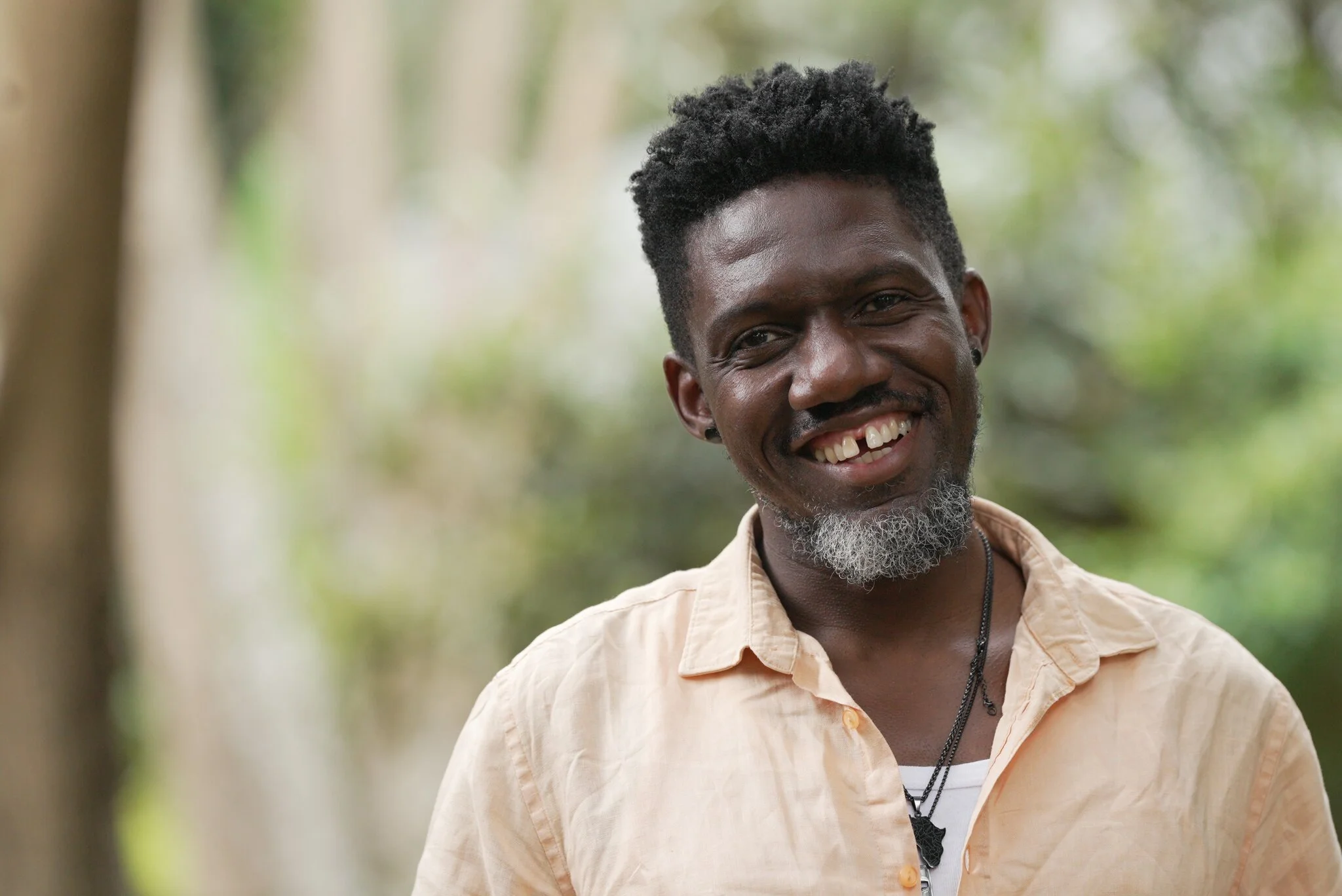
How are camera traps used in the conservation of cryptic species such as the African golden cat? How can local communities be engaged to foster the success of conservation?
In this episode, we talk with Mwezi Mugerwa, winner of the 2025 Indianapolis Prize Emerging Conservationist, a National Geographic Explorer, and President of the Society for Conservation Biology. Our conversation focuses on how he and his team at Bwindi Impenetrable National Park in Uganda use a network of camera traps to study the African golden cat, Africa’s rarest wild cat. We also discuss some of the community-led conservation projects that Mwezi has been involved including Embaka, which inspires local support for African golden cat conservation.
Cover art by Brianna Longo
-
Marty Martin 0:05
Cam, you know a lot about animals, but I bet you don't know the answer to an incredibly obvious question. What's the most common vertebrate in the world?
Cameron Ghalambor 0:14
Huh? Well, you know coming from you, my first response would be house sparrow. But I know that's not right, and it's probably not something like a house mouse. That might be too obvious. Your questions are always super tricky, and I know you're trying to get me in some kind of a trap here, so I'm gonna guess maybe some sort of small marine fish?
Marty Martin 0:39
Oh my gosh, that deductive reasoning would have put Sherlock Holmes to shame. Well done, sir. Yes, the most common vertebrate in the world, so we think, is the bristlemouth fish or Cyclothone microdon. To be fair, we're not really sure whether the species or some other in this genus, is truly the most numerous. It's hard to count so many small things when they reach such astronomical numbers in the deep ocean.
Cameron Ghalambor 1:01
Huh? Tell me more. How small and how numerous are they? Are we talking about, like, millions or trillions of little, small guppy-sized fish or something else?
Marty Martin 1:11
Yeah, they're a little bigger than a guppy, about five centimeters or less in length, and they weigh less than a paper clip. But in terms of numbers, your estimates are way off. Guess again.
Cameron Ghalambor 1:23
Okay, wait a second, I said millions or trillions, and you're saying guess again. Are you sure? A trillion is a huge number.
Marty Martin 1:31
Yeah, I'm sure a trillion is wrong, or at least off by a few orders of magnitude. You know, our best guess is that these fish number in the hundreds of trillions to maybe even quadrillions.
Cameron Ghalambor 1:47
Okay, give me a second I have to process how many zeros are in a quadrillion. Is that 15 zeros in a quadrillion? That's an incredible number of fish. How come I've never heard of the bristlemouth before?
Marty Martin 2:01
I don't know, but I guess it has something to do with where it lives, about 500 meters below the surface of the open ocean, moving up and down in the water column with the sun. And I've not spent much time in places like that, either, and my phobia for deep water is going to keep it that way.
Cameron Ghalambor 2:16
Fair, but still remarkable that I don't know that this was the most abundant vertebrate on the planet feels like I would have bumped into that piece of trivia at some point in the past.
Marty Martin 2:26
Okay, well, let me see if I can help you feel better. What's the rarest cat in the world right now?
Cameron Ghalambor 2:30
That one is a little bit easier, mostly because we just spoke with Mwezi Mugerwa about the rare and elusive golden cat, which is the focus of his conservation work. And I recall doing my research that the most rare felines are either the Amur leopard or the Iberian lynx, both of which number in the hundreds, if not less.
Marty Martin 2:52
See, you're more of an expert in species abundance than you thought.
Cameron Ghalambor 2:55
Fine. But let's talk about Mwezi, who's our guest today on Big Biology. He's a PhD candidate at the Leibniz Institute for Zoo and Wildlife Research. He's also a recent winner of the Indianapolis Prize for Conservation, a National Geographic Explorer and current president of the Society for Conservation Biology,
Marty Martin 3:14
Originally from Uganda, Mwezi devoted more than a decade to the study and protection of the African golden cat and other species. His innovative work, particularly his approach to partnerships with local landholders, has provided new forms of effective protection in parts of Africa that have otherwise been difficult for conservation.
Cameron Ghalambor 3:31
As you'll hear in a minute, Mwezi's passion for the golden cat is somewhat surprising, because he grew up in Kampala, a huge city where feral cats were about the only wildlife he could expect to see,
Marty Martin 3:43
But a series of unfortunate accidents and quite a bit of ambition and good naturedness led him to where he is now. He and collaborators have learned an enormous amount about this extremely cryptic and relatively rare species, lessons they've been able to apply to other species in other parts of the world.
Cameron Ghalambor 3:57
But before we get to Mwezi's story, remember that we're now seeking your support, and the best way to do that is by signing up to become a podcast subscriber on substack. Go to big biology dot substack dot com.
Marty Martin 4:12
And thank you so much to all of our current subscribers. Over the holidays, we saw our subscriber totals rise almost exponentially. The only downside is that most of those subscribers took the free route. We're so happy that you like what you're hearing, but unfortunately, the full show remains behind a paywall, unless you pursue the paid subscription route.
Cameron Ghalambor 4:30
Remember, though it costs relatively little to keep Big Biology coming out, about the cost of a cup of coffee for a week, best bet is just to go for a $50 subscription option. Then for the next year, you won't need to remember to support us.
Marty Martin 4:42
But if you can't afford a one time $50 subscription, that's fine. We offer monthly options too. In fact, because we never want money to keep you from listening and learning about biology, if you can't afford a subscription at all, you can contact us and ask for a free one. If you're a student, we want to be sure you get full access to the show. So we're a nonprofit, so the only reason the show is paywalled at all is to ensure that we can pay Molly, Brianna, Caroline Clayton and all the other interns that help us get Big Biology to you.
Cameron Ghalambor 5:09
And if you are a subscriber, or become one soon, you'll automatically be entered in a random draw for prizes. For every 20 new paid subscribers, we'll pick a subscriber, new or old, to receive a big biology t-shirt or poster with the cover art from the show. You get to pick the image
Marty Martin 5:26
And critically paid subscribers don't just get access to new shows. They also get access to behind the scenes discussions from can and me, as well as extra audio from our guests about their lives and hobbies and much more. So please
Cameron Ghalambor 5:37
Go to big biology dot substack dot com and sign up today. And if you lead a lab, or you're a parent or are responsible for just a bunch of junior biologists, consider giving gift subscriptions to big biology. There's an easy process for that too at our Substack site.
Marty Martin 5:55
And thanks again for all of your support, be it on Substack, Patreon, or elsewhere, we can't do this without you.
Cameron Ghalambor 6:01
I'm Cameron Ghalambor.
Marty Martin 6:02
And I'm Marty Martin
Cameron Ghalambor 6:03
And this is Big Biology.
Cameron Ghalambor 6:17
Mwezi, thank you so much for joining us today on Big Biology.
Mwezi Mugerwa 6:20
Thank you. No, thank you. It's a huge honor. It's a pleasure to be here with you today to talk about me and talk about my work. And I'm excited.
Marty Martin 6:32
Excellent, excellent. Yeah, we're really happy to have you. And before we jump into the work you've been doing, we have to congratulate you about a couple of prizes. So you were the 2024 Wayfinder Award winner, and more recently, the 2025 Indianapolis Prize winner, and that's for an emerging conservationist. So that means someone under 40 years of age with a talented drive to make significant impact on saving an animal species or a group of species. And I think that's one of the most prestigious awards for early career conservation biologists. So how, how does that feel? And when did you find out about receiving that award?
Mwezi Mugerwa 7:06
Yeah, not even in my wildest dreams ever. I ever thought I would be recognized with such a prestigious award. And it came as a huge surprise when, when I got the news that I was selected to be the Indianapolis Prize Emerging Conservationist for the year 2025, given the amount of talent that's out there, and given how competitive, you know, like these sorts of awards are, to be selected to come to at the top, you know, as the winner of the award, it's humbling. It's humbling because, again, you know me starting out back in 2010 just after university, I never thought that I would ever be in such a space, on such a platform, such huge global recognition. It hasn't sunk in yet. It has it. I may have received the award in September, but I still, when the news broke it's still so fresh in my mind. And I think like, you know, like that, that symbolizes how grateful I am, not only to the Indiana police prize, but also the reviewers, the mentors, I've had over time, that people have worked through the path of this journey with me. It's a long list. And I think this recognition didn't only come to me, but it went to all these individuals and all these organizations.
Cameron Ghalambor 8:36
Yeah. So, so let's talk a little bit about your career path, and how you got to that point? So tell us a little bit about like your progression. How did you become a biologist, a conservation biologist? You know, some of us grow up being fascinated by animals at a very young age. Some you know, reach that point later in life. What was your path to getting where you are?
Mwezi Mugerwa 9:07
Oh, wow. How much time do we have? Do we have two weeks?
Marty Martin 9:12
No more than two hours. We'll cut you off at two hours.
Cameron Ghalambor 9:14
Maybe the Wikipedia version.
Mwezi Mugerwa 9:18
Oh, yeah. It's been a rewarding journey, my conservation career. I would like to think it's early on reading, you know, like the National Geographic Magazine, you know, like the yellow, it's called the yellow magazine at that time. Like seeing all these, you know, breathtaking photographs of wildlife and wild landscapes, I think that's when it started, and when I had the opportunity to choose what I was going to study at the university, I chose conservation biology and forestry. I think because of what I was reading and what I was seeing and what I was exposed to this profession felt a very, you know, natural path for me. It just came naturally. And I went to university here in Kampala, Makerere University, which is Uganda's largest public university. And I studied forestry. And in forestry, Bachelor of Science in Forestry. And in that program, I specialized in conservation. So there were two branches. You could either go and be a plantation forester, basically planting trees and plantations, or you could be a conservation biologist, the path which I took.
Mwezi Mugerwa 10:33
And after that, I got an opportunity to travel south of Uganda at that time, that journey was roughly 12 hours drive by bus to Bwindi Impenetrable National Park. So many people around the world, they know when as their home of half of the world's mountain gorillas, I think slightly, slightly close to a thousand mountain gorillas in this in this very small forest habitat. So I moved to Bwindi as a volunteer to support one of the PhD programs that was happening in the national park at that point. And that was 2008 just after my final paper at the university. The next day, I jumped on a bus and I drove 12 hours to one of Uganda's remotest parts, really. What I haven't told you, I'm born and raised in Kampala, which is the big city.
Marty Martin 11:29
That's what I was waiting to hear. You're a city boy. This must have been jarring to go to the most after growing up in the city.
Mwezi Mugerwa 11:38
I know, I know. And I moved so we wake up in the morning, we jump on a bus, and 12 hours later, we are in this very green, quiet, near pristine environment, something I wasn't used to at all, given how loud and buzzing Kampala can be. So I get to Bwindi, at that time, there was only satellite internet, which was only available from 8 to 10, from midday to 2pm and then from 4 to 6pm so all the other hours of the day it was off. So I'm coming from Kampala, Internet by that time, it was, you know, readily available to many people. So I come to Bwindi, the Internet is being rationed, we're using solar, solar power. So the lighting was strictly on solar, solar panels. There was no running water, there were no street lights. And this is a place where I'm gonna be spending 12 months, because the internship was 12 months at that time. And I was like okay, and no cell connection. So growing up with my parents, I mean, like we never really traveled as a family, so we are always together like a unit. So now this was the first time when I was way out, far away from my family, and I could not even talk to them on the phone because there was no phone signal. But this is the most beautiful place I've ever seen in my life. So like driving through the forest up the hill, if you haven't been, you should. Bwindi is spectacular. So driving up the hill, up to 2300 around where, about meters above sea level, this very thick, dense forest, like I would never forget that sight.
Mwezi Mugerwa 13:36
And the moment I got there, I was like, I'm not leaving this place. And I didn't. I didn't after the interns, which was one year. I was lucky and fortunate to be hired to run one of the biodiversity monitoring programs for the field Biological Station. And that program was the Tropical Ecology Assessment and Monitoring network, or TEAM, as we used to call it. And this was a network of field sites and protected areas in 17 countries across the tropics, a bunch of them in South America, a bunch of them in middle America, bunch of them in Africa, and then some in Southeast Asia. And what this network was basically doing was to assess biodiversity and monitor trends over time in relation to climate change and its impacts. So I was the principal investigator for this program at Bwindi National Park, because Bwindi was one of the 17 protected areas in the network. During that time, when I was doing the camera trap surveys for the TEAM network and the permanent sample plots for the forest monitoring for the team network, this is when I stumbled into, I stumbled onto the African golden cut and the rest, I think, is what we're going to be talking about for the next one hour or so?
Marty Martin 15:02
Yeah, yeah. Well, perfect. You set yourself up incredibly well. That was my next question about this discovery that you made. I was reading an article earlier today, and I think they had the initial image that your camera trap took of the golden cat. And I mean, it's just a wonderfully iconic image. We'll have to see if we can post it somewhere where the cat is looking directly at the camera. And so, I mean, it's just incredibly inspiring. It's very much a cat, but it's very much like no other cat that I've ever really seen. So tell us about it. And how did you become passionate about it? What was the history? I mean, people there didn't know much about it, but the locals around the park had been, I mean, they were quite, quite well aware. So tell us a little bit about this, this species.
Mwezi Mugerwa 15:49
Yeah I mean, you have set up this question really well. So this was a black and white image. At that time, camera traps weren't, I mean, they weren't new, but also they weren't very old in our field. So I think, like, that was a time when they are really exciting. And I remember we are using, like, this very big Reconyx RM 45 camera traps, like really bulky. Forget about the small ones we're using these days, you know, the Brownings or the the Bushnell. It was, it was a big camera trap. And we put these camera traps out there in May for 30 days, and we put them out, and then we moved them to other locations in the National Park. That was the first ever survey in Bwindi with camera traps. And guess who shows up? It was the African Golden Cat, big, you know, eyes facing the camera. I look at this image like: "Oh my goodness. What a creature." Like, even in black and white, that image is so vivid that even in black and white, like looking in the eyes of this guy, it's something I'll never forget. I was like: "What is this creature?" I got excited, obviously. And I was talking to people. I talked to my field assistants, who have spent, by at that time, they'd spent like decades, of years running this forest, looking for all sorts of things, and they didn't know this animal. They didn't know this animal. Only a few of the senior scientists through their research, they got to know that that was the African golden cat. But what was so striking is that when I took this black and white picture outside the biological field station into their communities, people made it look seem so easy, like, that's embaka. Like, because, I mean, like they knew it from the mother tongue, which is Ruchiga, spoken around the National Park. So they knew embaka as the African golden cat in their own local languages, but they didn't know it was the African golden cat. So I had to work backwards, so its embaka, and then landed back to the African golden cat.
Mwezi Mugerwa 18:00
But what was so striking and so concerning was that they knew this animal from their snare traps. And some of these elders I talked to in the village like this is embaka, and we catch it all the time in our snares. Now that was very worrying, because the field assistants I was working with, they had never seen this animal alive, right? They even didn't know the animal. But now the elders, who are mostly hunters, they're like, I always catch this animal in my snare traps, and it's and it's embaka. So that kind of open to opportunities. The first opportunity was, oh, look, we actually don't know so much about the species, and then the opportunity was, there is a lot of room to save the species. And this is basically when I started like writing a proposal. My first proposal was in 2011 to Mohammed bin Zayed Peace Conservation Fund. And that was my first ever grant, I remember, it was $15,000 and it was about first of all collecting sample ecological data on the species using camera traps, but also to learn more about the human threats to the species from the communities living around Bwindi Impenetrable National Park.
Mwezi Mugerwa 19:19
So that project was so fun. It was so fun because I was able to literally cover the whole national park with camera traps, this time looking specifically for the African golden cat. So what TEAM was doing was the general biodiversity survey, the general community survey of what's present in Bwindi. But with this grant, I was able to just narrow and focus on the African golden cats. I had camera traps all over the National Park, and one of the questions I was asking, there was, like, three, four questions, but what one of the questions I was asking, how is this species, how is this cat responding to human activity in the national park, because I had already, you know, figured out, given that if it's only the hunters that know the species, it means human presence is definitely one of the key threats you have to address ASAP. So the question was, how is this species responding to this widespread, unsustainable human presence within the National Park? And there are some other ecological questions. You know, there was temporal activity patterns, which we didn't know so much about, home range sizes, which we didn't know about distribution, which we didn't know about. I also looked at prey. I was collecting skirts from the forest to look at diet as well. So there are lots of things I was looking at in that project, but the one objective that stood out was that correlational study, correlating the occupants or the distribution of the African golden cut with areas where hunting is prevalent or was prevalent. And that result was so striking that in areas where we had camera traps and hunting was happening, occupancy was this low. And in areas where we had camera traps and there was no hunting, occupancy was here, so way much higher, and the estimate was nearly 50% actually fewer cats. I'm using "fewer" in quotes because this was an abundance. It was occupancy, but fewer cats in areas with hunting versus areas where there was no hunting. So putting this story to the story from the elders that I catch this cat all the time. It made so much sense. It made so much sense and that opened doors to start engaging local communities, bring them together, to start talking about the African golden cat, to start talking about why hunting is so destructive, and start talking about why we should stop hunting and find alternatives to bush meat hunting.
Marty Martin 21:56
Yeah, and that you call that embaka, you know, and in honor of the name, so let's, I want to talk about that in detail in a second. But you know, the downside of doing podcasts is that when you have a visually striking organism like this, we only get to talk about it in words. We don't have pictures here. So can you, can you share some details with the listeners about, you know, what does it look like? How big is it? One thing that I learned the genus name is Caracal. So is it a Caracal? Because Caracal, that's one of my favorite species, but it doesn't look a lot like a Caracal. I thought, you know, based on the images I've seen, but I guess it's related to a Caracal, and maybe that gives an image to people. But generally, how big is it? How common is it across how much of the world? Do we find it?
Mwezi Mugerwa 22:41
Oh, yeah, this should have been the first question.
Marty Martin 22:41
Sorry, I should have started there.
Mwezi Mugerwa 22:49
Because it's such a fascinating animal. I mean, again, that black and white image was black and white, but even then, it didn't do much justice to how beautiful and so different this animal is. At that time, we could not tell that this animal comes in different colors or color morphs, because the images were infrared black and white. The only thing you could know that it's either black or it's white, but you could not really discern what the white picture is, and that white could potentially be a gray color morph. It could be a golden brown color morph, or it could be a light brown color morph, and then you have the melanistic morph as well. So these are the four depending on who you talk to, but I believe these are the four color morphs that we have. Sometimes I say there are three colors because the light brown, the light brown is so close to the golden brown, so it's really hard to discern the two. But if you've got the brown, if you've got the brown and the gray and the melanistic one, those are the three most distinct morphs we have of these species, and it grows to twice, three times the size of your domestic cat. So it's actually, it's actually a big animal. I don't know why. I don't know why. In science, we call it a small cat. For me, that's not a small cat.
Marty Martin 24:10
That's compared to a Siberian tiger, though. I mean, it's not.
Mwezi Mugerwa 24:16
Yeah fair enough. And also, I think compared to its closest cousins in the tropical rain forest, which is the African leopard. It's way smaller, but yeah, it's, I mean, it can grow up 15, 16, kilograms. It can grow up to close to a meter in body length and maybe 50 centimeters body height. So that's not a small animal, and it is an animal that can put down a small goat. Can put down a small sheep. Yeah, it can put down, like a really big, a big, well-fed chicken. So, very easily, very easily. So this is known a very small animal. Very fascinating. At that time, we didn't know so much of its natural history, but now you know, we're beginning to gather a lot of that data now. We know, and I think to our listeners, they'll find this really, really fascinating. So it gives birth once a year, right? And 70% of the time, it gives birth to one kitten. That explains why it's been described as Africa's rarest, least known, least understood, wild cat species, once a year and 70% one kitten or one cat. So if you, if you get that, and then you, you overlay on top of the human activity, bush meat hunting, more specific, we see why there are not very many out there in the wild, because the natural history is not really on their on their side, but also the stories from the elders, the hunting families, they tell us they catch them all the time in their snares. So combining the two, I think it was one of my inspirations to and motivations to build a career around a species that people thought and still think is one of Africa's rarest wild felid.
Marty Martin 26:12
Is it being actively hunted? I mean, when it's caught in these snares, is it sort of the snares are being used for duikers and other more obvious game meat, or is the cat being actively hunted by people around the park?
Mwezi Mugerwa 26:26
Very good question, depending on which part of Africa you are. So when I was starting this work in 2010l 2011 after that first grant with from Mohammed bin Zayed, my mind, or my lens, was focused on the Ugandan situation, where, in Uganda, because of some cultural values and taboos and totems, carnivores are not hunted. And it's actually, historically, you would be punished to hunt a carnivore because they are charismatic and they bring these cultural values in the society. So anyone who would hunt a carnivore, like the African golden cat, you would be frowned upon like really. So in Uganda, no one hunts carnivores, but the methods that are being used to catch forest antelope, that are being used to catch bush pigs, that are being used to catch, you know, different things within the forests. These methods are non-selective. They're indiscriminate, that they catch anything that steps in them. And if you haven't seen a snare trap, they are nasty.
Marty Martin 27:30
Yes, yes.
Mwezi Mugerwa 27:31
So these traps are nasty. I mean, like, like, I mean, we've been, we've stepped in some of them ourselves during, you know, during our field work. But luckily for us, you know, we go in with strong boots covering our legs and our feet. But if you imagine, like how tightly they hold onto a small leg of an animal like the African golden cat, these animals have no chance. The bigger animals like the chimpanzees or the gorillas or the elephants, they escape. You know, they escape with wounds, or they escape with lost limb. But they live for the large part, but for the small ones, like now the African golden cat like no chance it will ever be able to free itself from the snares. No chance. So what happens? Like, the moment it steps into the snare, it's either stays in that same spot, it's been caught like for hours, so it dies of, you know, dehydration or bleeding. And what's so sad, because the hunters don't hunt the African golden cats directly, they have no use for them. So even when they come to check their snare traps and they find an African golden cat, they just leave them to rot just like that. In 2019 we are very interested in estimating the level of snare bush meat hunting and its impact on the African golden cat. And in one year, we estimated 80 cats were caught in snare traps and died. Out of those 80, nine of them were reported to be directly hunted by the hunters, so the 71 it was collateral damage, as I like calling it.
Mwezi Mugerwa 29:11
But now that story is different. If you cross from Uganda just next to DRC, and then you cross all the way to West Africa, so central to West Africa, where the African golden cats are directly hunted for different traditional and cultural values. It's a sign of power if you're able to catch the African golden cat and you presented it to a local chief, and because, again, people, people have called them the phantoms of tropical rain forest in Africa, even for the chiefs, because they know the species is so rare, if a hunter can catch one and carry to them, you buy favors from the chiefs. We see them a lot in bush meat markets. Also one of my colleagues, Eduardo, who is part of the African Golden Cat Consortium Alliance in Angola. Just last year, he was able to find two of them in the bush market in Angola. My colleague Anastasia, who's part again of the AGCCA. Just a few weeks ago, she sent me a picture hunters had caught the African golden cut in Equatorial Guinea. My colleague Franklin also has reported them in bush meat markets, but you'll never see that in East Africa though, Uganda, Tanzania, Kenya, because in East Africa, people don't really hunt carnivores, but central and west Africa, it's kind of both collateral damage, but also there is some level of direct hunting for their species, yeah.
Marty Martin 30:46
And so that was interesting to hear, too. But, I mean, there's a very broadly distributed species. It's sort of, what is it? Most of Subsaharan Africa?
Mwezi Mugerwa 30:55
It is. 21 countries that we have recent evidence of its presence, 21 countries stretching all the way from farthest west Africa. That's Sierra Leone, Liberia, Guinea, that part of Africa. Then you come to Ghana, you come to Nigeria, you come to Cameroon, you come to Equatorial Guinea, your Guinea, Gabon, you come to Central African Republic, South Sudan, Uganda, DRC, Tanzania, Kenya, Rwanda, Angola is the farthest I think it gets, the most southern part of its range.
Cameron Ghalambor 31:29
So I just wanted to kind of clarify. So like the Bwindi Impenetrable National Forest National Park has its name because I think it, it's doesn't it's not supposed to have any road.
Mwezi Mugerwa 31:42
It's impenetrable.
Cameron Ghalambor 31:43
So it's supposed to be impenetrable, but, but it's clearly not very impenetrable. If there are a lot of people going into the park and hunting for bush meat, so are these mostly people who are living on the border of the park, or are they coming from, like, relatively far away to hunt inside the forest? Or do you know where this pressure is coming from?
Mwezi Mugerwa 32:14
Yeah, no, very good question, because we have data on that, and we had this, we shared this, you know, similar curiosity with you. Well, we wanted to understand with all this, you know, widespread, totally out of hand snare hunting, where are these hunters coming from? So in that analysis, we discovered that it's mostly the farmers that stay within one kilometer from the park, from the national park boundary, which makes so much sense, because they are the ones that are close to the National Park, and they interact with the forest more often compared to families living out from the National Park.
Cameron Ghalambor 33:01
Okay, well, let's transition and talk a little bit more about the science of camera traps. Because I think, you know, not only practicing biologists, but I think the general public now is very familiar with like, imagery that comes from these types of camera traps. I mean, you see this in the news a lot. You know, I was talking with my family not too long ago. There was this, like video from a, from a camera trap of a coyote and a badger in North America somewhere, which are two very different predators. And they were like walking into a tunnel together, like they were sort of like friends.
Marty Martin 33:42
Like a Disney movie.
Cameron Ghalambor 33:44
It was like a cartoon. And, I mean, it was, it was great because, you know, it was clearly taken, I think, at night with some sort of like, you know, infrared. But it's opened up this world of being able to see things that most people, typically, you know, would not be able to observe. But now we're moving from just using it as a, you know, something for fun curiosity, to a very legitimate scientific method or tool for monitoring, so if you're designing a study. So I imagine, like in the case of the African golden cat, like, you might know something or want to learn about its home range size. What's the approach that you use to distribute these cameras? Like, do you look at like a landscape and place them in like a very organized grid across the landscape? Or do you target paths or rivers? Or what's the you know, if, if one of our listeners is list you know, wants to design a study. What do you tell them? How do they start to think about this?
Mwezi Mugerwa 35:00
Oh, wow, that's a very good question, but also a very difficult question, because I think what determines your design is basically of the questions you're asking and also the species you're working with. For the African golden cat, as an example, we didn't know much. You know, back in the day, we had no clue even where, you know, what type of habitat are we likely to detect the African golden cat, we put our cameras there. Do they use trails or they don't? Do they walk in valleys or they don't? Do you find them in disturbed forests or in intact forests? We didn't know. Do you? Do you find them close to community settlements? We didn't know. Yet, for if you're for instance, come a trapping a baboon, you won't need to ask all these questions, because we know so much. We know so much about baboons. So for just as an example, the African golden cat was very challenging from the beginning, because we just didn't know much about its ecology and how it uses its landscape.
Mwezi Mugerwa 36:09
So luckily for me, we had this very, very wonderful dataset from the TEAM network, which I mentioned at the beginning of this conversation, and that was a systematic grade, which means, you know, one camera to the other was more or less uniform distances and intervals across the whole grid. And it was systematic because the team network wasn't interested in a specific species. It was interested in understanding and assessing the community. The whole committee that was present at Bwindi and all the other sites where this program was running. So that systematic grid was a wonderful grid, because for us, it gave us the entry point into the African golden cat, you know, environment. So the grant I talked about from Mohammed bin Zayed, what I actually did, I went back to those sites where we had recorded the African golden cat, thanks to the TEAM data set, and we just intensified our effort in those areas. So where the team had one camera trap per square kilometer, we had two camera crops per square kilometer, because we really wanted to increase our effort in detecting the African golden cat. And also, being a small animal, we didn't know the home range, the home range sizes, even now, actually, we don't, because for us to be able to answer that question, we probably need fine scale telemetry data, which we haven't gotten to, so we didn't really know, we didn't really know the home range sizes for the African golden cat. But given the detection rates from the TEAM data set we're like, maybe any grid that's between 500 meters and one kilometer should be sufficient for us to be able to record not only the males, but also the females and also the sub-adults or the juveniles within the population. So in that survey that followed immediately after the TEAM grid. I will be calling it a grid, but basically, it's basically a bunch of camera traps laid out in the forest. So that grid, we had camera traps that were 750 meters to one kilometer apart. And the idea for that was that we wanted to not only be able to get the males, which range widely, but also the females and maybe some of the sub-adults who may not range as far wide. And coming back to the design, when we did that work, we also were interested in being able to estimate the density of the African golden cats in Bwindi using capture mark recapture methods. It's a complex ecosystem outside that, you know, like with the models that you use on camera trap there to estimate these things. I want to go in detail, but at that point, what we are interested in was to estimate the density. And what we did, we had two camera traps at each of the locations. So these were paired camera traps for us to be able to take, you know, to be able to take a picture of either flank of the animal, which is a standard method for estimating densities for cats anyways. So that wasn't, that wasn't new to us, but we are interested in estimating density. So we had this, in total, we had 96 camera trap locations all across the National Park, and those 96 were between 750 meters to one kilometer apart, and each of those 96 locations had a paired station of camera traps. So again, I hope that answers your question, depending on the objective, depending on the species, those designs may be different for you.
Marty Martin 39:39
Yeah. The crazy thing about these studies, there's many things, I mean, 96 camera stations across a giant, impenetrable Park. I can only imagine amount of the work to go around and get those cameras.
Mwezi Mugerwa 39:52
It was painful.
Marty Martin 39:53
Yeah, it's a beautiful place to be. I can imagine, yeah, when you're not struggling through the bush,
Mwezi Mugerwa 40:00
When you're not sweating up those hills, yeah.
Marty Martin 40:02
So you bring these cameras back, or the data on them, you've got, you've got just loads and loads of images. Because although the camera traps are motion sensitive, there's still thousands of images. So that must be another form of pain until, well, I don't know how recently, but, but I presume, I mean, you're using artificial intelligence to help with this, this kind of work. So maybe say a little bit about what you do with these images when you get them to, you know, transform this into data. Yeah.
Mwezi Mugerwa 40:33
So I think that landscape has evolved significantly the past ten years, or even less. When we used to do this work, back in the day, it was all physical, manual. You go through all these thousands, tens of thousands of images for you to identify and tag this species. But now, thanks to technology, there's lots of platforms that are available on "market", quote, unquote, that have simplified this work. Yeah, there are several. I can't even start naming them, because there are several of these technologies on market, which has been a very good thing, because now we don't have to save through tens of thousands of images to look for the African golden cat. Our partner Panthera, which is a non-profit conservation NGO, based in New York, has been at the front of developing some of this, you know, artificial intelligence algorithms for the wild cats, because like this is what they do. Panthera is wild cats. And we, we've been trying with their algorithm Panthera ideas, which is, which is wonderful in some ways, because it's, I mean, there's room for improvement, as I'll speak to that in a little bit, but it kind of gives us, you know, like that, opening into the AI technology we need to simplify the work we do. And even now, we have learned that even just the Panthera ideas may not be sufficient for us to ask some of the questions we need to ask.
Mwezi Mugerwa 42:04
Whenever I talk about the African golden cat, people always ask me, "How many are they in the wild?" And that's a very main question for a species people have described as Africa's least known, Africa's least studied. And I think that has been my career purpose, really, to start putting together estimates of their density. And that has opened opportunities for me, you know, to start exploring at a deeper level, what machine learning, what AI, you know, models and algorithms out there to try out so together with my colleagues from the AGCCA, the African Golden Cat Conservation Alliance, we already looking into an algorithm that that will help us identify individual African golden cats, individuals, because that's the only we can estimate densities, right? So we are tweaking a few open source models that are available on market. I mean, like it's free, but available to the community. And we are tweaking this using our own images, which we are gathering from our camera trap program now, so we get this image, and then we feed them into into this AI algorithms and the idea is that we are able to be able to estimate, to train this machine, to be able to identify individual African, golden cats. So we have come, we have come really far. But also there is a lot, a lot for us to do for the future. It seems like the field is rapidly evolving, which is very good for us, because it means that the work we do hopefully will simplify, you know, over the years.
Marty Martin 43:47
Yeah, and I don't know very much about it, but these AI algorithms are becoming so adept so quickly that even though you know you're working oftentimes, well, I don't know, are you working with black and white images now, or do you have more color images, given that this is probably mostly a nocturnal animal, and so color images in general are going to be tricky, but still, the AIs are far better than humans in discriminating individual variation, even if it's a black and white image, right?
Mwezi Mugerwa 44:14
Yeah. I mean, this is, this is something where we are trying, we are trying to nail, to nail down. We share the same belief as you we really do, because some of these algorithms have been tested on other spaces, and they have performed really, really, really well. But something I didn't mention when you were describing the species, and we talked about the size, talked about the color morph, talked about the natural history, but what we didn't talk about is that the African golden cats in East Africa, right, very different from the African golden cats in Central and West Africa. So the African golden cats in Central and West Africa, they are well spotted, you know you could think, okay, I'm giving a very naive example, but you could, you could think it's a small leopard. That's how distinct. That's how distinct their spots are all over the body. In East Africa, you only get those spots under the belly, under the limbs, so the front limbs and the hind limbs, and then the belly. That's why you only see the spots. The rest of the body is the plain coat. So in that case, and something that's really giving us a run for our money, if I could use that phrase, is that the algorithm that will have for the East Africa African golden cars may not be the one we may need to use for the West Africa. Potentially, we could focus on the facial features, but those are not very helpful compared to the spots that are all over the body, right? So that's, that's, that's a side not which I thought I could mention. And again, when I say there is a lot of work to do, there's really a lot of work to figure these things out.
Marty Martin 46:06
Yeah, in East Africa, you're going to have less conspicuous stuff to work with in parts of the rest of the range. Yeah, okay, yeah.
Cameron Ghalambor 46:13
So, so Mwezi, I wanted to ask. I mean, obviously camera traps are a very effective way of sampling, you know, these, these very difficult animals to spot, but have you used other methods like DNA sampling to try to estimate? Or is there any talk about like you collecting DNA from scat? Or, you know, I know some people use these, like hair samples that they traps. And so is there any anybody considering doing that to kind of complement the camera trap work?
Mwezi Mugerwa 46:52
Yeah, one of my colleagues from the ADC, Dr Imran Joe tree is a molecular biologist, and we've been playing a little bit around on this topic, if we could, you know, collect biological material from, you know, from the forests, and then we expose this in the labs, and we do all this molecular genetic analysis, it's tricky, because, first of all, and again, back to the question about describing these pieces, we also didn't say that they're solitary, right? So which means that even gathering their scat can be challenging. It's not impossible, but it's challenging, and given that in the areas where we work, they also share the habitat with more or less a similar sized serval, or serval cat, as people call it. So they actually three of them, the African golden cat, the servo and the caracal. These are closely related in terms of their genetic makeup, so and that's why the name that's the genus Caracal comes from Caracal aurata, which changed initially from profelisor to Caracal aurata, so it means in place as well. So they are living in sympatry with with these other cat of this small, similar size. The cat can be notoriously difficult to discern, right? And my colleagues in the DRC and Central African Republic, it's even harder because you get the African golden cat and the servo and the caracal in the same habitat. So it means chances are high that if you're collecting scat, you will end up with scat for other species, not the African golden cat. So again, it's not so much of a challenge. But I think what has really held us back. It's the budgets we need for us to do this genetic analysis. I mentioned earlier on that I tried to look at this, at the diet of the African golden cat using scat like that was all manual, you know, like looking at hairs and then comparing, you know, the hair structure in literature. This wasn't genetic studies. So of course these are more powerful and robust, but also they are very expensive and inaccessible to many of us who are working in this part of the world, so and that goes also for the eDNA, you know, the environmental DNA. We have tried a little bit with acoustic sensors, but for a species that doesn't make so much noise that hasn't worked well.
Cameron Ghalambor 49:27
I was gonna ask about that,
Mwezi Mugerwa 49:31
It hasn't worked very well. It works very well, we know, with primates and this vocalizing species, but not for the African golden cat. So that's definitely out of the question. Though, we have used the passive acoustic sensors for us to measure the level of human threat to the African golden cat, because the hunters in Bwindi they are very vocal. They use dogs. So we are able to capture those sounds. But we could not not use passive acoustic sensors to survey or assess African golden cats. So again, there's so many other things. There are so many other methods that we could potentially play a little bit around with, but we have to be cognizant that this is a various species. So are you willing to invest a lot of money on DNA samples, which are not even certain they are from the African golden cat they could be for, you know, from a servo, from another species.
Cameron Ghalambor 50:25
So, I mean, I guess just one last question about, you know, the kind of practicalities, because, so you mentioned cost. I mean, these, these cameras, are when, when you're putting out, you know, hundreds of cameras. I mean, maybe individually each camera is not so expensive, but, you know, hundreds of cameras start to get actually quite expensive. And so in terms of like, budget for doing like, yes, eDNA is expensive, but these, these cameras, are also, there is a significant cost barrier for a lot of these. And I mention that because I think you were part of a study or lead on a study that looked at the like a survey of using camera traps. And yes, they're very commonly used in wealthy countries, but in countries with smaller budgets and less resources, they're very underutilized. So can you talk a little bit more about that?
Mwezi Mugerwa 51:36
Yeah, no, that's a very good point, and I'm and I'm happy that you, you know, you cite that paper that looked at the global disparity of camera trap research around the world. Yet camera traps have been described as, you know, as the world's gold standard method for surveying, mostly terrestrial mammals and birds, right? But also from that paper, you see there is a lot of there is a huge, huge gap, especially in the Southern hemisphere, particularly many parts of Africa and and much of that from that same study I've cited, we also learned that country income was was a huge predictor for country for the use of camera traps as a research tool, right? So yes, budgets are still a limiting factor for many projects, but for the species that we study, the species we are work we are working with like the African golden cat. Yes, the budgets are steep but probably this is the the most reliable tool we have in our toolbox for us to be able to collect some of this data. It was a challenge at the beginning, but it was also an opportunity, because we have had so many, several financial partners of our work who have come forth, you know, to donate camera traps to do the work we do. For instance Panthera, two years ago, they donated like, 200 camera traps to the AGCCA. And these camera traps were meant to start this species range, wide camera trap grid that we started in 19 of the 21 countries where the species we know is present. So like, that's that's that's big, that's big budget. And you have the camera traps, but also you have the other accessories. You need the SD cards, you need the batteries, you need the locks, and then you also you need people to go and deploy and retrieve the cameras out of the natural habitat. So it's a big budget, but I think what we get out of it, I would like to believe way overweighs, what we are putting in terms of camera traps the initial capital, because we have been able to gather a lot of a lot of ecological data on the species, which we didn't have 10 years ago, and that's all thanks to camera traps. I hope this can change, and I hope, you know, individual organizations are able to see, you know, like that gap, and they start chipping in and filling in those gaps, the way Panthera did. And at the moment, you also have a very generous grant from the National Geographic Society, which has helped us to actually be able to implement and establish those grid on the ground. So again, Panthera gave us the camera traps and there. But we needed them, we needed money to buy the locks, the SD cards, all those things. And also people to deploy each of the cameras. And that's when the National Geographic came in to support us on that. And now we are, as we speak, we have a grid that's standardized across the species range. And I think these are only species in Africa that has, you know, a grid designed specifically for this one species, which is something that we are very happy, very happy about.
Cameron Ghalambor 54:51
I imagine you also get data on other species, though, too, occasionally,
Mwezi Mugerwa 54:55
Exactly. So and again, this is where the initial capital, we know, with the investor. And the initial investment the camera traps is kind of outweighed by what we get in return. Because when I talk about the ecology, we also look at prey-predator interactions, especially for the African golden cat. So we look, we were able to collect data on small rodents, or on small antelopes, which we know African golden cats prey on as diet, which kind of data may not be very easy to collect with other methods that may be present or may be available. So yeah, it's, it's, again, it's, it's an, it's a very steep initial investment, but the returns are definitely worth it.
Marty Martin 55:44
So Mwezi. I think it'd be interesting to talk about sort of the conservation efforts explicitly you've made, and especially the community engagement that you've been so successful in doing. You know, a challenge in general, of protecting biodiversity is just sort of somehow mitigating the effects of human activity. And in the US, for example, you know, we just prevent many people from going in and using the park, except to drive around on the roads and look at Bison and that kind of thing. But in a place like the Impenetrable Forest, with a lot of people living around and relying on it, it's much more difficult. So you've engaged a lot in community involved conservation. So can you say a little bit about what that represents and sort of how that's been successful for the golden cat?
Mwezi Mugerwa 56:29
Yeah, thanks Marty. It's been, you know, opportunities and challenges. Opportunities in a sense that we've been able to make friends for the African golden cat, and for wildlife in general. We now have a program that's all about reconnecting communities, you know, with nature, with these habitats, with this wildlife that lives in their backyards. It wasn't easy from the beginning, and probably this is a conversation for another day, but it wasn't easy getting into these communities, because first of all the communities, there was lost of trust for conservation in these communities. And these communities have dealt with non-government organization, NGOs for so long, but they had a lot of mistrust of the system, because they felt that once upon a time they had full access and ownership to this resource, and all of a sudden, this ownership and access was cut or was lost thanks to a new management system in form of protected areas. It was known that these communities didn't have a protected area. They did. It was just different from this new system of governance that was imposed on them so that brought so many problems in so many national parks in Uganda, in retaliation, committees put them on fire, like arson, and Bwindi actually, Bwindi had lots of such incidences where communities would intentionally burn the forest in retaliation of their lost access to the resource. So these communities, again, once upon a time, these landscapes, these habitats, were not just a collection of trees. You know this, these were their burial grounds. These were their worship grounds, these were their hospitals. These were so many things to them, and all of a sudden they could not access all these things. So what happened that the communities didn't trust us, even me. When I approached them for the first time, they said, "We are tired of seeing conservationists, because you come to tell us how to conserve a resource we have conserved for millennia. Like my grandfathers and ancestors did, conserve this forest before you had your concerted biology program at your university, my grandfathers didn't have that degree, but they managed to conserve the forest for you to come and find it 2000 years later. So we are really tired of you coming telling us what to do, because for us, we are born conservationists, and we know what to do. Otherwise, if we didn't know what to do, this forest wouldn't be here in the first place. So we need to work with someone who can trust us and someone who can engage us and give us a voice in conservation. "
Mwezi Mugerwa 59:40
So that was my entry point in these communities, that when I, when I was starting embaka, the community based organization, it was named after the African golden cat in their local language, to give that sense of ownership that this is, this is your organization. It's even named. They actually suggested a name the communities themselves. But because we're going to be focusing on this African golden cat, we would wish to have the organization called embaka. So that's an this was a name from the communities themselves, and for them, it had meaning. It wasn't just a name. It is a name that had deep roots within their culture and their community. So working with the communities at that level, we are the same level, and talking about hunting, talking about the alternatives, all the projects that we are implementing, as embaka or as AGCCA. I cannot take full credits, to be honest, because these are projects that were already or that used to be in the communities, and they were lost sometime along the way. So when I was talking to the communities and doing the mobilization, as we call it, we are having these conversations. And a good example is the livestock seed bank, whereby we provide livestock, smallholder livestock husbandry as an alternative source for bushmeat hunting. The way we designed this livestock seed bank, it wasn't just giving the hunting family livestock for it to grow and eat as meat. This was we you get a female reproductive animal, which you take care of, and when you get the first offspring, you donate to your nearest neighbor, and your nearest neighbor will do the same. And then the benefit cascades all across the community. This is something they traditionally used to do as communities. So sharing is caring. I have my livestock. I have a offspring. You're my neighbor. I will donate to you this livestock because it strengthens our community relations. And that was, for us, the unintended advantage of this work, because for them, the communities is to do it just to strengthen their community relations. But for us, it brought in an opportunity whereby the communities themselves, they are watching over each other about who goes into the forest for hunting and who does support conservation.
Marty Martin 1:02:20
Yeah, so is the basic idea is that that's, I think one of the first ones was a pig seed bank. So you would give a female pig to a family, and then when the piglets are born, the family would then give it to a neighbor. But was there a kind of contingency that giving it, donating it to the neighbor? Wasn't it something about not hunting bush meat, sort of the first family holding the second family accountable for only, you know, using the pig that you have to, you know, start your own pig breeding operation. And what there was a kind of policing by the community of everyone else. Was that a requirement, or is that something that just emerged naturally when the program started?
Mwezi Mugerwa 1:03:05
It's something that was already in the community. Because we as a community, we care about this resource. So because we care, we are against anyone who's there to destroy the resource, because we benefit, not only us, but also our children and our grandchildren. So whoever is doing anything harmful to the forest in the form of hunting is basically a threat to our own livelihood and after generations. So anyone who would be, who would be part, part of this, this seed bank, as we called it, was basically a police, policing, it was community policing for other people who are not being compliant to human activity, not only, not only by the hunting, even other things, other activities that anyone who goes in the forest to harm the forest is someone we are basically watching over as the community policing strategy, and that also created a lot of social pressure against hunting. So if you see now, that brings back the cultural value of whereby if you hunt a carnivore, everyone in the community frowns upon you. It's the same thing if you go to a hunt, and I'll be like you, who does that today, you know? So there was that social pressure that was out of this program and those all the other programs that we are implementing, you know, the Smiles for Conservation, all the conservation PESA program, all these approach, all these are things that were suggested and came directly from the communities. All we did was to, you know, put a conservation message on top of all those programs.
Marty Martin 1:04:42
Yeah, can you say more about Smiles for Conservation? I thought that was another really interesting one.
Mwezi Mugerwa 1:04:47
It is, it's, I don't want to say it's my favorite, because they're all my favorite programs, but, but, but it's been. It's been, I think one of the most. A powerful threat reduction interventions for us, because the community members, they realize the benefit instantly, immediately. Smiles for Conservation, or the S for C, as we call it, is a program where we use mobile data clinics to reach some of the less privileged communities, and these are basically communities who are living around areas where the African golden cat is present, and we offer free oral health, dental care and treatment to these communities in exchange for their support for conservation. And we've been delivering this service since 2021 thanks to several of our collaborators, the Small Wildcat Conservation Foundation, has been a very, very big support of us for the mobile dental clinics. We started delivering this service in 2021, and we are doing we're delivering our fifth this week, actually. I'm leaving tomorrow. I'm leaving tomorrow to go to deliver the fifth version of the S for C. But we've been able to give this service to people as old as 74 years old. Someone comes in, he's 74 years old, and he tells you he has never seen a dentist in his life, and is seeing a dentist today because he has supported the conservation of the African golden cat and the forest it calls its home. This is something that the communities, they never forget. So whenever they see us coming with our mobile dental clinics for them, they connect that service. They connect that relief in pain. They connect, you know, the money they have to spend on dentists. They connect all those things to the African golden cat. So the connection, the connection is immediate, is very natural, and that's why I'm saying it's one of my favorite and, you know, like the messages we get from from from these communities, about this service, it's one of the reasons as to why I think we have kept going, you know, since, since, since 2010 when we started, is because there is a lot of warm reception from the communities to keep us going, and then them even showing us that, you know, we are getting these services, and we have actually stayed out from the forest. Yes, there may still be a few bad apples, but, but many of the communities we work with, they are really, really supporting, and they are the forefront of the organization they run embaka themselves. Many, again, as I've said, many of these activities, they're basically their ideas as well. So they've really made sure that these projects continue. Even me not in the picture.
Marty Martin 1:07:59
Right. So how does this work, when someone, the 74 year old, for the first time, gets dental care, is there some kind of evidence, or some kind of thing that he would have had to do to get the care, and then, you know, keep getting the care. Is there some way to demonstrate, you know, his actions, that he wasn't in the forest, that he was policing the community, or how does that part of the work?
Mwezi Mugerwa 1:08:21
That's a good question, and it's something I should have mentioned when I was talking about the livestock seed banks. When we started, some members of the communities perceived that we are rewarding bad behavior. So you have the people hunting, the people you give the life story, the people you involve in the mobile dental clinic, which is something which it was never our intent. It was never my intent to reward bad, bad behavior. I had to explain the communities that, yes, we may be putting much focus on the hunting families, but this conservation benefits are for everyone, and that's why it's called a pig seed. That's why it's called a seed bank, that you will get a livestock regardless whether you're a hunter or not a hunter, you will get access to the benefit. And it's the same thinking and logic for the for the S for C for the small of conservation, whether you're a hunter or not a hunter, so long as you're living adjacent to the National Park, to a forest habitat which the African gold cats calls home, you are invited voluntarily to participate in these programs. And speaking back to the elders, to the 73 year olds, they are some of the most powerful people in the community, because people respect their wisdom. People respect their word. So if a 74 year old comes and says, I'm seeing a dentist for the first time because of African golden cat, all the young people will listen.
Cameron Ghalambor 1:09:48
So I'm curious now, you said that the program started in 2021 when you look at the camera trap data today, very. Says when you started initially. Are you seeing the benefits of the program? Do you see, for example, in those areas where the numbers used to be low, that the numbers are slowly coming back up, or is it still too early to tell?
Mwezi Mugerwa 1:10:16
Actually, it's not too early. Bwindi is a very. For much of my work, I've used Bwindi as a pilot from where things have been replicated, elsewhere. So many of the examples I'll give will come from Bwinidi. Bwindi is an interesting an interesting forest, because though you don't see it on a map, you can clearly draw a line where hunting is widespread and we are hunting is less prevalent. And this is because the national park itself has been kind of unintentionally divided between tourism and non-tourism zones, because of the mountain gorillas. So in the parts in the parts of the forest. And by the way, we're talking about a forest habitat which is only 321 square kilometers. So it's not like a massive, massive national park. It's that small. But because of the gorilla tourism and how the gorillas use the forest, the forest has been categorized and divided into those the tourism and non-tourism. So the tourism is where there is intense management of the national park. You have law enforcement going in, day in, day out for 365 days a year. They are looking for snares. They are disarming the snares. They are looking for mountain gorillas. They are doing all these things. Now, in the area where there is no mountain gorillas, there isn't much effort happening, and this is where hunting is so widespread that you can literally stumble on snare traps.
Mwezi Mugerwa 1:11:52
So when we are starting, I'm giving this background because it answers your question. When we did our camera trap grid, we had these camera traps in areas where we know hunting wasn't a much of a problem, but we also knew there's this other northern sector of the park where hunting is a problem. And at the beginning, the detections, just detections of the African golden cat in that part of the park, there were very few. But as we speak, I was just looking at the grid yesterday, because now we have a running grid running in that across the whole national park, monitoring the African golden cats, in relation to the work we do. And I'm seeing detection that's spreading, like even in that part of the park. We are seeing more detections in that sector. We are not so concerned about the southern sector, because we know this sector, things are already good, but in that sector it has always been a concern. And what is interesting, the work we do is, clearly, is not only benefiting the African golden cat, we are also beginning to see elephants going back in that part of the national park since the late 60s. That's what the elders are telling us. So now elephants have become, are now roaming back in that part of the national park. Of course, we can't take all their credit that this has all, has all been our effort, because, you know, there is there is law enforcement, there is the national park agency operating, there is a local governments, there are all these programs that are being implemented. But I can, in the context of the African golden cat, I can confidently say that the work we've been doing the communities has really changed how people look at the forest. The hunting has gone down, and this is something we both get to hear from the Park Authority themselves. The arrests have come down. The snares have come down as well. And we are seeing detections of African golden cats increasing on our camera traps. So we may not be able to attribute this just to Smiles for Conservation, but it could be Smiles for Conservation. It could be the livestock seed bank. But what, what I think matters, matters to us, is that our being present in that landscape and engaging these communities is definitely changing the mindsets. It's definitely changing the landscape within the national park as well. And we are getting senior reports even from my colleagues who work in Tanzania, who work in Equatorial Guinea, in Cameroon, in Liberia, they are sharing the same experiences. What I'm trying to, maybe to get to is that conservation works. It takes a long time, but there is always hope that things change for the better.
Marty Martin 1:14:34
Wow. Well, I mean, this is, this is great. It's rare that we end conversation on such a positive note, especially when it's about conservation of a large mammal. Thank you so much for the chat, it's wonderful to learn about your work again. Congratulations on the award, and good luck with the future efforts. We like to wrap every episode with sort of just a you know question to you about anything else you want to see. Ideas. You want to share plans that are coming, something that we didn't, we didn't ask you about, but you want to make sure that the listeners hear.
Mwezi Mugerwa 1:15:07
I think we've covered pretty much, by the way, this has been a very fun conversation. I've enjoyed myself a lot. Love talking about African golden cats . I wish I had two weeks of this, but I know it. I know we done. I'm really grateful that you thought you know about us and the work we do, and you thought it's worth a spotlight. We really appreciate that we can't take that for granted. And it's been, it's been a very wonderful, very fun conversation, you know, having this with you two, Cameron and Marty.
Mwezi Mugerwa 1:15:39
I think there is a lot of hope. This is normally how I end my conversations about speaking the work I do. It has taken 15 years from the at the beginning, everyone was telling me, you really want to build a career on a species you will never see. You know, like, want to build a career. I mean, people are not calling it Africa's rarest for no reason here. There is a reason why no one is doing work on the African golden cat. And even myself, I've only seen like, three times in the wild. And when I say three times, I mean like, like a piece of a head, a piece of a tail and a piece of. So collectively, collectively, I can say I've seen one in my 15 years of work, right? But again, coming from, from that situation where, like things, there was so much uncertainty and confidence was really low, to coming to where we are right now that the work I started in 2010 just from one small national park that has exploded to 30 different other forest habitats across 19 countries, or the 21 countries where we know the species is present, for me, that has been a symbol of hope. There are so many out there. There are so many people out there who really care about nature, who really care about wildlife. Sometimes all it takes is someone to blow the whistle. And then the movement will naturally start. And I think this is something that has happened with the African golden cat. At the moment, as the AGCCA, we are 46 people, and not all these are biologists, you know, we are. We have people in finance, we have dentists, we have journalists, we have musicians, we have artists, we have people who have never stepped, you know, in a conservation biology classroom. And now there are people I'm working with to amplify the message for conservation for the African golden cat. So my message is to all our listeners, anyone can be a conservationist. All you need is to, you know, care about, you know, the planet, and care about the environment around you. And if that's the essential basic you need. And once you have that, you're a conservationist.
Mwezi Mugerwa 1:18:02
We haven't had a chance to talk about my other work that didn't show up in this conversation. The new program, for instance, I started, is called Afrikanity, and it's all about reconnecting the urban public with nature through African culture. So clearly, conservation is not a classroom subject in our conversation, you had me mentioning, you know, some of them were totems and taboos and cultural values. So they already pre existing cultural dimensions that can be very meaningful for us to amplify and bring the conservation message in the mainstream, public and the way this program works, I'll basically put together a team of creatives, local food restaurants, musicians, painters, fashion designers, hair and beauty people who don't normally, you would not normally find in a classroom teaching conservation biology, but if you look at the work they do, you know, the wildlife paintings they paint, the music they make about conservation, these are really powerful vehicles to get conservation word in the mainstream public. So again, to our listeners, you could be a dentist. I work with dentists as conservationists. You could be a dentist. You could be anyone. All you need is to care for biodiversity, to care for nature, and then we're conservationists, and then you can really contribute meaningfully to the work we do as the AGCCA or as embaka. It could be through just, you know, bringing the word in places, in your households, in your classrooms, at your workplaces, or it could be just financially supporting the work we do in any way, any effort is welcome and appreciated.
Cameron Ghalambor 1:19:51
Yeah, great. Well, thank you so much for taking time. You know, I think just to echo what Marty said, you know, ending on that note, I can see that you know you were very deserving of this Indianapolis Prize, and you know wishing you continued success, and hope these programs continue to grow and thank you again.
Mwezi Mugerwa 1:20:13
Thank you. Thank you so much. Thank you so much again for having me. I really appreciate it. Yeah, I've been very happy to share our work with you. Thank you so much.
Cameron Ghalambor 1:20:41
Thanks for listening to this episode. If you like what you hear, let us know via Bluesky, Twitter, Facebook, Instagram, LinkedIn, Threads or leave a review wherever you get your podcasts, and if you don't like something, we'd love to know that too. All feedback is good feedback.
Marty Martin 1:20:57
Thanks to Steve Lane, who manages the website, and Molly Magid for producing the episode.
Cameron Ghalambor 1:21:00
Thanks also to Caroline Merriman for help with social media. Brianna Longo, who produces our awesome cover images, and Clayton Glasgow, who blogs about topics covered in the main show. Check out his work on our Substack page.
Marty Martin 1:21:14
Thank you. Also to the College of Public Health at the University of South Florida, our Substack and Patreon subscribers and the National Science Foundation for support
Cameron Ghalambor 1:21:22
Music on the episode is from Podington Bear and Teiren Costello.