Ep 151: The Cost of correctness (with Matt Kaplan)
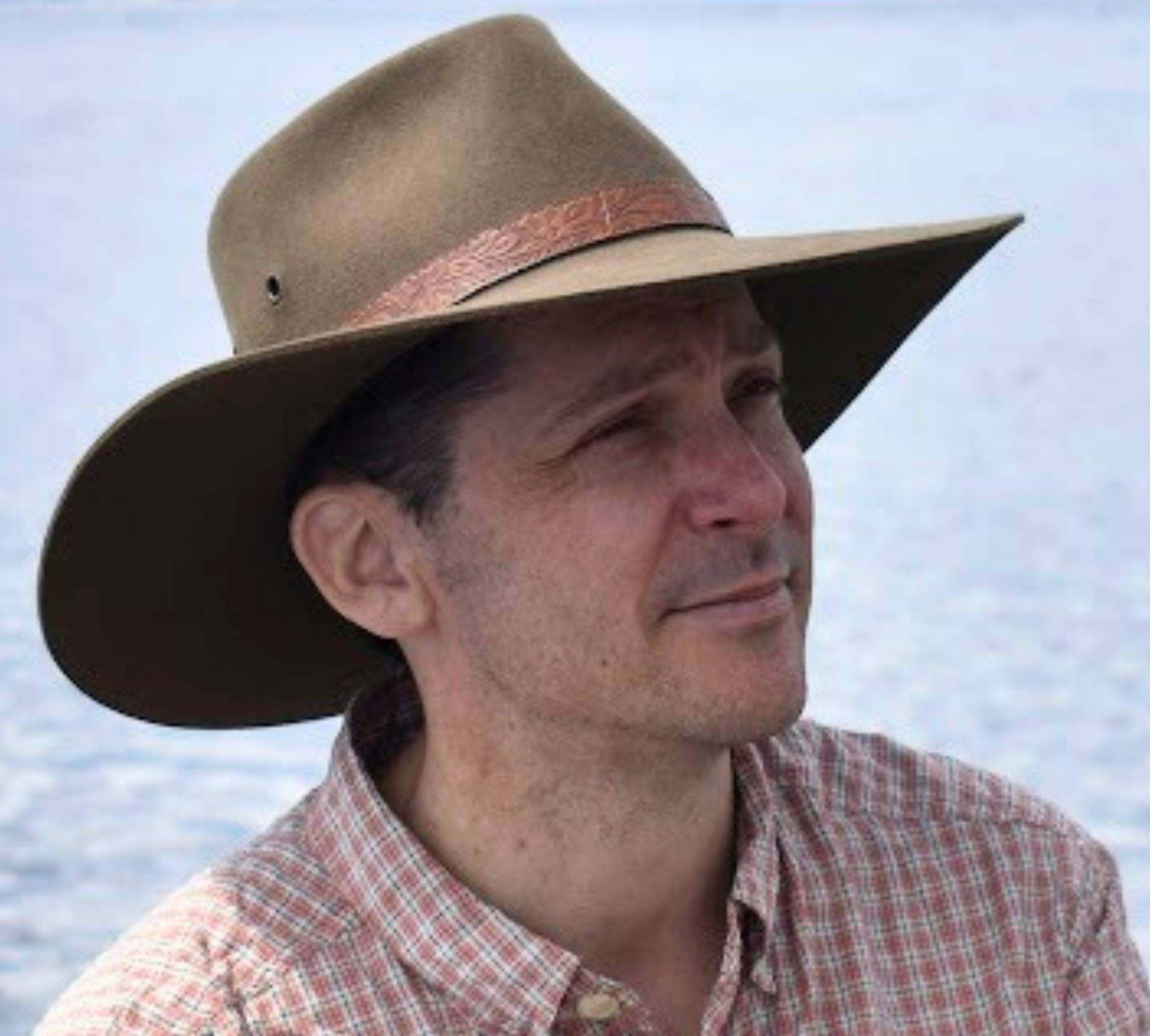
What have so many influential scientists been at some time been ridiculed and disbelieved by their peers or institutions? What reforms could foster bolder and more innovative science?
In this episode we talk with Matt Kaplan, a science correspondent at The Economist and author,about his most recent book I Told You So! Scientists Who Were Ridiculed, Exiled and Imprisoned… For Being Right. We discuss the lives and ordeals of scientists like Ignaz Semmelweis and Katalin Karikó whose science was correct, but in many cases were not accepted at the time. We also ask Matt about what changes could be made to the science system to support high-risk, high-reward research.
Cover art by Brianna Longo
-
Marty Martin 0:04
Between 1976 and 2018 the number of full-time faculty at American colleges and universities grew by 92% but over that same period, the number of full-time administrators grew by 164%. Sit with that info for a second. What those numbers tell us is that American universities didn't just get bigger in the last 50 years, they got different structurally. The people making decisions about resources, about whose work gets supported and whose doesn't, about scholarly productivity itself, that population grew much more than the support for the people that justify the existence of the universities in the first place.
Marty Martin 0:44
Johns Hopkins political scientist Benjamin Ginsburg has been tracking changes like these for over a decade. He points out that as recently as the 1970s university leadership was drawn largely from the faculty itself, people who'd done the science, taught the students, and understood the research mission from the inside. Academics ran the academic institution. Now, though, many universities are led by a more professional managerial class than scientists or other intellectuals. Many current administrators have little to no academic background, meaning that for them running the institution is a job, not a temporary service commitment like it used to be when the faculty did it.
Marty Martin 1:22
Now layer on funding incentives, because this is where it gets really interesting. Federal funding accounts for roughly 60% of the average research budget at a research university. Universities don't just receive that money, though; they extract from it, as you might know or remember from our past episode with Editor-in-Chief of Science magazine, Holden Thorp, there's a mechanism called indirect cost reimbursement, or F&A costs, that universities negotiate with federal agencies on top of direct research funding. Harvard's negotiated rate in 2023 was 69%, Yale's was 67. This means that on a million dollar direct cost grant, those institutions pull in hundreds of 1000s of additional dollars on top of the science itself.
Marty Martin 2:05
The consequences of this administrative bloat and indirect funding have been predictable. "Good science" in university settings like these has somewhat become a code word for indirect cost recovery, inference, innovation, discovery, and training - those are fine, as long as they have a big price tag paid by the federal government. This shift in priorities has had all sorts of unintended downstream effects. A 2020 analysis by Packalen and Bhattacharya, published in PNAS, found that it systematically favors incremental research over work that's most socially valuable. It's also led to what Ferric Fang and Arturo Casadevall have called hypercompetition, the state where researchers spend disproportionate time writing safe grants, not doing scientifically audacious work. Bruce Alberts, Harold Varmus, and Shirley Tilghman wrote about this in 2014 in PNAS, calling the American biomedical research enterprise effectively a machine for perpetuating funding pipelines.
Marty Martin 3:03
So, let's put all these things together. Administrators without scientific expertise, setting resource priorities, and institutions financially rewarded for grant volume rather than scientific impact. Is it any surprise that the system we now have is tilted away from exactly the kind of long horizon heterodox thinking that has historically produced transformative science, and towards the safe research that keeps the federal dollars flowing?
Marty Martin 3:28
And this is where today's guest comes in. Matt Kaplan is a science correspondent at The Economist, where he's been for the better part of two decades. But Matt is a trained paleontologist and has written a new book, "I Told You So: Scientists who are ridiculed, exiled, and imprisoned for being right". Matt's book is a forensic look at what happens when correct science runs into exactly the kind of institutional inertia I've been describing. As you'll hear, Matt's argument isn't that scientific consensus is always wrong or that institutions are uniquely corrupt. It's more that institutions have structural biases towards established paradigms, and those biases impose real measurable costs in delayed breakthroughs, careers ended, and even lives lost. The question to stew on today, as you listen to Matt, is whether these costs are getting larger as the people overseeing science understand it less, and as the institutions funding it are increasingly rewarded for asking not what's most important but what's most fundable.
Marty Martin 4:22
Before we get started with Matt, two quick things. First, we're obviously missing a co-host today. For all you Cam fanatics out there, fear not. Cam's absence is merely a one-off. He was traveling when Matt was free, so I interviewed Matt by myself.
Marty Martin 4:34
Second, Big Biology continues to grow. We remain in the top 50 science products on Substack. We're well past 20,000 followers on Spotify, and Google identifies us as one of the top-ranked biology shows out there. We are super grateful for all your downloads, your listens, your shares with students, family, and friends. We could not make this podcast without you. But a small ask before I bring on that: either keep telling people about us, or if you're feeling super generous, go to Big Biology dot substack dot com and become a paying member. For $5 a month or $50 a year, you can help ensure episodes keep coming. As a nonprofit, all of your support either goes to episode production or right into the pockets of our producers, interns, artists, and bloggers. We also offer group subscriptions too, so you can share Big Biology with your lab, family, or department. And now on to the show. I'm Marty Martin, and this is Big Biology.
Marty Martin 5:36
Matt Kaplan, welcome to Big Biology.
Matt Kaplan 5:38
Thank you for having me, Marty.
Marty Martin 5:40
Thanks very much for coming. I'm really glad to have you here to talk about your new book: "I told you so: Scientists who were ridiculed, exiled, and imprisoned for being right." And that's quite a title for a book. So, maybe let's start. Where did that come from, and was it the personal, some personal professional experience that made you feel that the book needed that title?
Matt Kaplan 5:59
So, I really wanted to emphasize the fact that scientists who are often right about so many things end up in a lot of trouble. Now, I mean, that's part and parcel with the human experience. When you tell people what they don't want to hear, they often don't respond all that well. That's been, and certainly, looking at the historical situation, it's easy to see there's so many examples of people who were absolutely right, and who we go, "What you threw the person who told you to wash your hands before doing surgery, where? You did what to them?" That kind of stuff. We look at that and go, "No way, that's not possible." But then we, as a science journalist who's been doing this for 20 years, more than it's really easy to look at the modern scientific environment and say, and we behave exactly the same way today, and that's that's ultimately why I wrote the book, because I was going to conferences as a journalist and watching bright young things, PhD students who were really, they were doing what they're supposed to do, they were asking questions, and they were asking good questions, like, well, why do we do it this way, or why do you make that assumption? And then rather than have their elders say, oh, you know, thank you for raising that, I hadn't considered why we make that assumption. They just shout them down and throw them out. I saw some particularly bad behavior in this latter half of my career that really hit me hard.
Marty Martin 7:32
Alright, so I mean, this is interesting. You know, you are a scientist and you became a journalist. So you know, scientists, we're deeply embedded in our problems in our communities, and being a journalist, I wonder if you feel that that gives you a perspective that maybe we scientists don't quite have.
Matt Kaplan 7:49
It's funny you should say that, because I had the opportunity to go to Yale and do a PhD studying the rats that ran underneath the feet of ancient humans. And I also had the opportunity to go to do a master's in science journalism at Imperial College in London way back in 1999 when it was pretty much the only program that offered science journalism. And I remember going to Yosemite with a couple of friends, and sitting on Half Dome, I flew my kite on Half Dome, actually, and thinking, gosh, what am I, you know, what am I going to do? And one of my professors, who died during the pandemic, commented to me at the time, if you do a PhD, they'll ruin you. And I remember having the book is dedicated to him, Richard Cowan, and I remember talking to him about, and he said, because you're going to specialize and specialize and specialize, and once you go down that rabbit hole, you won't be able to see where you were.
Matt Kaplan 8:56
And it's an interesting perspective, I'm not sure that I agree with it now where I am today. I did stare at over a thousand fossilized marmot teeth to look at how marmots adapted to climate change, and in my case they didn't. So I wrote a report saying you can throw ice ages and warm periods in marmots and they don't change very much. There's a pretty boring paper, really, but it's actually it tells you that if marmots really start having a tough time in the climate systems that we throw at them today, then that's bad. They're like the final canary in the coal mine. If they're doing badly, oh boy-
Marty Martin 9:34
We're really in trouble.
Matt Kaplan 9:35
You're stuffed. So I both agree with him, because I do think that when you get hyper specialized, it gets really hard to see other fields with perspective, but at the same time being able to talk the talk and walk the walk at conferences, being able to talk to a paleontologist who studies turtles and talk about cryptodires with them. And you know, throw the lingo around with the dinosaur paleontologist, and say, "Oh, okay, so that's a saurischian, and as opposed to an ornithischian," and being able to say that and use the lingo and understand what they're talking about when they talk about their chi squared tests or their p values. And then be able to look at their results in their papers, and then determine whether or not I'm going to cover their research, because I don't like the stats. These are very valuable tools to have in your toolkit as a journal, as a science journalist, which is what really separates out a science journalist from an author journalist, is that I'm equipped with the ability to say, well, I don't think that's right, and I'm going to throw out that paper because it feels off to me. I mean it's an extra form of peer review, and the newspapers, like The New York Times and The Economist, that have people who are scientifically trained are functioning as an extension to peer review. It's amazing how often we run into stuff where I read the paper and it's been passed to me by someone else who says isn't this cool and I say
Marty Martin 10:21
Well
Matt Kaplan 10:51
I really don't like it or the reverse. I was just as a piece that published just last week on plants and air purification in the new wellness section that the economist has which I have mixed feelings about. And in that section, our medical correspondent, Natasha, called me up and said, "Do you realize that one of the sources you are referring to, and there were like 10 sources in this particular 500 word article, that they tortured the numbers in their results section?" And I hadn't spotted that, but that's absolutely cause for eliminate and the fact that we can do that is an important part of our job,
Marty Martin 11:45
Yeah, yeah. Well, that science as journalists comes off in the book quite clearly. I mean, I really enjoyed reading the kind of little bit of history and then a little bit of the practice of science, and then we're back to another historical anecdote. It was a neat way to tell the story, but for sake of time, let's jump to the story, and we got to give plenty of space for Semmelweis . I've been teaching about this guy in my evolutionary medicine class for about 15 years. I didn't know all of these details, so he was an exceptional individual, maybe the hero of your book, a crusader for scientific truth, experienced all sorts of challenges, really trying to nobly pursue protection of women from infection during childbirth. So, maybe give us the core parts of the story as it relates to your central thesis.
Matt Kaplan 12:32
Yeah, so Semmelweis, so he faced the disease puerperal fever, which is also known as child bed fever. And when women gave birth during the Victorian era, they had a very high likelihood of developing this infection. And it started with pain in the uterus, black and blue splotches on the upper thighs and lower abdomen. And then it would spread, they would develop hideous fevers, and ultimately have seizures and die, and nothing could be done to save their lives. There was a lot of attention at the time being paid to things like smallpox, because smallpox, diphtheria, cholera, they kill men. No one really cared about the fact that roughly one in ten women died shortly after delivering a baby.
Matt Kaplan 13:27
Semmelweis was different. Semmelweis looked at the problem he arrived at. So Semmelweis was Hungarian, and he was one of Hungary's brightest and best, and as was the case back in that day, because Hungary was effectively of a vassal state of the Habsburg Empire, Hungary's brightest and best went to Vienna. And Semmelweis went to Vienna, and as he started working as an obstetrician in the Vienna medical ward, he recorded how often people died from childbed fever, and because he was taking notes, he realized that there were two clinics, and one clinic, the infection rate was 22%, one in five women would get this infection, die. I mean, it was so awful because they couldn't stand the pressure of sheets on their abdomen as they were suffering from this disease, they would die with screams frozen on their lips as they passed. He was deeply affected by it. He writes in his journal what it was like tending to these women, knowing that he could do nothing to save them. And then there was the other clinic where the infection rate was about 4%. Semmelweis desperately wanted to know why. Why is it that you know? Because why does one clinic have a 22% infection rate, and why one has 4%? This is insane. How is that possible?
Matt Kaplan 14:59
Because at the time, doctors had been following the notion of the wind, the weather, and the stars being responsible for disease, and we laugh, right? Oh, those stupid ancient people believing that the wind, the weather, and the stars brought disease. How silly were they? But they're like, let's throw them a bone for a minute, because the notion that diseases have a season is actually spot on. Influenza comes in the winter, chicken pox comes in the spring, they all have their moment, and so this notion was that well, this is coming, so the stars are in alignment for this disease to arrive. That's how they interpreted it, but Semmelweis, when he was looking at these two clinics, went does not compute 404 error, page not found. How is, you know, we got the same stars over this building, we got the same spring birds chirping. How is it possible that this room has puerperal fever and this one doesn't? So he started running experiments, and he started taking notes. I mean, he did lots of stuff, which I write about in the book. My favorite is he fired the priest who was constantly walking through the clinic that had the 22% infection rate, because so many people were dying, because Semelweis thought, well, it must be the gong that the priest's assistant rings and the incense that they swing from the censer that's causing puerperal fever. Turns out, throwing out the priest had no effect. Go figure. Ultimately, he worked out all doctors all over the world in the Victorian era would go down to the morgue in the morning and dissect the patients who had died the previous day. And they would wash with soap and water, but that would be it after dissecting these bodies, and Semmelweis noticed that his hands, even after washing with soap and water, still smelled like corpse, so he thought there's an aura of corpse on my hand. He had no understanding of bacteria, because Louis Pasteur, he's another character in the book.
Marty Martin 14:59
Oh, yes, oh, yes,
Matt Kaplan 14:59
Louis Pasteur hadn't done his work yet. Joseph Lister hadn't done his work yet, also another character in the book, selected for the reasons, in many cases because they're so different from Semmelweis, but also because they're contemporaries. But he knew there was something on his hands, so he did the one thing that he could do to deal with a bad odor, and he went to the sewage treatment plant in Vienna, where they were dumping chloride of lime into the sewer to make it not smell as bad. And he said, "Hey, can I borrow some of that, and he writes in his journal, he dipped his hands in this stuff, and the scent went away. He got the concentrations totally wrong, because three days later he writes in his journal that all the skin on his hands fell off,
Marty Martin 17:53
Of course.
Matt Kaplan 17:54
Because you know, you put your hands in a highly concentrated enough chlorine solution, your skin's gonna fall off.
Marty Martin 18:00
Yeah, yeah.
Matt Kaplan 18:00
But then he thought, okay, I've got rid of aura of corpse, I'm going to implement this in the hospital, and we're going to see what happens, and he did, and the infection rate went to zero. Which I mean, which, like, like, you don't need stats to understand that an infection rate of 22% to zero is a big deal.
Marty Martin 18:19
Yeah no p value necessary.
Matt Kaplan 18:21
And so he did that work, and pointed out, look, I think we've got to start using this stuff. Problem was that Semmelweis also.., how do I put this politely? Semelweis was a little bit like Sheldon Cooper from Big Bang Theory.
Marty Martin 18:44
Good example. Okay,
Matt Kaplan 18:41
Because he understood what he knew. He could see in his notes that it was truth, and he wanted to impart it with everybody. He could not understand why people did not want to follow him. He ran into lots of doctors who said, "Sir, we are gentlemen. How can our hands be dirty?" And there were also lots of politics in the hospital, and again Semmelweis totally skewered himself with a lot of his political moves, because remember, Hungary, vassal state. Hungary rose up against the Habsburgs while Semmelweis was doing his work. During that time, he showed up to the Vienna General Hospital in the uniform of the Hungarian rebels. His boss was an Austrian aristocrat who had everything to lose if Hungary won, and Semmelweis was rubbing his face in it every single day. So it's no wonder that a lot of people in the Vienna hospital did not like Semmelweis and ultimately treated his ideas and he himself very, very badly.
Marty Martin 18:44
So he, how long was it from the time that he went to the sort of sewage treatment group in Austria and uses chlorine to wash his hands, to that becoming a common practice in Vienna, or maybe Austria more broadly?
Matt Kaplan 18:44
So, but that's the big deal. So he did his work during the 1840s. He finally ran the big experiment in 1847 but he created such severe political enemies that his work was entirely discarded. He was effectively evicted from the hospital premises at Vienna. He was then exiled back to Hungary, and then thrown in an insane asylum by his own peers, because of all of his arguments that he'd been making. I mean, he also was starting to, the cheese was beginning to slip off the cracker. He was not handling the stress and pressure of the politics well at all, and so certainly he was not doing well, but exiled and eventually thrown into an insane asylum, where he died shortly thereafter. The cause of his death is much disputed, but you know it was not a good end for Semmelweis.
Matt Kaplan 18:44
What's really sad is it was a doctor named Michaelis. I can't remember his first name, but Michaelis was a doctor in Germany, in Kiel, who read one of Semmelweis's papers and tried out the chlorine wash and watched the infection rate go from 20% to zero in his own hospital. So this was a major moment where Semmelweis, who had written his paper in German because he was in Vienna, had transmitted the knowledge to another obstetrician who had the opportunity to really make things better. And Michaelis wrote to Semmelweis enthusiastic about the change. And then Semmelweis found out Michaelis threw himself under a train on its way to Hamburg, because he could not cope with the knowledge that he personally had been responsible for the deaths of thousands of women. And I think that's an important point, because a lot of the people you can talk about the Hungarian rebellion, you can talk about their aristocracy and the politics in the hospital, you can talk about Semmelweis's poor diplomacy, but here's the rub: when someone tells you you're a doctor, you, because of your past ways, have resulted in the deaths of thousands of women, and they're, and they're just born children. There are some people who are going to just deny, deny, deny. And then you're going to have some people who are going to go, oh, and kill themselves. And so I think, I think that a lot of the response that you see with Semmelweis is emotional, because these are doctors who some of them realized, oh God. And I think it's important to point out that this is not unique to Semmelweis. Oliver Wendell Holmes was an obstetrician in Boston, Massachusetts. He also studied in France, learned a ton from several French scholars who I get into in the book, but he also pointed out that child bed fever was being transmitted by medical practitioners. He wasn't sure how to prevent it exactly, but when he laid out that certain practices and hand washing routines could help, he got destroyed by critics, all of them obstetricians who could not cope with the notion that either their hands were dirty or that they were responsible for any kind of serious problem.
Marty Martin 23:33
So, I mean, in interest of time, there's so many characters in there. I would like to spend a lot of time on Pasteur. I learned a lot about this gentleman in your book. But I think the person that we really want to save time for is Katalin Kariko, right, for the work that she did developing mRNA therapeutics. She was stripped of her faculty position, she lost her funding, she was antagonized by mentors, and she won the Nobel Prize. So, what does her case tell us? Why did you feature her, given there's this, you know, slew of a century's worth of other examples, or more, that you also covered?
Matt Kaplan 24:07
So, Kati is a beautiful example of someone who can just about beat the system. Semmelweis did not. Kati, I mean, she put up with so much crap for so many years, paid terribly, treated terribly, threatened with deportation, ironically, back to Hungary, exile by the US Department of State. And just, we are so fortunate that she didn't say, "Screw this, I'm going to go be a florist, thank you very much. So, there is the resilience and the endurance right there, but there are other elements of Kati that I think are really worth examining, and this is why I put her. So, as you point out, the book is braided. The book is not one scientist, one chapter. The book I flow from past to present and back again, and I do it specifically to make the point that these stories are being repeated. Kati was very much in the same position as Semmelweis. She was identifying that messenger RNA had the potential to really change therapeutics and make a big difference in things like vaccines, which ultimately her mRNA technology was critical to the Pfizer vaccine that basically pulled the world out of the COVID pandemic. So this is a big deal.
Matt Kaplan 25:33
One thing that Kati, and you can say endurance is part of it. I think part of that is the family environment. Kati has a lovely daughter who's an Olympian, no less, and her husband, who's nurturing and supportive. Semmelweis was very much alone for a long part of his career and struggled with mental health, whereas Kati never faced that, so that is a big part of it. But here's the other really big difference: allies. Semmelweis was friends with Joseph Skoda, who taught him statistics at the Vienna Hospital. Skoda himself was a pariah, socially barely tolerated by the other doctors, not well liked, and because he was Hungarian, Semmelweis, just didn't ally with anybody else, he had very, very little support.
Matt Kaplan 26:28
Kati is charming. Yeah, okay, fine. She speaks a mile a minute. It's really hard to keep up with her, really tough. Interviewing her as a journalist is a major feat, but Kati is charming, and most critically in her career, built powerful allies. Elliot Barnathan, while he was at Penn, really shielded her from trouble. He really looked after her throughout her time there. Similarly, David Langer was a PhD student in her lab under Elliot Barnathan, and when Elliot Barnathan left, David Langer used extraordinary diplomacy and negotiation techniques with different departments at Penn to keep Kati afloat. Those allies provided her with shelter when things were really, really tough. Semmelweis never had that, and I think those kinds of allies are critical. And this is, I think, I kind of ambushed the reader with Galileo at the end of the book.
Marty Martin 27:41
To be expected though. Yeah,
Matt Kaplan 27:42
Yeah, I mean, you write about scientists who are, you know, ridiculed, exiled, and imprisoned for being right.
Marty Martin 27:47
Must be Galileo.
Matt Kaplan 27:48
You gotta have Galileo. And I think a lot of people, when they read the book, they call me and they say, "Hey, I'm three quarters of the way through your book, and there's no Galileo here. Like, that's not cool." And it's intentional because Galileo pairs so beautifully with the Kati Kariko story, and is a beautiful counterpoint to Semmelweis and his failure. Semmelweis couldn't get anywhere because he didn't have the diplomacy and the charisma to find shelter. Kati had that, Galileo had that in spades. I mean, we all remember Galileo was this amazing astronomer who worked out all of this stuff, and I don't want to discredit that, that's true. But Galileo, when you really get into his story, oh my god, the man had the Medici family wrapped around his little finger, he was friends with the Pope. He had, I mean, like the ambassador from Tuscany in Rome was one of his best friends. The wife of the ambassador to Rome was one of Galileo's good friends, and she made him home-cooked meals when the Inquisition was questioning him. I mean, like the degree to which people stuck out their necks to shield Galileo was unbelievable. When you really get into it, and you realize what actually happened, and I get into it in the book in a big way. The story is amazing, and you realize just what he did. You start to appreciate, oh, charismatic diplomat as opposed to scientist. I mean, I don't want to pull away from the scientific discoveries, they are important, and he was a very capable astronomer, but I'm taken aback by that, in the same way that I'm taken aback by how far Louis Pasteur was able to go with a silver tongue and abs of absolutely Machiavellian techniques,
Marty Martin 29:41
Yeah. So, maybe say a little bit about Pasteur, because you know his approach is so different, and he.. I didn't realize that, you know, part of his success came from just putting out for the general public to see whatever claims it was that he was making, so you're not talking about just having the Medicis, not to be dismissive, but if you have most of the public supportive of you, you know that's gonna really help to make your case and continue the progress.
Matt Kaplan 30:09
Pasteur knew, I mean, he learned early on in his career where the money was coming from, and that he had to keep government on side, which, like an American senator, he was a political chameleon, he would change his politics based upon who was in power, so that he could keep the gravy train going. This was hugely important to him, but he also was a showman, that partially was for keeping the government on side, because the government really didn't understand a lot of what he was doing. So he would run experiments that were exceptionally dramatic. "Madames and Monsieurs, I have a hundred sheep, 50 have been injected with saline, 50 have been injected with the rabies vaccine. I am now going to inject 50, I'm going to inject all 100 with rabies, and we're gonna watch and see what happens. Actually, I'm messing up the experiments, because that wasn't rabies, that was, Pasteur was.
Marty Martin 31:08
I can't remember which one it was either, but the general idea of infecting with an audience, I mean the audacity.
Matt Kaplan 31:15
Oh yeah, oh anthrax, that's it. Yeah, so he had 100 sheep, and half were vaccinated and half were given a placebo, and he infected all of them with anthrax. And then watched to see over the next days which ones die from anthrax. It was like blood sport science, and the public was riveted by this. I mean, it was a great way to draw attention. Never mind that he was lying about how he created the anthrax vaccine, because you know the anthrax vaccine had been created by Henry Toussaint, who was a country bumpkin veterinarian from Lyon, and he had developed all these techniques for just like basically killing the anthrax bacterium and then injecting the dead bacterium into animals and revealing that they could become resistant to the disease. Pasteur could not accept that someone could beat him to the punch, so he railed against Toussaint and said, "It is not killing the bacteria that works, it is weakening it. You must expose it to oxygen and have it weakened by exposure to oxygen, attenuating the bacterium, and then inject the weakened bacterium that will work. He wasn't wrong, but he couldn't make it work, and his lab notes, which were unveiled like 2004 reveal that he couldn't make it work, and that he lied to everybody and used Toussaint's technique, Toussaint, who he had just discredited, and then said Toussaint was totally wrong. This is my attenuation technique for creating the anthrax vaccine. I mean, like, wow, really. And he did the same thing with rabies, stealing the technique of a guy named Pierre Galtier and utterly discrediting him and hogging the glory, but it was bad behavior. He did very well, but I don't think it speaks very well of science, and I don't think actually it's how science thrives. He was very, very smart and very, very capable, but when we behave like that, we actually create more problems than we fix.
Marty Martin 33:15
Yeah, well, it's at the expense of a whole bunch of people that don't have the personality to counterbalance that kind of thing, and so, yeah, so I want to, I mean, we don't have a ton of time today, so I want to modernize our conversation, meaning that there's a lot of the book where you're prescriptive about how we address some of these issues. Before we get to that, I wanted to sort of bring up a couple of issues that I didn't seem to be, I didn't see to be emphasized in there, and of course they're a bit selfish. So, I've been here at USF for about two decades as a scientist, and the incentive structure for us, it's pretty dramatically changed. So, I'm in a college of public health, which means I'm in a school of medicine. So, what I'm about to say doesn't necessarily apply everywhere, but right now my success comes down to the dollars that I bring in and mostly the indirect costs, right, which we can talk about that a little bit more, but basically every time a grant comes in, some fraction of it goes to the university to make research happen. How do we fix a system where most of us, at least at the research institutions that are professors, whether or not we're able to stay, whether or not we're tenured, I've been doing this for long enough, so I'm well past the tenure point, but how do we fix a system where the incentives are about money, not necessarily about science, or about the impact that we have, training students, publishing papers, all of that kind of thing?
Matt Kaplan 34:35
So I don't deal with that in the book, because I don't see a financially viable mechanism for fixing the funding problem in science in the current geopolitical climate. In the past two years, we have seen the funding systems in science go from already not good to outright terrible and very much under threat. I refused in the conclusion of my book to identify problems or to focus on problems where the solution is we need money. And I don't see a way to change the system without changing the funding structures, so universities should have funding coming to them from the state and the federal level to support basic research, as we see in so many other countries. The state should be funding the provision of a microscope to a microbiology lab. The scientists shouldn't have to take a grant from, you know, the National Academy, and apply that to the purchase of a microscope, so the basic funding for walls, carpeting, desks, microscopes, computers should be supported at a more universal level, but that means funding science, which we don't, because we're currently building, you know, intercept or missiles and drones and weapons to go and deal with very serious geopolitical problems. And I don't want to dismiss those geopolitical problems. They are very serious, very serious money going towards these problems. That doesn't mean I'm supportive of the tactics that are being used, and there needs to be very serious money, also going towards, you know, health care, so that someone who has a curable form of cancer at the age of 40 doesn't become bankrupted, so that they can go on and live their life. So you're weighing all of this out, and under the current circumstances, I don't know where that money comes from without raising taxes, and in the economic climate that we're in, that's really hard. So, I don't, I don't stand up and say we got to change the funding structure, because that's not viable in the current environment. But I do talk about a lot that is fixable under the current circumstances. I mean, you can pick which ones you want me to talk about.
Marty Martin 37:03
Well, so yeah, I mean, maybe let's just say the small changes that you think would be most effective in the short term. What's your favorite? What's your favorite example?
Matt Kaplan 37:14
So I personally am very opposed to the system that we currently have, whereby a very well-established scientist will continue to write grant proposals to take incremental steps forward with research that's already well, well understood. And they say, okay, well, we've done this, we've done this, but we haven't done this little bit of this yet, so I'm going to apply for another grant to do this and explore this avenue. And there's a time and a place, I get it, and some of that can have funding, but because we're so averse to risk, we don't fund the PhD student who's not established, who says, well, I really wonder about this, we've never explored this before, and I don't know the answer to the question, but it's possible that this could solve this issue of pancreatic cancer. It's a, it's a blue sky moment. We don't really know if that's going to work. We don't know if this material will make solar panels more effective, but let's try it. And let's fail, because we're so scared about failing our funding systems don't support people who are not well established or who are new, or this is the worst, outsiders. And outsiders can be, "Oh, I'm a paleontologist, but I'm operating in the field of biochemistry now, and I want to run an experiment." "No, you're a paleontologist. What are you doing?"
Marty Martin 38:39
Yeah
Matt Kaplan 38:39
"Or, oh, I'm a biochemist, and I'm working in paleontology. I want to understand how feathers biodegrade over 70 million years." "No, you're a biochemist, not a paleontologist. We're not going to grant fund that". This kind of stuff drives me crazy, but also, oh, lots of fields dominated by men, and you're a woman, and we're not going to fund that. And we laugh, but this is how things actually operate. I mean, this kind of stuff is still coming up. Or I got people saying you can't write about this in The Economist because I'm a PhD student, and if my PhD supervisor found out that I had these ideas, I'd be fired.
Marty Martin 39:14
Be in trouble, yeah. Well, one of the things that you brought up that you know, I've served on a lot of panels for the National Science Foundation, reviewing grants. I've submitted a lot of proposals. I run a lot of grants. One of the things that my colleagues and I talk a lot about, and you get pretty intense reactions, some very supportive, but more than like extreme skepticism and a borderline "Are you crazy? is the kind of lottery ticket idea that instead of investing based on, you know, these sort of legacy things, where the rich often get richer, and innovation, especially if you're a biochemist trying to do paleontology or something like that, that's not seen as a positive, that's more of a stay in your lane kind of thing. Maybe say a little bit about how you think of this lottery ticket idea and other groups, or sort of practicing groups, funding groups that are trying these kinds of experiments right now.
Matt Kaplan 40:03
Yeah, so the lottery system, as you know, I discussed extensively in the conclusion of the book. And I'm not, so I'm moderate by nature, and my inclination would not be to shift to, okay, here are all of the grant applications, let's throw them into a big basket and pick out 20 that we're going to fund. I am not in favor of that. I am in favor of saying, okay, here's a hundred applications, we're going to look through them and identify, because we know that it's really easy to identify stuff that's just not very good. When you're looking at grant applications, the real bias comes in when you're trying to separate the outstanding from the very, very good. And that's when stuff like the English in this application isn't written very well. It's clear that this is a second language speaker. Or this is from a university, this is from the University of Witwatersrand in South Africa, not Harvard. Or this is a researcher's name that we recognize, whereas this is someone we don't know. This is where, when you're separating the very, very good from the outstanding, these are the factors that have a part to play, and they should not.
Matt Kaplan 41:19
So I am a huge proponent of look at your grant pool and say "Okay, these are all bad, not very good, so, so, or just, oh, they're good, but they're not very good or great. Let's get all those out. Now we're left with 30, and okay, fine. Why don't you pick five that you think are amazing, but the rest throw them in a lottery." And pick them out and take them at random, because then you're not going to have the biases ruining you anymore. Similarly, when you're on a grant awarding body, you often have group think getting in the way of one person in the group on the grant awarding body goes, "Poh, that's really cool, I like that". But other people go, "Oh, that's weird, it's too different, no, no, no, we don't all agree to it." You can have what they call the golden ticket mechanism, whereby each person on the grant awarding body gets one ace to play, where they can go "No, the rest of you are wrong. I think this is really cool. This paper is gonna get funded".
Marty Martin 42:34
Yeah
Matt Kaplan 42:35
"To hell with the rest of you". And I think that paves the way for us to have a little more creativity, a little more blue sky thinking, because here's the rub: the more we focus on group think and the less creative we are, the more risk averse we are, the less likely we are to have the big ideas to solve the big problems. Big biology isn't going to get delivered, and we need the, we need big biology, right, along with the big engineering and the big chemistry, right. We need all of this big, and we need it now. We've got really big problems, so we need big solutions. And as long as we're being risk adverse and only taking little baby steps forward, that doesn't get us anywhere. And this is well established. So, I mean, we know, like the Arc Institute and the Howard Hughes Medical Foundation, they do things like this, where they give people the opportunity to try stuff and fail, and then they fund them again. The more we can support that kind of stuff, the better off we'll be.
Marty Martin 43:32
Yeah, agreed. Agreed. So, a couple more questions for you, in the sake of time. I guess the first one is, there's a communication challenge at bottom with a book like this, because you know we've kind of been alluding to the fact that the public, at best, right now is skeptical about so much science, so to write about, you know, problems and what I think you call broke, the brokenness of science. I mean, how did you, how did you get over that dilemma? What did you think about how the book take its final form, given that?
Matt Kaplan 44:02
Yeah, so I have to be very careful, because science is a clunky - I view science as a clunky engine prone to break down -
Marty Martin 44:12
Sounds about right.
Matt Kaplan 44:12
It is not, it is not efficient, but it can currently get us from point a to point b, it can do it, it doesn't do it as effectively as it could, but we are not going on a road with a level grade anymore. We have billions of people to feed, we have energy crises, we do have a lot of very, very serious problems. So we are now going uphill with a clunky engine. We need a much leaner, meaner device that can get us from point A to point B, and that requires an overhaul. Science is in desperate need of a tune-up. Science, however, peer review is the best we've got, and it's not going anywhere, but we need to look at it and say, "Okay. This is what we're doing. This isn't as good as it could be. Here's what we got to do.
Marty Martin 45:04
Yeah, so the message that you would give to students getting into to this world, knowing that science needs the overhaul, knowing that the challenges are there, knowing that some senior mentors are not necessarily going to foster their career, what would you tell a bright young person thinking to go in this field? And how does your framework, your ideas about fixing science, sort of mesh with the challenges and opportunities that the next generation is about to experience?
Matt Kaplan 45:35
You got to go in with both eyes open. Now, there are going to be some people who are the Sheldon Coopers of this world, who will not have the ability to play the diplomatic game, who will not have the charisma to be able to navigate the environment that they're going into, but PhD students are in a prime position to ask important questions, to test important hypotheses, and to explore. They got to do it, but you got to do it, and be aware of this history that we have, and the ecosystem of science that can so often get in the way. Don't make the assumption that just because you see a glaring omission or something that doesn't work as well as it should, that just because you flag it, everyone else is gonna go, "Wow, thank you so much for noticing that, because that's not how it's going to play out. Science doesn't behave that way, even though it should.
Marty Martin 46:31
Well, the last question is a sort of blue sky thing. We've only touched on a fraction of what's in your book, and the ramifications of what you're writing about are many and broad. But is there anything else that you want to make sure to leave the listeners with?
Matt Kaplan 46:45
Yeah, we all have a responsibility here. Science journalists have a responsibility to communicate how science works. It is very, very important, and science journalists are becoming an endangered species. Newspapers are just tossing them left, right, and center, sometimes for AI, sometimes because they believe that their sports correspondent, who writes about health sometimes can write about science.
Marty Martin 47:07
Oh boy.
Matt Kaplan 47:08
And I know newspapers that do this, and that's worrying. But scientists too have a responsibility. Whenever possible, a scientist needs to be able to, in three minutes or less, talk about what they're doing and why it matters in language that an ordinary person can understand, and we, when we lose touch with that, we really put ourselves, everyone in the community, at risk. So I think that's an important takeaway message. We're all here for the sake of humanity, we're all working together, trying to solve the problems that we all face. And scientists, part of their responsibility, needs to be stepping away from the lab desk and being able to at least talk in a basic fashion about what they're doing and why it matters.
Marty Martin 47:54
Good. Well, that's a relatively positive note to end on. So, we'll leave it there. And Matt, thank you very much for making time. I wish you success with the book, and really appreciate it.
Matt Kaplan 48:03
Hey, my pleasure. Thanks for having me.
Cameron Ghalambor 48:22
Thanks for listening to this episode. If you like what you hear, let us know via BlueSky, Twitter, Facebook, Instagram, LinkedIn, Threads, or leave a review wherever you get your podcasts. And if you don't like something, we'd love to know that too. All feedback is good feedback.
Marty Martin 48:37
Thanks to Steve Lane, who manages the website, and Molly Magid for producing the episode.
Cameron Ghalambor 48:41
Thanks also to Caroline Merriman and Cass Biles for help with social media, Brianna Longo, who produces our awesome cover images, and Clayton Glasgow, who blogs about topics covered in the main show. Check out his work on our Substack page.
Marty Martin 48:56
Thanks to the College of Public Health at the University of South Florida, our Substack and Patreon subscribers, and the National Science Foundation for support.
Cameron Ghalambor 49:03
Music on the episode is from Poddington Bear and Tieren Costello.
Transcribed by https://otter.ai